
City by the Sea played outsize role in Revolutionary War
NEWPORT — With the state and nation set to celebrate the 250th signing of the Declaration of Independence on July 4, Newport Historical Society Executive Director Rebecca Bertrand and her staff have already launched a series of events, some of which will continue all year.
“We have an awful lot going on, from public programs to lectures,” Bertrand told Ocean State Stories in a recent interview.
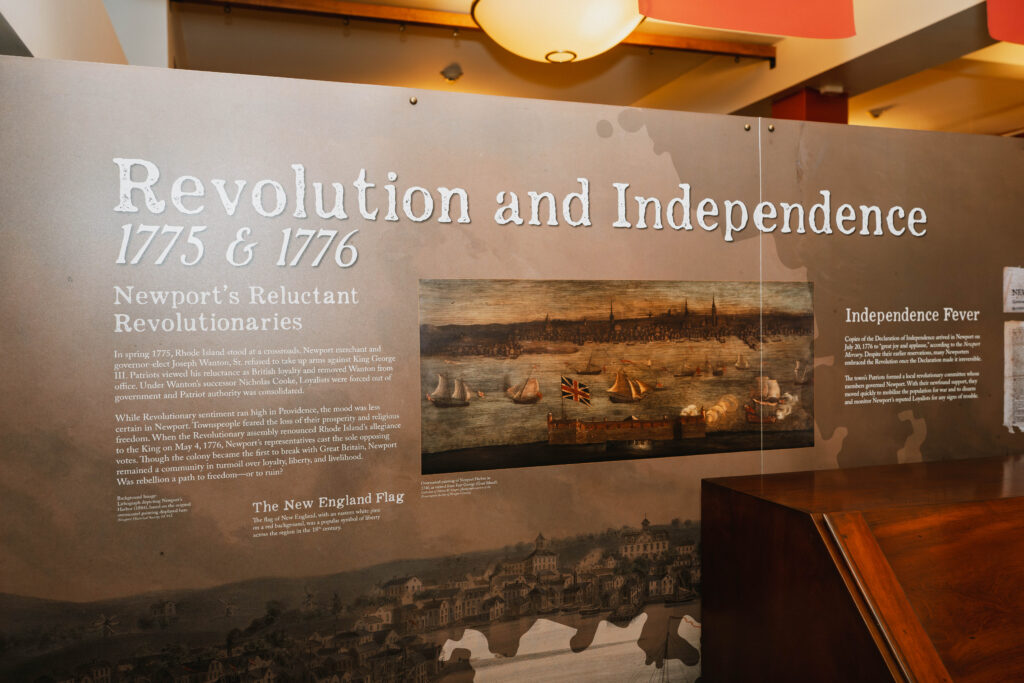
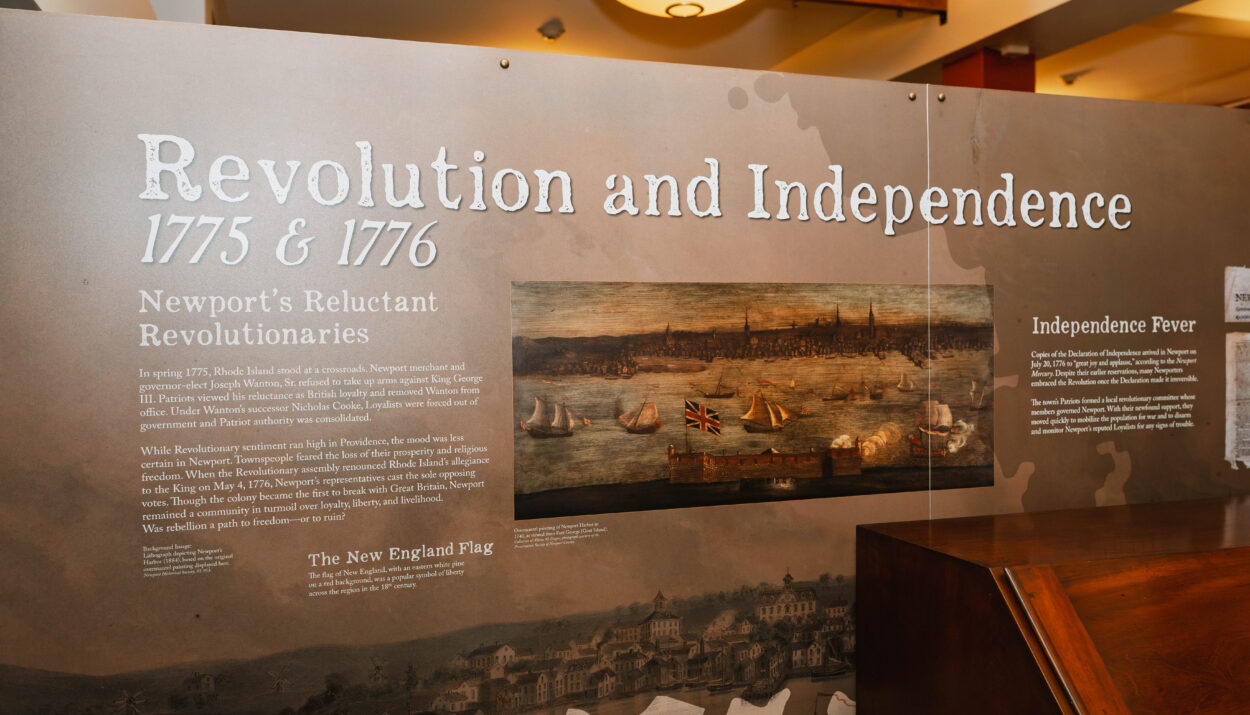
Occupied Newport and the Fight for Independence, for example — what Bertrand describes as “our special exhibition that’s open weekdays, Monday through Friday from 9 a.m. to 3 p.m.” In conjunction with that, Bertrand said, “on the third Tuesday of every month we’re open late for what we call ‘history happy hour,’ which is a great way to engage with the exhibition after hours, grab a drink, and walk through the galleries.”
At 10 a.m. on Friday, June 19th — Juneteenth — the society will cut the ribbon on the Center for Black History at the Wanton Lyman Hazard House, “a project that’s been years in the making,” according to Bertrand. Built in 1697, the structure, located at 17 Broadway St., is one of the oldest surviving houses in Rhode Island. An interfaith celebration will be held at Hazard on Sunday, June 21, at 1 p.m.
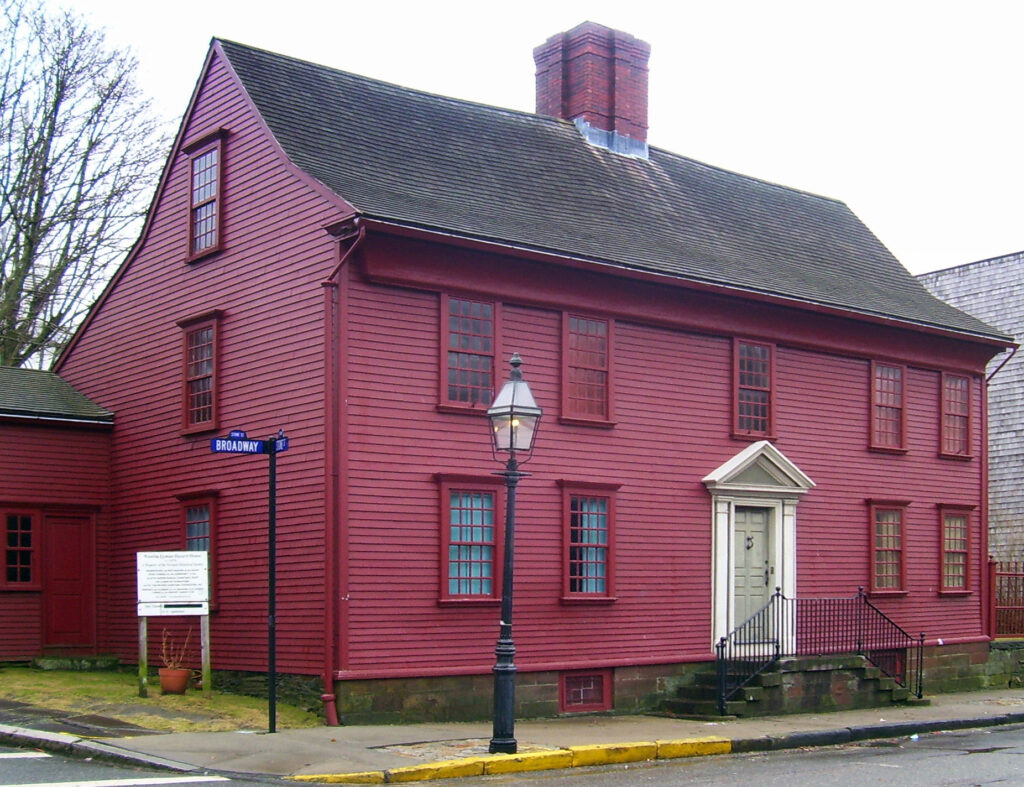
“The house reflects the larger history of Newport due to its association with early Rhode Island colonial government, pre-Revolutionary War conflict, Quakerism, and the New England slave trade,” the society states on its Wanton Lyman Hazard House page.
The society will also commemorate the history of Indigenous peoples in Newport with a performance by Annawon Weeden, a Mashpee Wampanoag/Pequot/Narragansett man who was born and raised in Charlestown and later moved to Mashpee, Mass. Weeden will perform at the French in Newport event, July 11, 11 a.m. to 4 p.m., in Washington Square.
Also on the society’s calendar:
— Tavern Talks, “a series of events featuring notable historians and authors examining historical narratives and offering perspectives on Revolutionary-era events.”
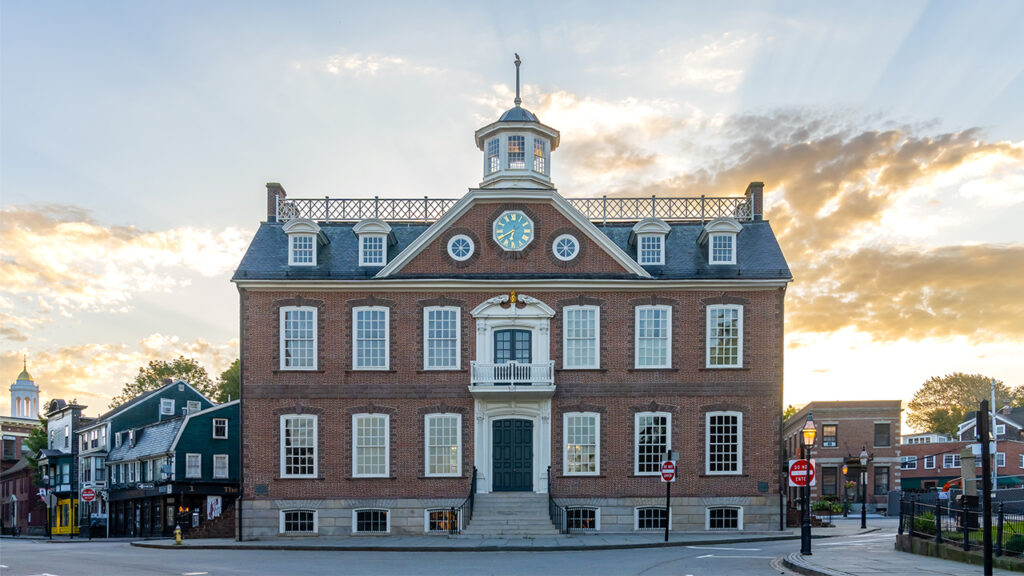
– Independence Day Open House at the Colony House, which “will be open to the public on Saturday, July 4th from 9am to 10am [with] a reading of the Declaration of Independence [to be] held on the steps of the Colony House at 11am.”
– French in Newport, a “living history event showcases what life was like in colonial Newport and features historic reenactors portraying key figures like George and Martha Washington, the Marquis de Lafayette and the Marquis de Chastellux, and head of the French army, comte de Rochambeau.” At 11 a.m., July 11th, in Washington Square.
— Educational resources “that bring the American Revolution to life for K–12 classrooms and community learning.”
Bertrand said planning for this year’s Semiquincentennial began a long while ago. “This is my fourth year at the Historical Society and I think we started working on it on my first day. I know that the staff had been working on it before I was here.
“So much of the American Revolution in Rhode Island happened right here in Newport. We played an outsized role in it. And we really want people 250 years later to keep knowing that.”

Watch a video of Rebecca Bertrand discussing the 250th.
The society lists key dates and milestones on its website, and provides a detailed history of the City by the Sea.
– March 1765: Britain’s Parliament enacts the Stamp Act, which requires colonists to pay for stamps to be placed on various paper products, including newspapers, pamphlets, legal documents, and even playing cards.
– June 1765: A group of Newport sailors attack the HMS Maidstone in retaliation for the impressment of civilian mariners in nearby towns.
– August 1765: Violent protests break out in cities across North America. In Newport, a mob threatens the designated Stamp distributor, erects effigies of British sympathizers, and ransacks the home of outspoken loyalist Martin Howard. The Wanton-Lyman-Hazard House, then home to Howard and under the stewardship of the NHS today, is nearly destroyed.
– 1767-1768: Parliament enacts a series of customs duties, known as the Townshend Acts, on the colonies over imported items like paint, lead, and tea.
– July 1769: A mob in Newport captures the new captain of John Hancock’s former smuggling vessel, Liberty, strips the ship of valuables and burns it in retaliation.
– May 1773: Parliament enacts the Tea Act, granting a monopoly on colonial tea sales to the British East India Company. Sons of Liberty and other groups oppose the Act as a piece of legislation passed without colonial consent.
– September 1774: The Continental Congress, a meeting of 56 delegates from 12 colonies, meets in Philadelphia for more than a month to debate a united response. The representatives agree to boycott British goods.
– April 1775: Massachusetts militiamen exchange fire with British troops at the battles of Lexington and Concord, marking the start of the Revolutionary War.
– 1775: Establishment of the U.S. Army and the U.S. Navy, the latter of which would develop and maintain a significant presence in Newport.
– May 1776: Rhode Island declares independence, and the Colony House, operated and open to the public as a NHS property, is known officially as the State House from 1776 until the Rhode Island State House opened in Providence in 1901.
– 1776-1779: British occupy Newport, and more than half of the city’s population flees.
– August 1778: The Battle of Rhode Island, also known as the Battle of Quaker Hill, takes place on Aquidneck Island and marks the first attempt at cooperation between French and American troops.
– 1780-1781: French military is stationed in Newport.
– June 1781: Revolutionary forces, under the leadership of General Rochambeau, depart Newport for Yorktown to assist in the decisive victory that would lead to the end of the war.
Editor’s note: Bertrand is a graduate of Salve Regina University