
Sixty years after the state took 8,600 acres of private property for the ill-fated Big River reservoir, one last defiant holdout looks to move on.
By Tom Mooney
Originally published in Rhode Island Monthly. “Copyright permission granted Rhode Island Monthly 2026.”
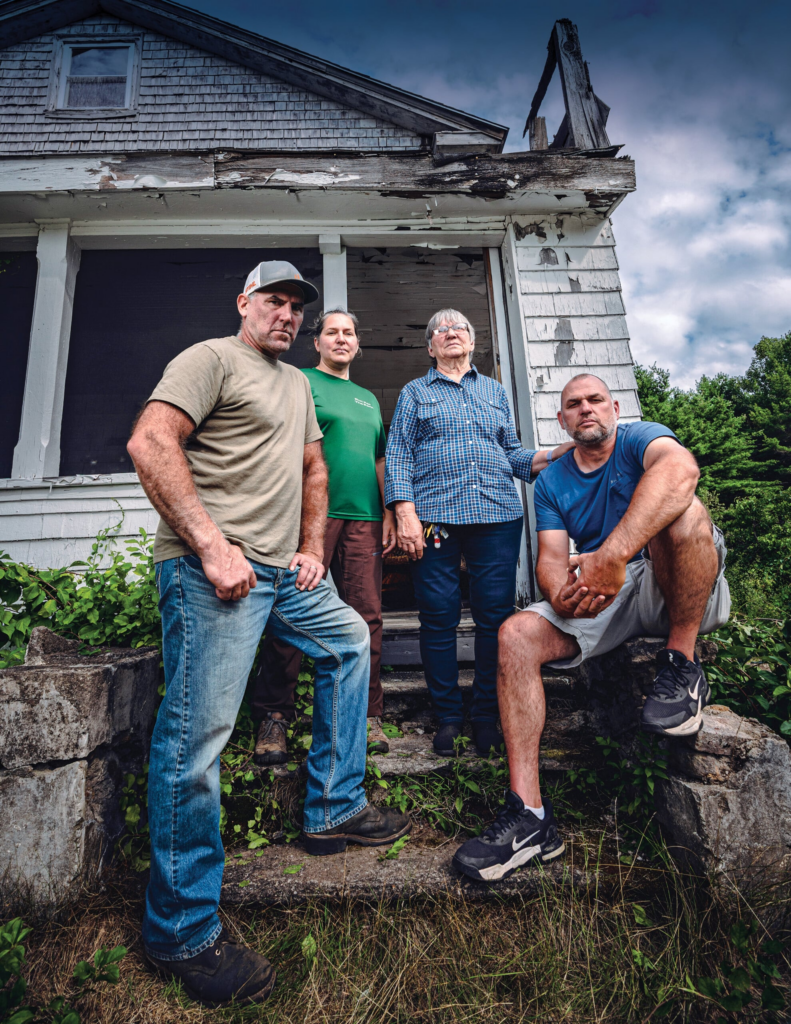
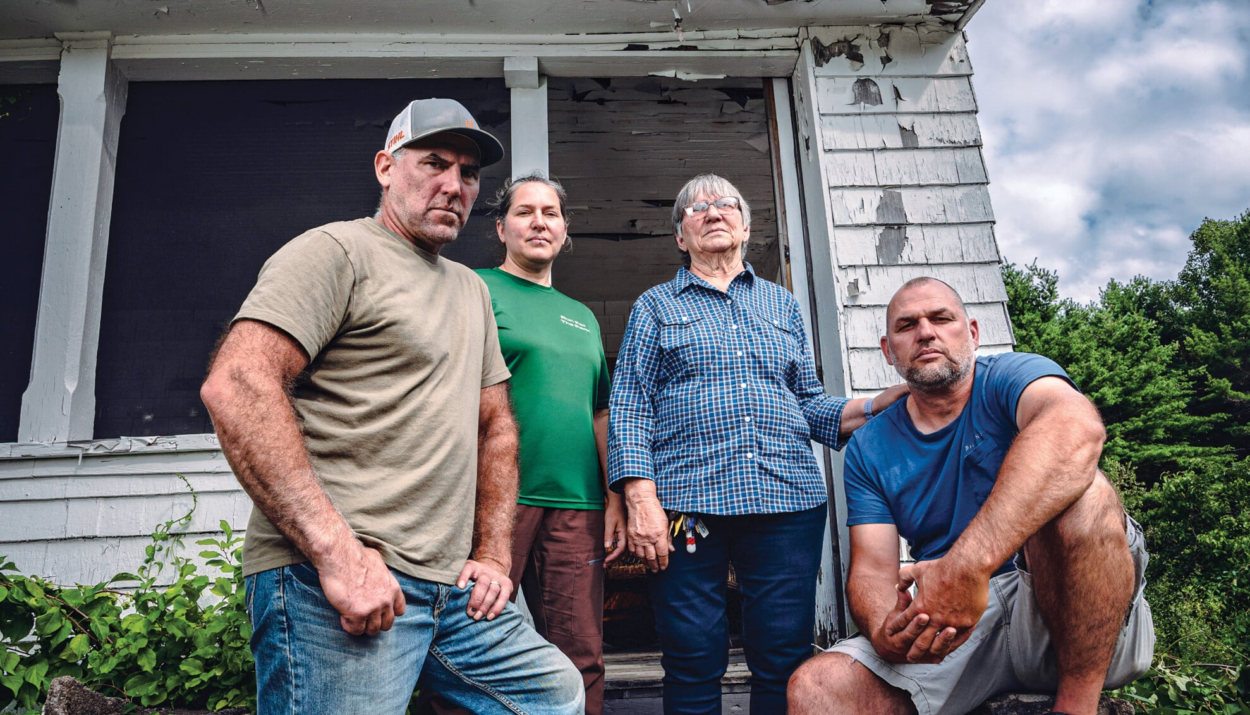
When it finally came time to leave, when their defiant stay on land Rhode Island seized from them sixty years ago reached an inevitable End, the Lemaires took the kitchen sink, too.
They took their tables and chairs, of course, and the beds and some bookcases. They took the living room woodstove and the tree-cutting and farming tools accumulated over decades. They took china cabinets and toys belonging to the fourth generation to call the West Greenwich farmhouse home. And they took the kitchen sink; it would not be left behind for when the state’s demolition crew arrived.
Jo-Ann Lemaire’s son-in-law, John, got started, pulling away the wooden cabinet beneath the white porcelain basin as eighty-two-year-old Jo-Ann took photographs. It was April now and the back door was wide open. But inside the almost empty house, winter’s cold proved equally stubborn about leaving.
“Oh boy,” Jo-Ann said. “How many thousands of times did I stand there washing vegetables that had come out of the garden?”
Jo-Ann can recite from memory the notice she sent off to the state in January. It amounted to a formal surrender.
“I said, ‘After living on Congdon Mill Road in West Greenwich, Rhode Island, for ninety-eight-plus years, the Lemaire family is letting you know that we are vacating the property.’”
She had typed “vacating” in capital letters to emphasize the point: This was an end to hostilities. The message went to the acting general manager of the Rhode Island Division of Statewide Planning, an agency, along with the state Water Resources Board, the Lemaires and their former neighbors in what is now the Big River Management Area had clashed with for years and years.
In the 1960s the state took by eminent domain 8,600 acres of property belonging to 351 owners in West Greenwich, Coventry and a part of Exeter for a reservoir that was never built.
Seven governors over three decades had supported a Big River reservoir. The U.S. Army Corps of Engineers offered to build it. But state lawmakers and voters were less enthusiastic, rejecting half the measures requested to move the project forward (originally estimated to cost $27 million and now at least $1.2 billion by the Water Resources Board’s estimation if ever attempted). In 1990, amid lingering questions whether the reservoir was actually needed — or would even hold water with such porous soil beneath it — the U.S. Environmental Protection Agency vetoed the reservoir project, saying it didn’t justify the environmental damage it would cause.
The state, however, kept all the land, arguing it might provide a water source someday.
By then most Big River residents had accepted a state payment for their property and moved out, sometimes moving their houses with them, sometimes engaging in the dubious practice of renting out homes no longer theirs. Others abandoned them to be demolished or burned for firefighting practice. But some, like the Lemaires, found it impossible to uproot. Instead, they resigned themselves to become tenants, renters of their once own homes, subject to regular visits from state property inspectors who could evict them on short notice for unsafe living conditions.
Now the Lemaires and the last three or four other remaining residents in Big River are contemplating their futures. So, too, are West Greenwich officials. This year they approved a new town comprehensive plan that urges the state to finally declare any Big River reservoir forever dead — something the Water Resources Board has never done — and bestow more-permanent protection to this swath of land that represents almost a quarter of their town.
Since 1993, the Big River Management Area — enjoyed by thousands of outdoor enthusiasts every year — has been designated as “open space.’’ But that’s not enough protection for a town trying to plot its future, local officials contend. Their unease is detailed in the comprehensive plan: “The town remains concerned that some housing advocates and homebuilders view the Big River Management Area as vacant state land where housing should be developed.”
Noting that lawmakers could someday rescind its “open space” designation, town leaders want Big River declared a state or federal forest, forever safeguarded from development.
Toward that end, town leaders successfully lobbied the governor and General Assembly this year to allow the state Department of Environmental Management to take over management of Big River from the state Water Resources Board. The DEM, with more staff, resources and ecological expertise, will be better stewards of Big River, officials say. (The Water Resources Board can still draw water from Big River if ever needed, but most likely by using wells.)
And if DEM uses federal funds in preserving Big River, money that could come from, for instance, the National Park Service’s Land and Water Conservation Fund, that could offer “pretty solid protections” from any future development, says DEM Director Terrence Gray.
Meanwhile, West Greenwich is working to preserve its past as well. It is building a senior center and town museum inside a former Baptist church that was moved decades ago to escape the ill-fated reservoir. Organizers want new residents to learn the town’s history and what happened sixty years ago in the white pine forest — or more precisely what did not happen — and why bitterness and mistrust linger.
“My story is no different than so many others who lived here,” says Jo-Ann Lemaire. She is dressed in a blue sweatshirt and jeans and strides across her yard with a rugged assuredness that belies her age. “We all cherished our homes, and we wanted to continue living here.” But the eventuality of leaving “was there from the beginning when they condemned the land.’’
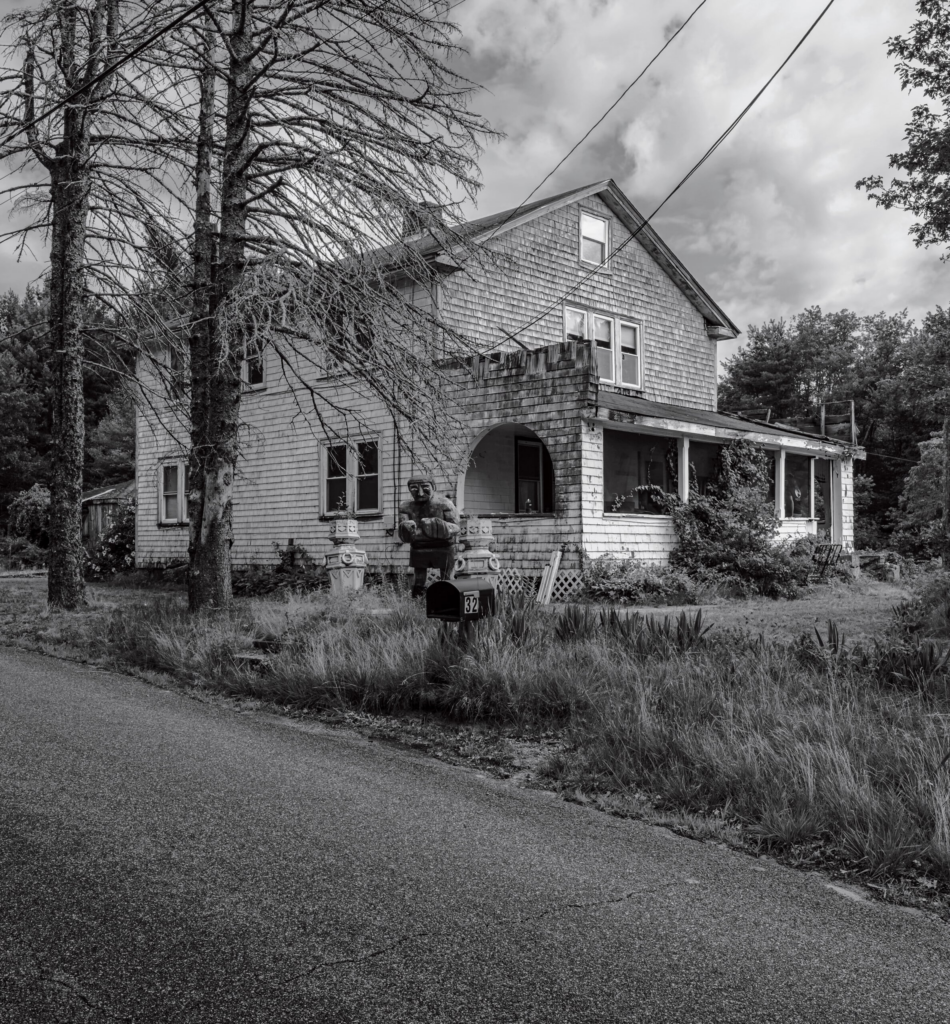
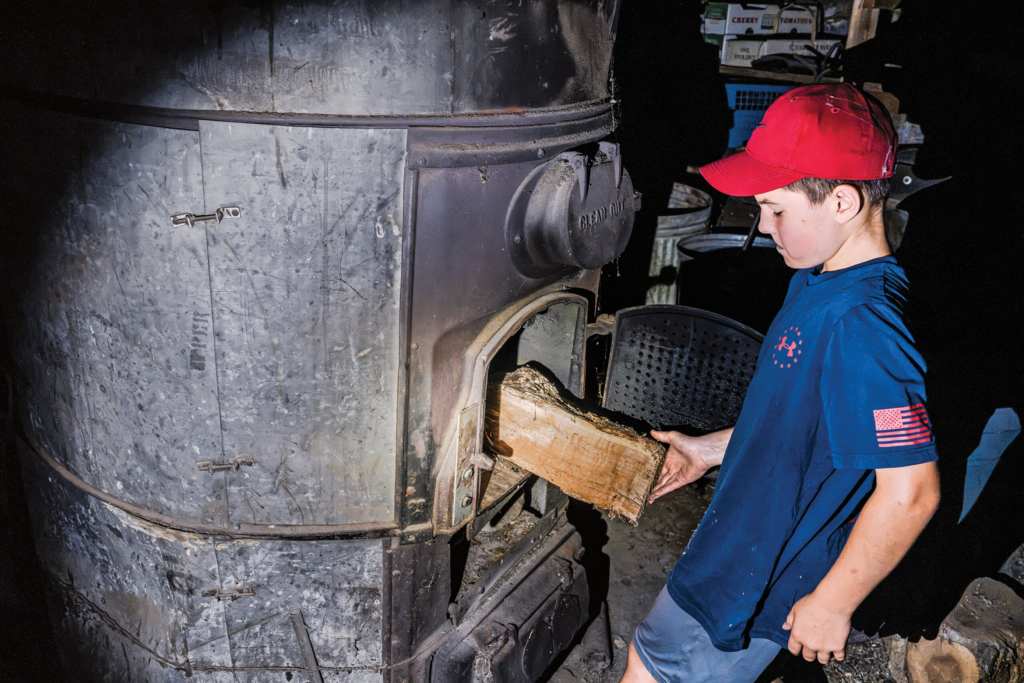
The Lemaires had owned 475 acres of woodlands and pasture in the 1960s. Joseph Lemaire, Jo-Ann’s father-in-law, bought the first piece of property in 1926 after his doctor told him he should move to the country to improve his health. When the first farmhouse burned prior to World War II, Joseph Lemaire built another with his own hands, assembling a monstrous wood-burning furnace in the basement hole then constructing the foundation around it. They were a family of woodcutters with a small dairy herd and lived largely off the land. They grew and canned their own vegetables and butchered beef and venison from the “meat pole” out back. Down through the shaded woods, fingerling brook trout still dart in the cold spring that supplies the house water.
The Lemaires became familiar critics of the reservoir project as the much-publicized controversy stretched over decades. They were named plaintiffs in one lawsuit arguing Big River residents should get their land back if the reservoir wasn’t being built, and allowed to keep what the state had paid them for it. (Joseph Lemaire had called the state’s original offering of $35,000 insulting. Many Big River landowners shared that sentiment and were forced to hire lawyers and surveyors to prove they owned more property than the state asserted. Joseph Lemaire eventually settled for $75,000.) They lost their lawsuit in 1991 when a judge ruled that despite the EPA vetoing the project, the state hadn’t abandoned the land and might use it as a water source someday.
In another group lawsuit, the Lemaires challenged the Water Resources Board’s plan for residents to pay substantially increased rents or face eviction. They lost again and paid the higher rent, despite early assurances that “original” landowners would never face rent increases. (Their first nominal monthly rent of $35 increased to more than $776 over the years, says Jo-Ann Lemaire.)
The Lemaires stayed put, their grievance handed down to the next generation like the family Bible. But their farmhouse, which stood like the Alamo for passersby familiar with their battle, is now falling apart.
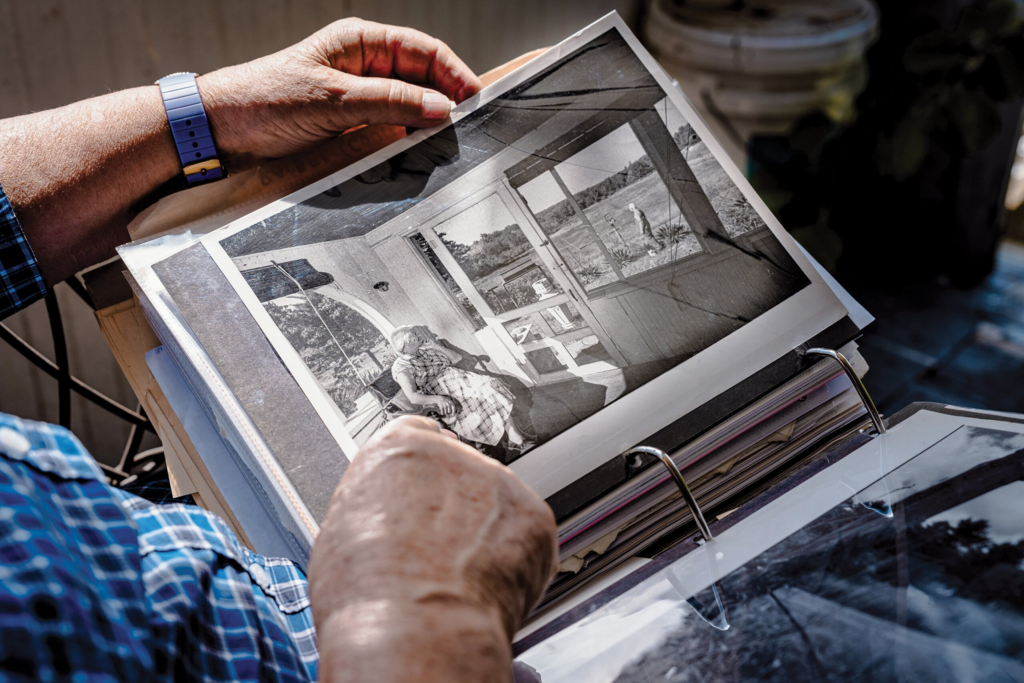
“Time is rotting it,” Jo-Ann says. “It always broke my heart to see it coming apart. But we were hand-to-mouth farmers and my husband’s [tree-cutting] business wasn’t big like the companies today. So we didn’t have the money to put into repairs and then when we did, it wasn’t ours. How do you put a lot of money into a house that you don’t own?
“We’re one of the last ones still here because my family is French and they’re stubborn. My father-in-law said, ‘They will never build a reservoir; I’ll stay here until I die.’ And he did. His son Frank [Jo-Ann’s late husband, who died in 2007] said the same words: ‘I will stay here until I die.’ And he did. He died upstairs. He was born here and he died here.”
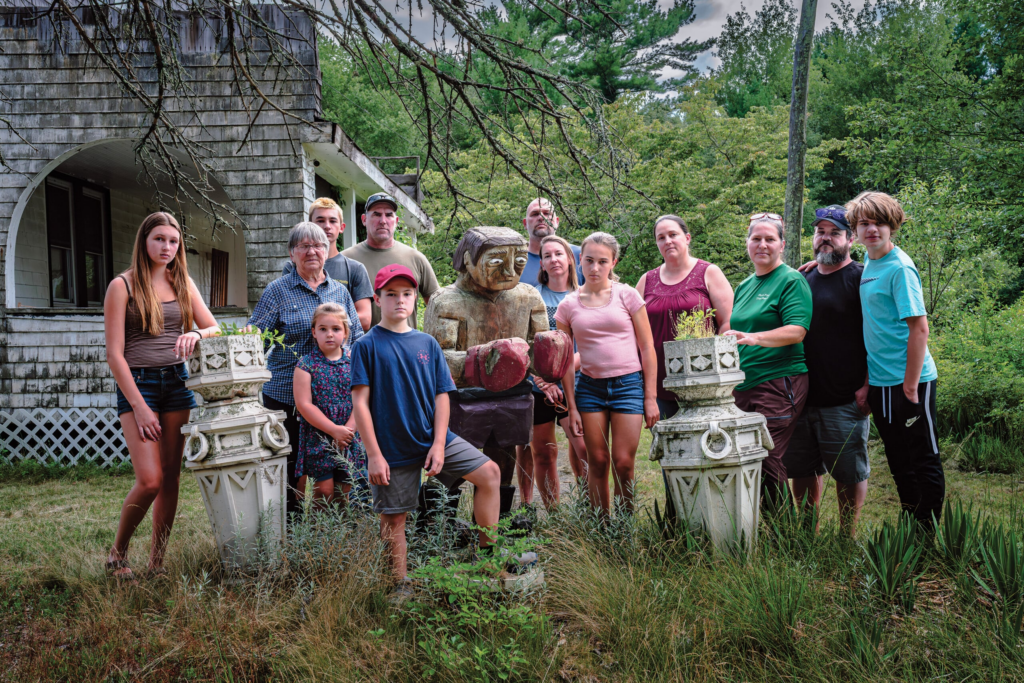
Her son, Frank, now in his mid-forties, wanted to honor his father’s stance and stay, too. But the reality is his three school-aged children need a better home; he’s bought a house in Foster. Jo-Ann has moved into a comfortable trailer across town.
“It’s been very emotional, especially for my son. He followed his father’s footsteps with the same attitude to stay. It’s sad that it’s not going to happen.”
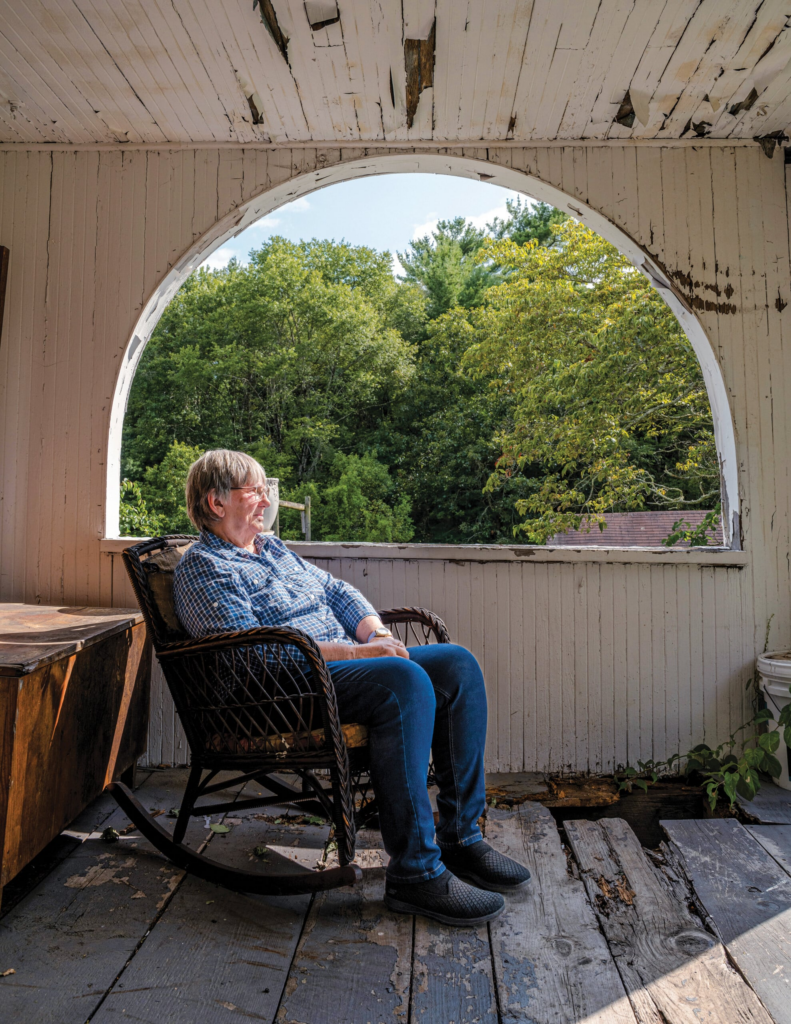
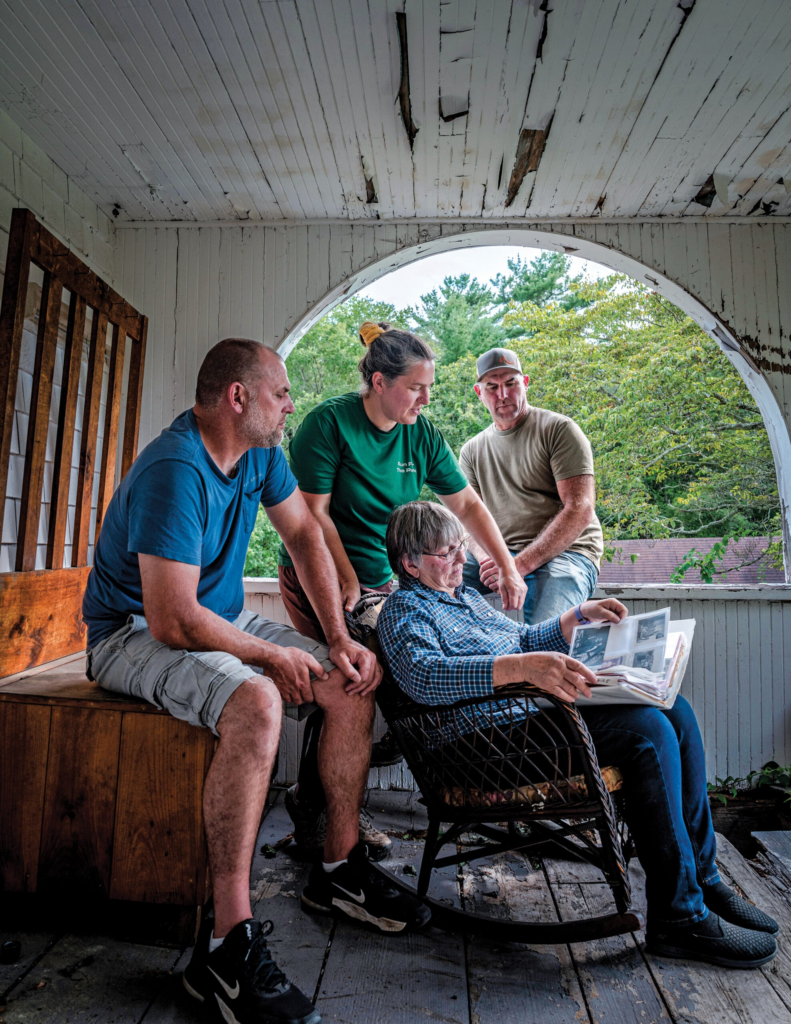
She looks up at the leaking roof over the collapsing porch and shakes her head. Her mother-in-law loved to sit out there on nice evenings and survey the lower field. But “once water got in there it just rotted everything. My son asked me, could I live here by myself? I said, ‘Yup, I can do it.’ But do I want to? No, because I don’t want the thing leaking in on me.”
Kevin Breene, whose father lost a 200-acre farm to the reservoir project, has worn many hats for his hometown, including West Greenwich Town Council president, state senator, long-time town administrator and since retiring last year, town historian. A descendent from one of the oldest families in town, this afternoon he’s also a tour guide.
He’s arranged to have Police Chief Richard Ramsay drive us through Big River with Breene riding shotgun while the new Town Administrator Greg Coutcher and myself sit in the backseat of the chief’s black SUV.
Looking down at a map, the Big River Management Area could resemble a curled woodchip that has fallen smack into the center of the state with one tag jutting northwest into Coventry. Most of the management area lies within West Greenwich, making up 21 percent of the town’s land area, which is why its future is a major concern to residents. The last completed section of Interstate 95 — which arrived around 1969, raising serious engineering concerns for a reservoir — cuts through Big River’s center.
Nooseneck Hill Road (also known as Route 3) once came as close to a village as rural West Greenwich offered. The reservoir condemnations changed the road forever. As the chief drives, Breene points back and forth across the road, his virtually unbroken narration a monologue to what was.
“Right here was the Pines Hotel . . . There was a nice house right there, the Wilkins’, they had an Esso station . . . Irving Matteson, he was a town clerk, was there . . . That’s the old driveway for Harold Greene’s house . . . The Water Board had an office there, where they collected rents . . . ”
My eye follows the pointing finger and I see dirt paths, former driveways, blocked by boulders and leading into woods. One conspicuous distinction: a stone chimney rising from the brush.
Town Administrator Coutcher was confident the General Assembly would approve DEM managing Big River, but whether the area becomes a protected state forest, “I’m not so sure.” Lawmakers face tremendous pressure to ease the state’s housing crisis, he says, and while Big River is designated open space “that can be easily undone through the Legislature. That’s the fear.”
Breene jumps in: “This is land that needs to be preserved because the people who owned it are never going to get it back. It’s just unconscionable to think that: ‘Oh well, you took it away from the people sixty years ago and are now probably not going to build a reservoir so we might as well sell it for housing or industrial development or something else.’”
Intrusions into Big River have happened, and been threatened, before.
In the 1980s the Water Resources Board faced criticism for selling huge quantities of sand and gravel from Big River to some contractors at a fraction of market prices, says Breene, an arrangement that rubbed salt in the wounds of many former landowners. State officials reasoned the contractors would be hauling material that had to be removed anyway as part of the reservoir project.
In 2005, despite Big River’s “open space” designation, Governor Don Carcieri proposed taking eighteen acres along I–95 for a new State Police headquarters. Environmental groups and the forty residents still living in Big River at the time vehemently objected. Carcieri backed off. (This summer the State Police held a ribbon cutting for its new Southern Public Safety Complex along I-95 adjacent to Big River land.)
About four years ago, Breene says he received a call from a lawmaker friend at the State House who was chairing a committee hearing on housing. Some building contractors are eyeing Big River, his friend warned.
“So, I go up,” recalls Breene, “and the guy [a builder] starts right in saying, ‘Well, you know the state’s got all this Big River land just sitting there. I don’t know why we can’t nibble around the edges.’”
When it was Breene’s turn to testify, “I said, the trouble with the nibbling is you won’t quit nibbling around the edges until you get to the middle.” Breene told the committee not one acre of Big River land could be used for any other purpose than water and warned of the avalanche of lawsuits if the state tried. “Nobody in my generation who was born here ever got a chance to build a house on the land. Now you’re going to say, ‘Well we don’t know if we’re ever going to build a reservoir — let’s build a whole lot of houses?’”
Breene remembers the night as a boy in the 1960s when his parents went off to an informational meeting about the reservoir. His father broke the news to him the next morning: “They’re taking it all,” he said. “This place will be sixty feet under water.”
The town’s comprehensive plan assumes the reservoir won’t ever be built. It bases that assumption on several points, including that the project relied on “inflated and erroneous state projections” regarding future population and water use; that the EPA has approved only one reservoir project in the Northeast since 1990 and that was to repair an existing dam in Pennsylvania; and that it is “highly unlikely” Rhode Island voters would approve funding for a project now estimated to cost, with inflation, $1.8 billion.
In recent years the Water Resources Board has emphasized using wells in Big River if ever a water need arises. But the board has been vague as to whether that means a reservoir is now out of the question, West Greenwich officials say, a position that contributes to local wariness.
“If anything, this comprehensive plan is saying, ‘This sixty-two-year-old issue has to be dealt with right now. Period. End of story,” Jonathan Stevens, an assistant planner in West Greenwich who drafted the plan, said in an interview. “You never built the reservoir. If you’re ever going to build it, can you confirm that, please?”
So, has the state ever declared the Big River reservoir dead? Karen Greco, a spokeswoman for the Division of Statewide Planning, responded to that question in an email: “While Big River Management Area remains designated as open space, RI [sic] statute allows the state to consider the area for future drinking water use, including a reservoir.”
Hearing what Greco had written, Breene shakes his head. “There has always been a disconnect with the Water Board,” he says inside the police chief’s SUV.
The Water Resources Board was created in 1967 with the sole mission to develop the Big River reservoir and other new public water sources. Earlier this year Hector Barreras, the board’s new acting staff director, visited West Greenwich.
At that meeting, says Coutcher, “we outright asked him” if a reservoir would ever be built. “We got the same response you got — they have to keep that idea open in their mind.”
Toward the end of the tour, I ask Breene if he found it hard to drive by all these places once inhabited by relatives and neighbors.
“It’s been breaking my heart since the day it was condemned,” he says.
On a September evening in 1971 about twenty members of the Community Baptist Church gathered for a prayer service and groundbreaking at the new location of their small house of worship, near the West Greenwich Town Hall. For eighty previous years the white church had stood in the hollow along Nooseneck Hill Road, but its fate was considered doomed when the state condemned the church property.
Before she left the groundbreaking, Gladys Irons, a local shop owner, scooped up a handful of the freshly turned soil. She had helped raise money for the church move. “I want to put it in a bottle,” she said. “We worked so hard for this day.”
Today the church building, itself a reservoir artifact, is becoming a new senior center and museum.
Kathy Swann, chair of the West Greenwich Preservation & Heritage Commission and whose family lost almost 900 acres to the reservoir, says the museum will have a Big River exhibit with archives and donated artifacts.
“One reason we see it as very important not to forget what Big River was is so we can do whatever we need to now to keep the land preserved. And you do that by bringing awareness to the whole story behind it.”
Swann, whose family settled here before the Revolutionary War, wrote the history of West Greenwich for the Arcadia Publishing book series “Images of America.” Big River might seem like any other state recreational area, but for those with a deep connection, “the injustice” of what happened in Big River remains “raw,” says Swann. “It can still tear people apart.”
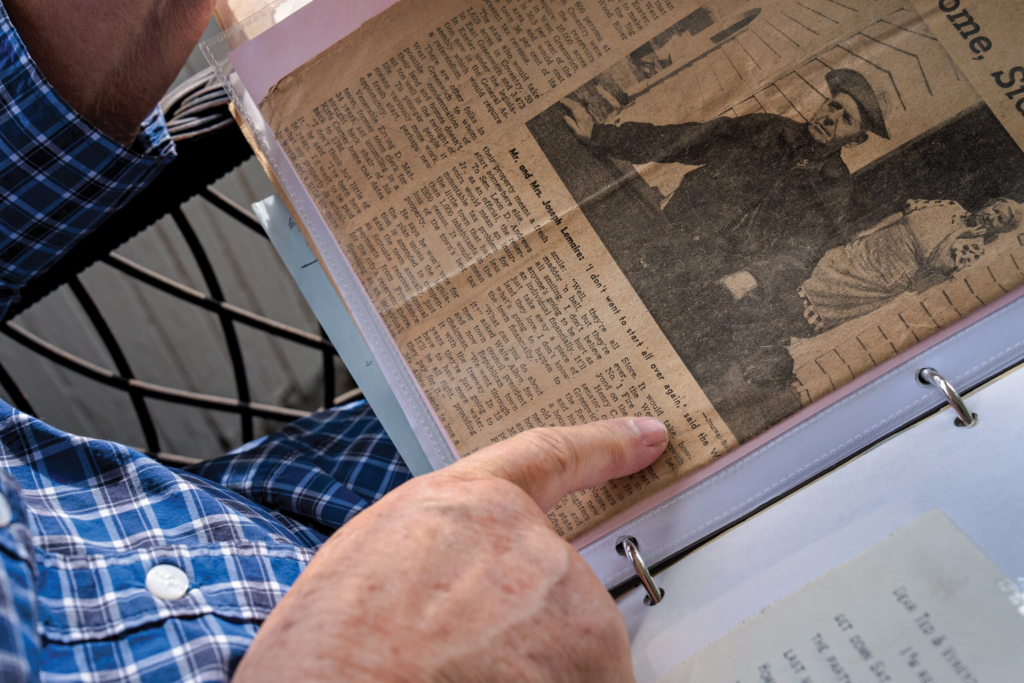
On a long table inside the town’s Louttit Library, Swann lays out some newspaper articles and other archives that capture the concern and bewilderment of sixty years ago when word came of a massive public works project about to change so many lives.
One 1966 newspaper clipping includes a photograph of her aunt, Ardis Barbour, a Coventry school teacher, signing in people gathered in the West Greenwich School who were demanding more clarity and a timeline from the state for when they would be evicted.
Swann lifts from a file the two, now fragile, notebook pages her aunt used that night. “When I first looked down at all these names — I’m going to start to tear up here — I saw the signatures of my ancestors. My grandfather, three of my uncles, my second cousin and her husband. These people had signed this paper because they were committed to doing what they could to save at least their possessions and find a place to live if they were going to lose their homes. It’s very emotional still.”
She plans to donate the sign-in pages to the museum’s Big River exhibit.
“I think the reason people are still so emotional about it is that it was never built,” Swann says, unlike the Scituate Reservoir. Constructed in the 1920s and by all accounts an engineering marvel, the Scituate reservoir submerged four villages and even led to some suicides. But its purpose was crucial and it still supplies most of the state’s water today.
In Scituate, “there’s still anger and hurt and strong sense of loss,” Swann says. “But there is also the acknowledgment of the vital importance it provides Rhode Island and with that there seems to be a peace about it that is not here.”
That old kitchen sink from the Lemaire family farmhouse on Congdon Mill Road is now in the loving care of Jo-Ann Lemaire’s daughter Barbara. She’s using it at a 200-year-old house she’s renovating in the Berkshires.
The porch rocking chair Jo-Ann’s mother-in-law sat in for years while looking out on her family’s land is headed for the town museum.