
Physical alterations will wall off portion of building where shooting took place ahead of spring semester
This story was originally published in Rhode Island Current, a publication partner of Ocean State Stories.
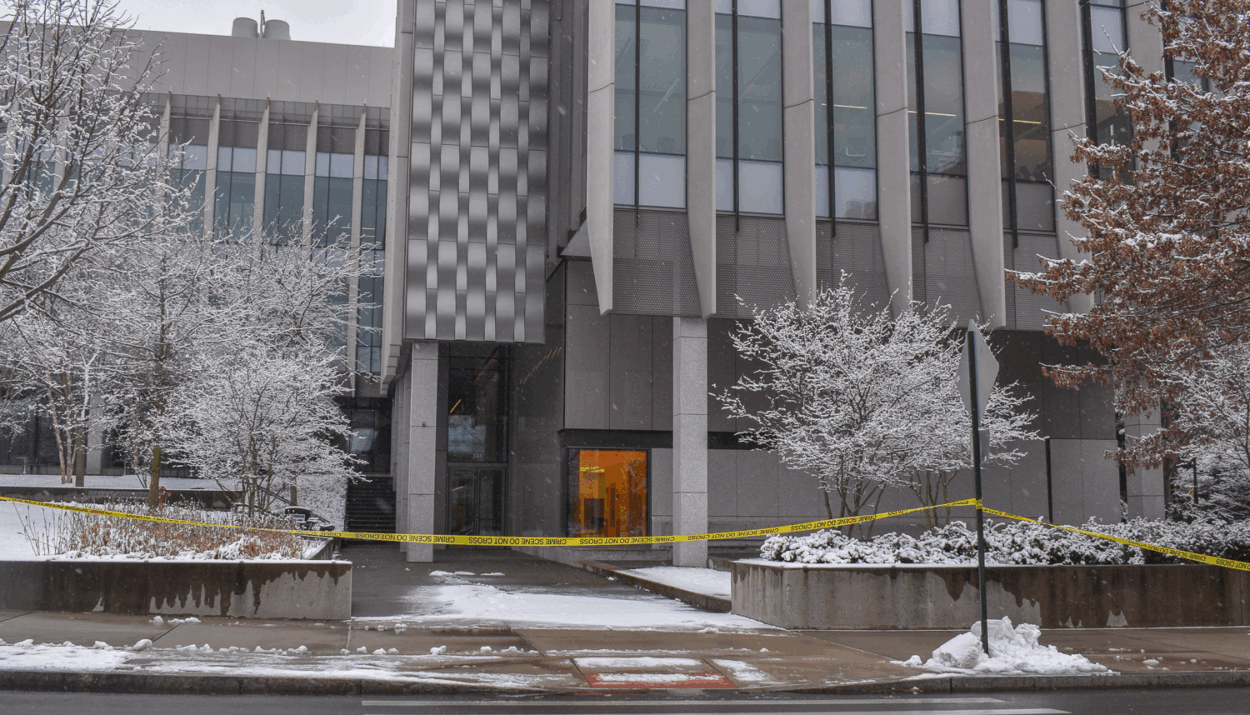
PROVIDENCE — The classroom in Brown University’s Barus & Holley building where a shooting killed two students and injured nine others will remain walled off and sealed away in the upcoming spring semester, school officials announced Monday.
“We know that resuming operations in Barus & Holley is particularly sensitive, and extensive work has taken place over the Winter Break to alter operations,” the school’s President Christina H. Paxson wrote in a letter Monday, adding that some of the spring semester’s engineering and physics classes will be relocated due to the closure of two lecture halls and eight classrooms in the building.
Paxson announced Monday that Brown is embarking on another initiative to process the campus’ collective trauma: Brown Ever True, a broad effort to strengthen the school’s mental health and community support offerings after the Dec. 13 shooting.
Paxson wrote that Brown Ever True will consolidate certain university resources, programming and services to assist students, staff and faculty in what she described as the “gradual process” of recovering from the traumatic event.
“The effects of Dec. 13 may surface in uncertain ways,” Paxson wrote. “And ‘recovery’ will at times seem elusive.”
The university’s new initiative will be “informed by medical and public health experts and scholars who specialize in trauma,” Paxson wrote, and it adopts efforts at other colleges that have experienced similar tragedies. Brown Ever True will incorporate ideas and feedback from across student organizations and Brown’s administrative units — including campus life, human resources, and the college’s School of Public Health — to “help ensure that the initiative reflects what our community needs to heal and move forward,” Paxson added.
Paxson’s announcement comes roughly two weeks before the start of the school’s spring semester. The winter session began on Dec. 20 and will end on Jan. 20, a day before the spring semester begins. Paxson wrote that the recovery initiative is meant to prepare the Brown community ahead of the new semester and to help them feel safe in their surroundings.
Over winter break, Paxson wrote, the school is offering remote options for students such as TimelyCare Teletherapy and BetterHelp, and she stressed that counseling services and staff will be readily available to students when they return to campus later this month.
The university has also widened its support for employees. Faculty and staff could access an additional dozen counseling sessions through the end of 2025 via the school’s Employee Assistance Program, and the university is working with its provider Spring Health for similar offerings in 2026.
Additional sessions and programming focusing on resiliency will be organized through the school’s diversity office and faculty in the Warren Alpert Medical School, with more details to arrive via the Brown Ever True website. The website currently includes an evolving, searchable list of on- and off-campus resources including 24/7 hotlines, counseling providers, chaplains, and mindfulness and meditation sessions.
Additionally, the university is planning a service for sometime in late January to remember Ella Cook and MukhammadAziz Umurzokov, the two students who were killed in the attack.
“While all the injured students now have been released from the hospital, they and so many others continue to navigate through very real challenges of coping with tragedy,” Paxson wrote.
As of Monday morning, all nine students who were hospitalized with gunshot wounds had been discharged, according to Rhode Island Hospital spokesperson Kelly Brennan.
New carpets and paint
A Dec. 23 letter from Brown’s Provost Francis J. Doyle III specified that the “sensitive areas” in the Barus & Holley building will remain inaccessible for now, as the school is being “mindful of the concerns that many community members have raised about continuing to use those spaces.”
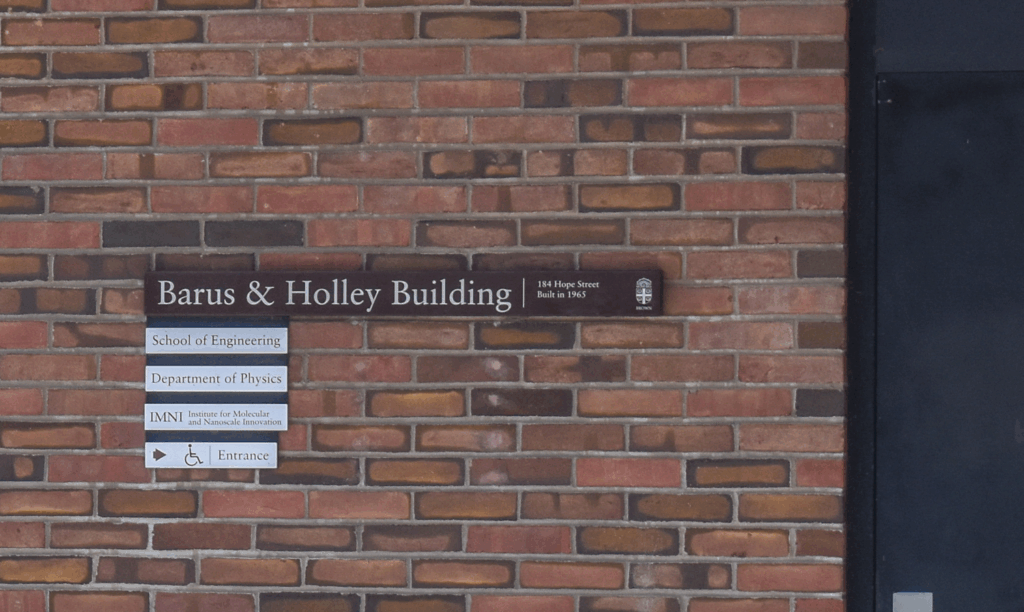
Among these spaces is lecture hall 166, where the shooting happened at the end of a review for an economics final. Barus & Holley mainly houses physics and engineering classes in addition to research activities.
Room 166 and 168 will be sealed off — secured behind new walls and emergency access doors, Doyle wrote — and have their basement level access cut off. Eight classrooms and the hallways, bathrooms and entrances adjacent or close to the shooting site will be inaccessible, Doyle wrote, and basically hidden from view.
“None of the closed areas will be visible to occupants and users of adjacent spaces, and no one will be able or allowed to enter those spaces,” Doyle wrote. “Nearby first-floor hallways that have a similar look and feel to the closed spaces will be updated with paint and carpet to change that look and feel.”
The school has not made any long-term decisions regarding the classrooms’ future, but Doyle noted that “the future of that area of the building, including consideration of appropriate memorialization, will be made over time in consultation and conversation with the Brown community.”
The Barus & Holley building comprises 117 laboratories, 150 offices, 15 classrooms, 29 laboratory classrooms and three lecture halls.
While “most of the building remains generally closed while this work is ongoing,” Paxson wrote Monday, a “limited” number of people who will need to work in the non-restricted areas of the Barus & Holley, plus other physics and engineering research spaces on campus, are expected to regain building access before spring semester.
Doyle noted in his letter that “[t]he remainder” of Barus & Holley plus the “vast majority of the School of Engineering and Department of Physics complex will reopen in time for the spring semester,” while the closed areas will remain “inaccessible to everyone.”
The non-restricted areas are expected to have their general access restored by Jan. 20, according to Paxson’s letter.
Steps to enhance campus security
Alongside the mental wellness initiative, Brown’s new interim top public safety official — the former Providence police chief Hugh T. Clements Jr. — announced on Dec. 30 a lineup of elevated public safety measures.
Under Clements’ leadership, the school is installing more security officers across academic buildings, residence halls, and events. The increased staffing will roll out in phases, Clements wrote, and will be “aligned with the ramp-up of operations and the increase of students, faculty and staff on campus as we transition from the lesser density of the holiday break and Winter Session, to the Jan. 6 end of the administrative Winter Break and resumption of medical school courses, to the start of the second semester on Jan. 21.”
Brown will deploy additional officers via “coordinated mutual aid from partner agencies and well-trained private security resources” to ensure coverage of campus areas as needed, Clements wrote.
“Buildings also will continue to require card access, a key or displaying a University ID for entry,” Clements wrote.
Also on Clements’ to-do list before the spring semester: Transitioning all buildings with key access to card access, expanding and installing cameras on blue light phones, and adding more surveillance cameras and panic buttons in select locations across campus.
Clements assumed his interim role on Dec. 22, when Brown announced it was temporarily suspending police chief Rodney Chatman amid a pair of investigations into the shooting commissioned by the school’s governing body, the Corporation of Brown University. Chatman’s leave was preceded by a no-confidence vote in Chatman from the school’s police union in October 2025, the Brown Daily Herald reported then.
Clements promised a change in public perception during his tenure: “[Y]ou will see a public safety leadership team that listens and acts,” Clements wrote. “Over the coming weeks, I will be active across campus listening, learning and working alongside colleagues to ensure that our approach is responsive, thoughtful and grounded in care for the people of this community and the values of Brown.”
“Our goal is not to create a campus defined by fear, but one defined by preparedness, vigilance and mutual care,” Clements added.
The corporation commissioned two reviews from outside firms: One examining what happened leading up to the shooting and its aftermath and the school’s response and a more thorough assessment of Brown’s entire security systems and policies. Both are ongoing, according to Paxson’s most recent letter.