
Innovative Women & Infants’ program solves transportation issues, aims to reduce post-partum complications
“We know that structural barriers limit access to care and can have a negative impact on perinatal outcomes.”
PROVIDENCE — Recently rated by Newsweek as one of the best centers in the U.S. for excellence in maternity care, Women & Infants Hospital recently extended its services to new mothers who gave birth there but face challenges in returning for post-partum care.
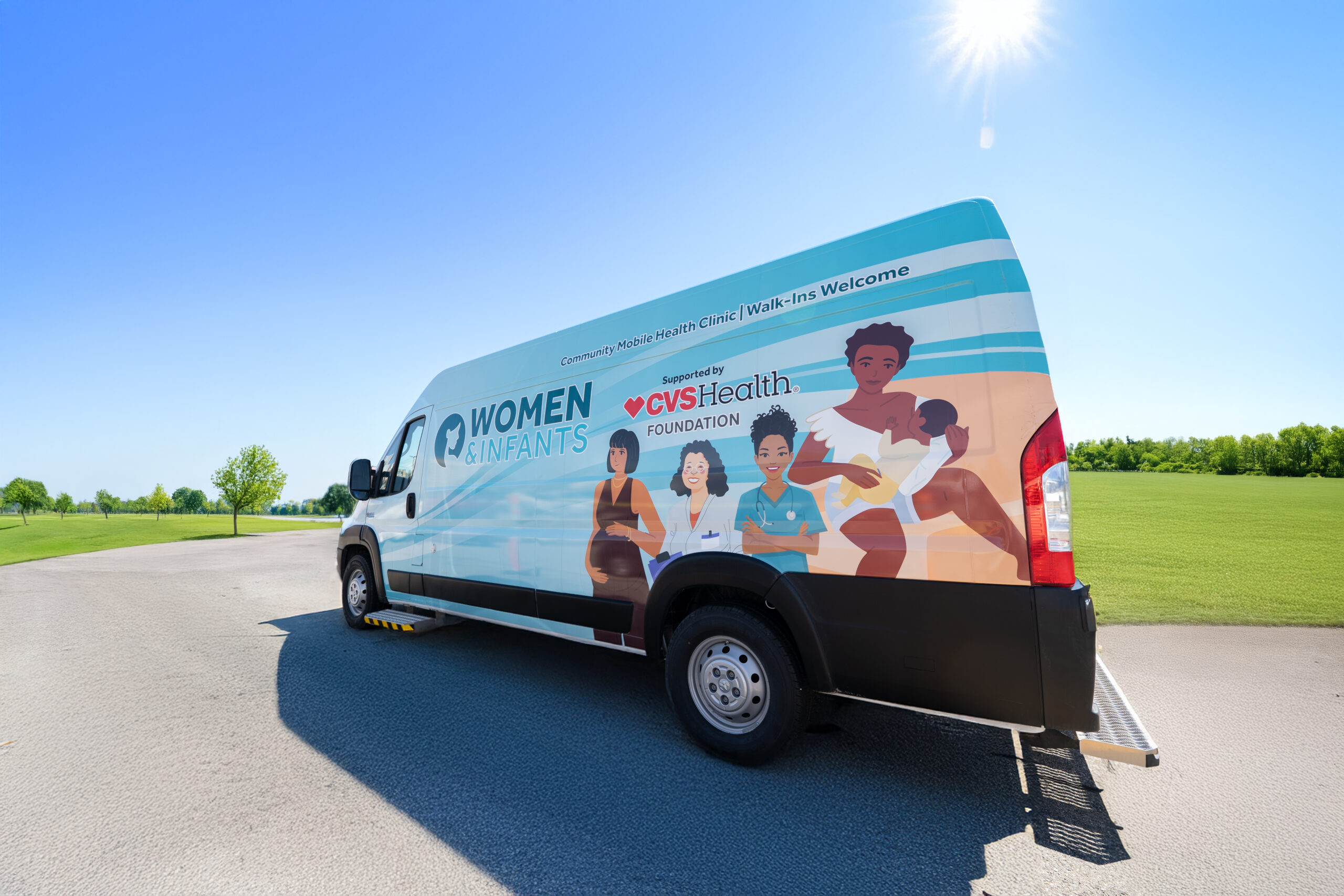
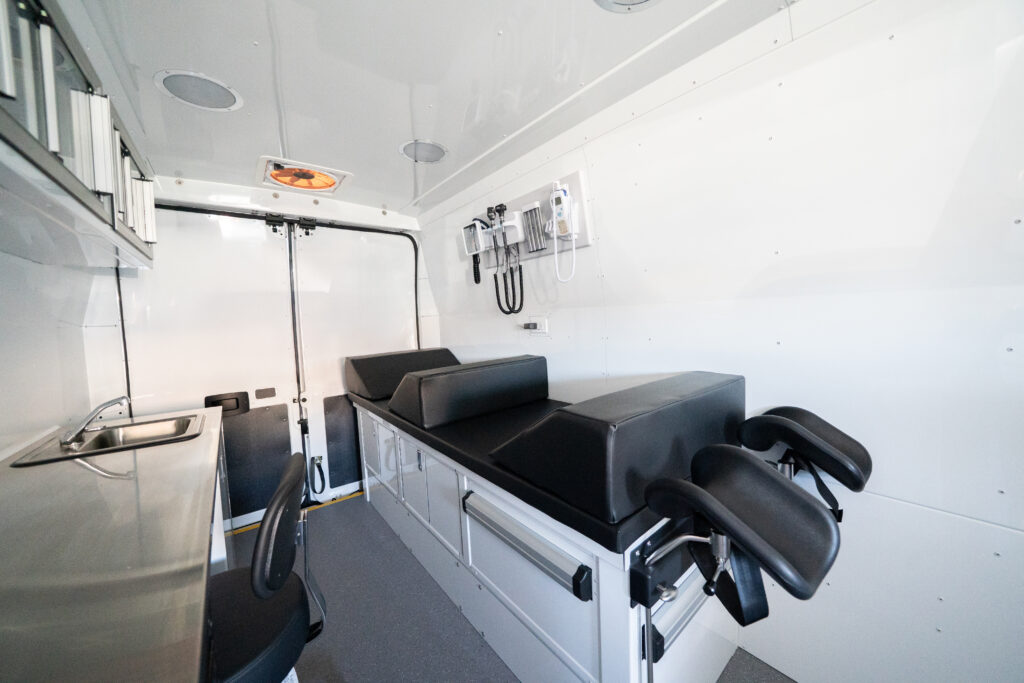
The hospital’s new Community Mobile Health Clinic treats women who have no cars or money for a ride service, no one to watch their newborns, or who face other obstacles in leaving home.
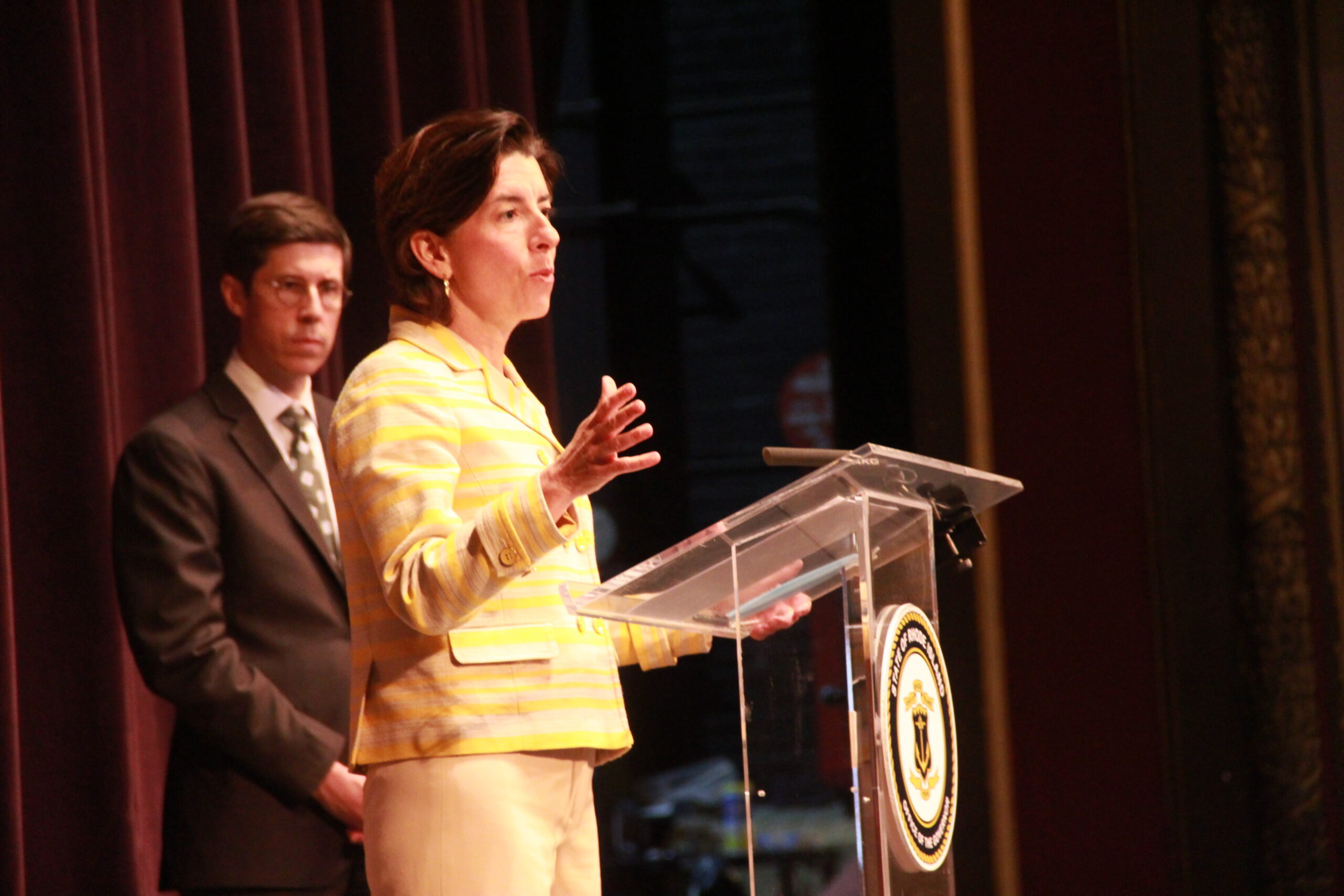
“We know that structural barriers limit access to care and can have a negative impact on perinatal outcomes,” Dr. Methodius Tuuli, the hospital’s Chief of Obstetrics and Gynecology,” said when the ceremonial ribbon was cut in October. “The van allows us to accelerate progress towards improved perinatal health in Rhode Island with the simple act of removing transportation as a barrier to receiving postpartum care.”
In a recent interview with Ocean State Stories, Women & Infants family nurse practitioner Danielle Simmons, who oversees the mobile clinic after first recommending the hospital put it on the road, described its origins.
“We noticed definite gaps in care for our postpartum patients who had delivered at Women & Infants,” Simmons said. “There was a period of time — we call it the fourth trimester, which is really the first six weeks postpartum when patients were getting discharged from the hospital but were not following up with their providers until six weeks later at the post-partum visit. There were a lot of healthcare changes that were occurring — blood pressure issues, diabetes issues, wound problems that were arising.”
Staff “realized we needed to give better care to our moms and not just have them focus on baby, which is what they’re doing,” Simmons continued. “So when I had talked to Dr. Tuuli, I told him I remembered being a student nurse here and seeing an RV that used to go out into the communities and provide visits. And I said, ‘that would be a great opportunity to catch these patients that might have transportation difficulties or mobility issues and providing care to the homes or in the area.’ And then that’s when Dr. Tuuli approached our friends at CVS Foundation, and they were able to provide us with a $1 million grant.”
The clinic serves mothers who experience maternal morbidity, “which describes any short- or long-term health problems that result from being pregnant and giving birth,” according to the National Institutes of Health (NIH).
NIH states that maternal morbidity “includes a range of different health conditions. Some of them start during pregnancy and last only a short time, while others do not develop until years after a pregnancy and continue throughout the woman’s life.”
Common examples listed by NIH include: “cardiovascular problems, such as heart disease and blood vessel problems; diabetes; high blood pressure; infections, especially from cesarean section; blood clots; bleeding (sometimes called hemorrhage); anemia (low iron in the blood); nausea and vomiting (sometimes called morning sickness) and hyperemesis gravidarum (severe morning sickness); [and] depression and anxiety.”
Statistics generated by the Rhode Island Department of Health on “severe maternal morbidity,” defined as outcomes that can have significant health consequences in the short or long term, indicate that women of color are more frequently affected than white women: The severe rate per 10,000 deliveries in a Rhode Island hospital in the 2019-to-2023 period for Black women was 115.8; for Hispanic women, 114.2; and for white women, 69.8.
Sorted geographically, the severe rate per 10,000 deliveries during the same period was 105.6 in the core cities of Providence, Pawtucket, Central Falls and Woonsocket. The rate for the rest of the state was 76.8.
Prominent individuals in the medical field contacted by Ocean State Stories for their assessment of the clinic responded with praise.
“I’m glad to hear that Women & Infants’ Community Mobile Health Clinic has hit the road in the community, staffed by a nurse practitioner and a Certified Community Health worker (CHW) who links patients with critical services,” Elizabeth Burke Bryant, Professor of the Practice of Health Services, Policy and Practice at Brown University School of Public Health’s Hassenfeld Child Health Innovation Institute, wrote in an email. “The Community Mobile Health Clinic brings timely postpartum screenings, hypertension checks, and mental health support directly to patients where they are, and helps to remove transportation as a barrier to care.”
“The Women and Infants van can help reduce barriers to postpartum health care and family planning by bringing health care to the people that need it rather than requiring that people get to a health care facility,” Michaela Carroll, Health Policy Associate, Rhode Island KIDS COUNT, wrote. “It is important that a Community Health Worker (CHW) is a part of the team, since CHWs are an integral part of community care. It is our hope that this new resource will help address barriers to contraceptive counseling and services, management of gestational hypertension, and breastfeeding support and improve outcomes for women and babies.”
Said Dr. Elizabeth B. Lange, a pediatrician and past president of the Rhode Island Medical Society: “Nationwide, data shows that mobile vans bringing healthcare directly to neighborhoods improves health access, outcomes and equity. Rhode Island is quite lucky to have two such mobile healthcare services – the mental health mobile crisis unit and the Women and Infants Community Health Van. With sustained investments thru state and insurance funding, the mobile vans add an important and often overlooked part of Rhode Island’s healthcare delivery system.”
“I’ve heard only a little about it, but it’s part of my dream of a health care system where we include every single person, and reach out to those with specific risks,” said Dr. Michael Fine, family physician, writer, and head of the state Health Department from 2011 t0 2015. “Imagine them going out to every single new mom, or having a nurse visit every single new mom once a day for two weeks and then twice a week for three to six months.”
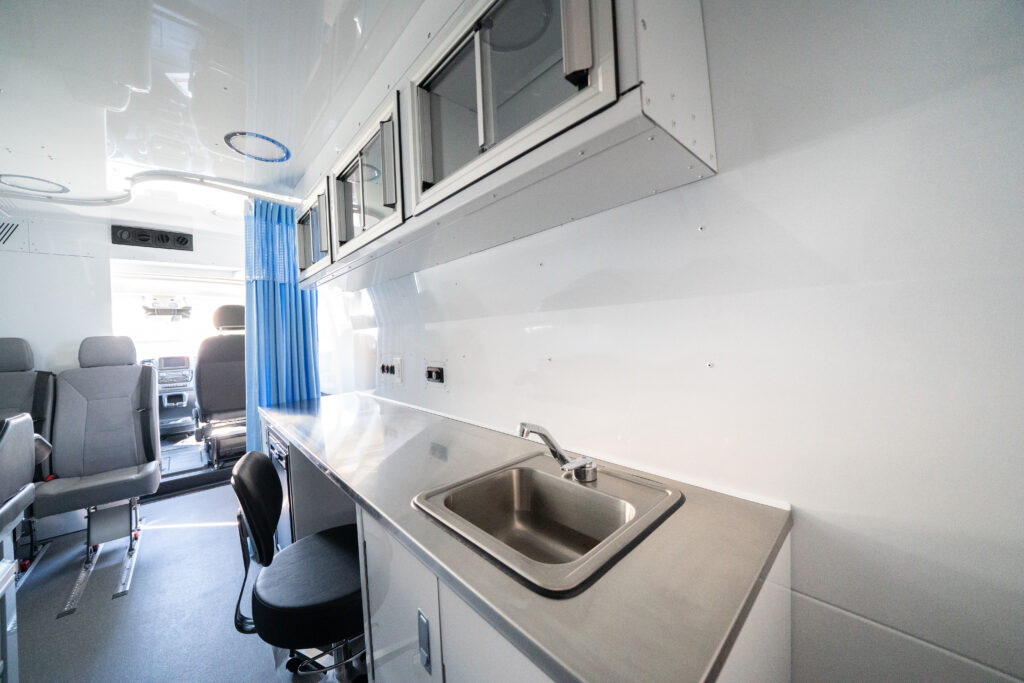
In her interview, Simmons highlighted the importance of monitoring blood pressure, which, when dangerously elevated, can have severe health consequences.
“We provide blood pressure cuffs to moms that don’t have them. And then we ask them to check their blood pressure once a day at home and log it into our system here. So we have access to their blood pressures Monday through Friday. If we see anything suspicious, whether it be too high, too low, we call them, we check in, we make sure they’re doing okay and adjust any blood pressure medications that are needed.
“We also recognize that there are other things within the body that can be affecting other areas. So you’re not sleeping well. How is that affecting your blood pressure? You’re getting different foods from a variety of different people bringing food over, but if it’s very high in sodium, that’s not going or help your blood pressure. Or if food is high in sugar, that’s not going to help your diabetes.
“Also, are you getting enough support at home? That’s a huge factor.”
Editor’s note: Elizabeth Burke Bryant and Dr. Elizabeth B. Lange are members of the Ocean State Stories Advisory Board.