
Rhode Island families are going without while local farms fight to survive. Here’s where the two crises meet.
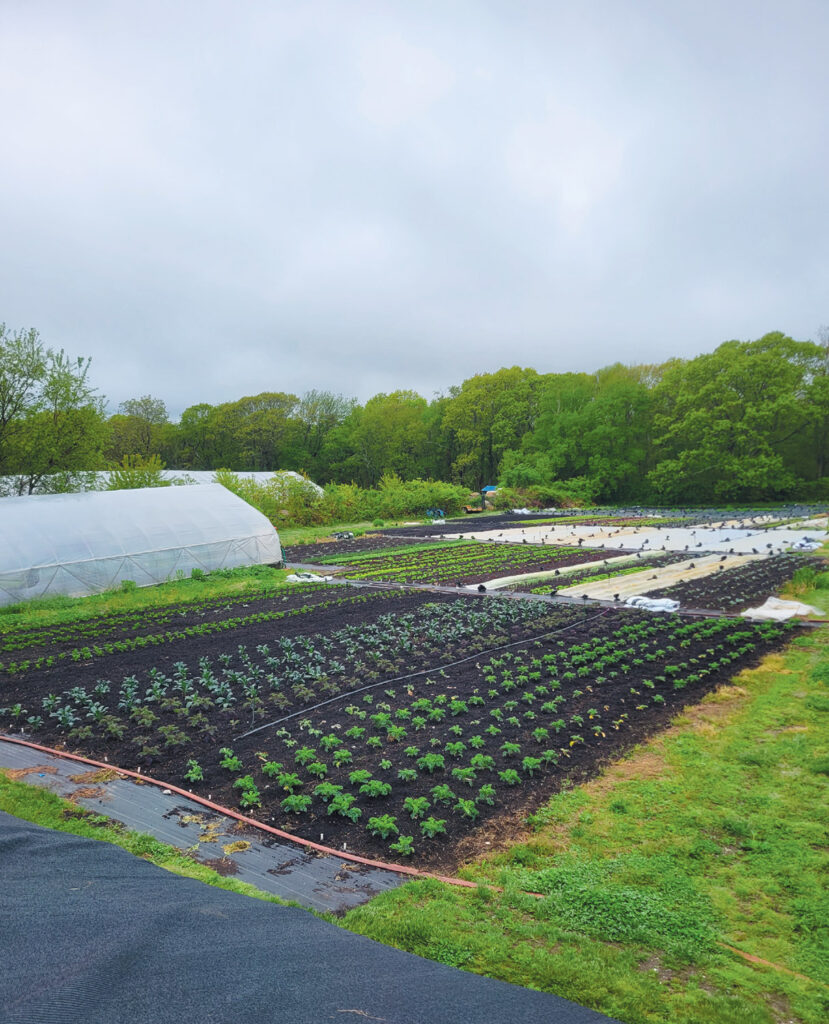
NORTH KINGSTOWN — On a Monday morning in North Kingstown, a food bank van pulls up to Luckyfoot Ranch and loads whatever perishable produce the farm didn’t sell over the weekend. Tomatoes, lettuce, maybe some carrots. It is a small gesture in the face of an enormous problem, but for farmer Matthew Thibodeau, it is nonnegotiable.
“Anything that’s worth keeping all goes to somebody,” Thibodeau said.
That ‘somebody’ is increasingly difficult to count. One in three Rhode Island households is now food insecure, a rate that has climbed 37.5% since 2020, according to the RI Life Index survey conducted by Blue Cross & Blue Shield of Rhode Island and Brown University’s School of Public Health. When the federal government shut down last fall and Supplemental Nutrition Assistance Program benefits ground to a halt, more than 102,000 Rhode Islanders sought emergency food assistance from the Rhode Island Community Food Bank’s statewide network, the highest number the organization has ever recorded.
The state’s hunger crisis is not happening in a vacuum. It is colliding with a parallel emergency among the very farmers, markets and nonprofit organizations best positioned to help solve it. Grocery prices nationwide have climbed roughly 29% since the start of the pandemic, according to Bureau of Labor Statistics data. Federal nutrition programs face unprecedented cuts. And Rhode Island’s local food producers, already struggling to turn a profit on some of the most expensive farmland in the country, are watching their customer bases shrink.
The question is no longer whether the food system is broken. The question is whether Rhode Islanders can piece together an alternative before the cracks widen beyond repair.
The numbers behind the need
The data is bleak and growing bleaker. Food insecurity disproportionately hits communities of color in Rhode Island, with 55% of Latino households and 47% of Black households reporting food insecurity compared to 33% of white households, according to the RI Life Index. Low-income Rhode Islanders miss an estimated 42 million meals per year.
The Rhode Island Community Food Bank and its 137 member agencies averaged 84,400 individuals served per month in 2024, a 9% increase over the prior year. That figure spiked dramatically during the November 2025 government shutdown, when $29 million in federal food assistance failed to arrive on schedule for approximately 145,000 SNAP recipients statewide.
“We cannot fundraise or run-a-food-bank our way out of this,” Rhode Island Community Food Bank CEO Melissa Cherney said when the organization released its 2025 hunger report in January. “Hunger in Rhode Island is too big a problem for any one organization to solve.”
The landscape is about to get harder. The federal reconciliation law enacted in July 2025 cut $187 billion from SNAP over the next decade, the largest reduction in the program’s history. The law immediately halved federal funding for SNAP administration and will, for the first time, require most states to pay 5 to 15% of benefit costs. Rhode Island’s new SNAP costs could ultimately add more than $60 million to the state’s existing $300 million structural deficit, according to state Budget Director Brian Daniels. Another 2,300 refugees and legal asylum seekers in Rhode Island were already cut off from food assistance in February due to changes in immigration status.
Gov. Dan McKee’s proposed fiscal year 2027 budget would double general fund allocations to the food bank from $1 million to $2 million. But advocates say the charitable food system cannot substitute for federal programs that serve tens of thousands.
At the farmer’s market, a lifeline with limits
For the past 17 years, Farm Fresh Rhode Island has been running a program called Bonus Bucks that serves as a parallel currency for SNAP recipients at farmers’ markets statewide. The mechanics are simple. A shopper walks up to a market manager’s table, swipes an EBT card for whatever amount they choose, and receives tokens equivalent to that amount for general food purchases. Then they receive a matching amount in Bonus Bucks restricted to fresh fruits, vegetables and herbs.
“Functionally, they walk away with $20 to shop at the farmer’s market,” said Thea Upham, senior director of operations at Farm Fresh Rhode Island. “Those tokens never expire. And since we manage the statewide system, someone could swipe their card in Newport and then use their benefits in Providence.”
What many shoppers do not realize is that the matching dollars do not come from the state or from the federal SNAP program. Farm Fresh raises those funds through competitive grants, primarily from the USDA’s Gus Schumacher Nutrition Incentive Program (GusNIP).
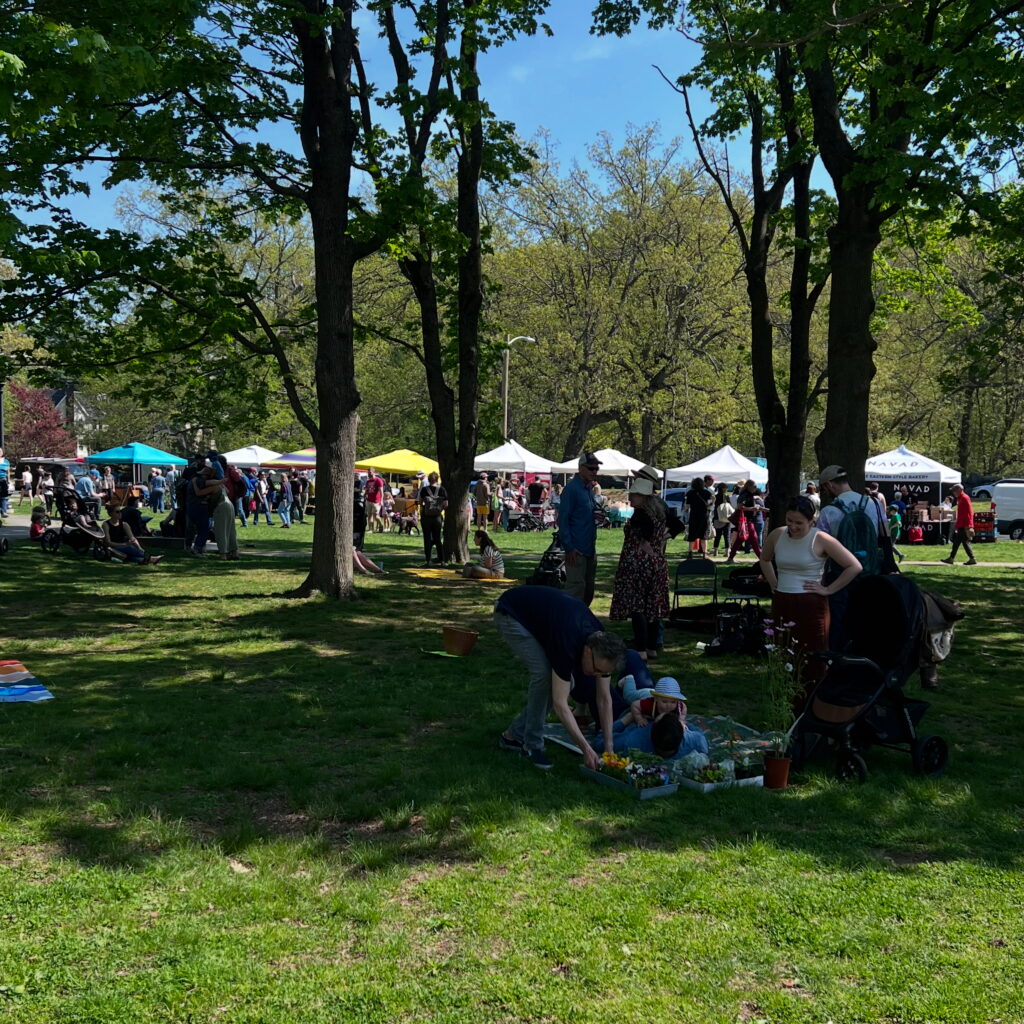
In 2025, the program issued $226,743 in Bonus Bucks and processed another $226,743 in SNAP spending at 17 market locations across the state, generating a combined economic impact of $453,486. The Hope Street Farmers’ Market in Providence led all locations with $108,784 in total activity. The Armory Market followed at $87,430. South Kingstown’s market, the highest-producing site in Washington County, accounted for $18,816.
The program’s data shows the multiplier effect is real. Every dollar invested in Bonus Bucks generates up to $2.40 in direct economic growth in Rhode Island’s local food economy, according to Farm Fresh Rhode Island. Over $2 million in Bonus Bucks has been issued statewide since 2009. The program now reaches 28 farmers’ markets, CSAs, farmstands and delivery programs, supporting 108 farms and 117 local food producers annually.
But Upham is clear-eyed about the program’s reach. The estimated number of unique SNAP users who tap into Bonus Bucks statewide each year is somewhere between 3,000 and 4,000, a fraction of the 145,000 Rhode Islanders enrolled in SNAP.
“We still know that farmers’ markets aren’t the be-all, end-all or the solution,” Upham said. “There’s no silver bullet to solve hunger or nutrition insecurity.”
The program’s future is not guaranteed. The GusNIP grant is competitive, and its funding has not kept pace with demand. Farm Fresh does not yet know if it will secure a new award this year, as the federal application has not even been released. To stabilize funding, the organization is now backing House Bill 7258, a joint resolution that would allocate $200,000 to sustain the SNAP match. Sponsored by Rep. Susan Donovan of Bristol and nine co-sponsors, the measure was introduced in January and referred to the House Finance Committee, where it is currently pending. A similar bill died in committee last year after being held for further study.
Farmers feeling the squeeze
Rhode Island’s roughly 1,054 farms operate on just 59,076 acres, or about 10% of the state’s land. It ranks 49th in the nation for agricultural exports. The state imports the vast majority of the produce its residents consume. Farmland here is among the most expensive in the country, and the American Farmland Trust estimates Rhode Island could lose an additional 8,100 acres to development by 2040.
For the farmers trying to make it work, the math is punishing.
Ben Coerper, co-owner of Wild Harmony Farm, saw his gross revenue decline from $460,000 in 2024 to $415,000 in 2025 after years of 15 to 20% annual growth. He attributes the drop to macroeconomic forces that are squeezing his customers.
“I have talked to a number of people in different parts of the country and everyone that’s doing what we’re doing is in the same boat,” Coerper said. “Everything” has gone up on the supply side, he added, from feed to materials.
Coerper, who got into farming after long-term food-related health issues, now sells pasture-raised pork and beef primarily through an online store and delivers to about 400 families across the state each year. He accepts SNAP but acknowledges that few recipients use it because the products remain expensive relative to conventional options.
His survival strategy is to narrow his focus. In 2022, he stopped raising chickens himself and found a partner farm to do it to his specifications, a move he calls the best decision the farm ever made. He is now considering the same approach with pigs. He recently lost a pig barn in a blizzard, tore his calf muscle and is scrambling to rebuild before 25 sows give birth.
“There’s no more important investment than your health,” Coerper said when asked what he would tell families considering the switch to locally raised food. “It is more expensive upfront, but it’s going to save you so much time and so much money from not having to deal with other things that come about.”
For produce, Matthew Thibodeau at Luckyfoot Ranch grows a wide range of vegetables across nine greenhouses and open fields. He sells primarily direct to consumers through a farm stand and three weekly farmers’ markets during the summer season, plus a winter market in Providence. About a quarter of his sales go to local restaurants.
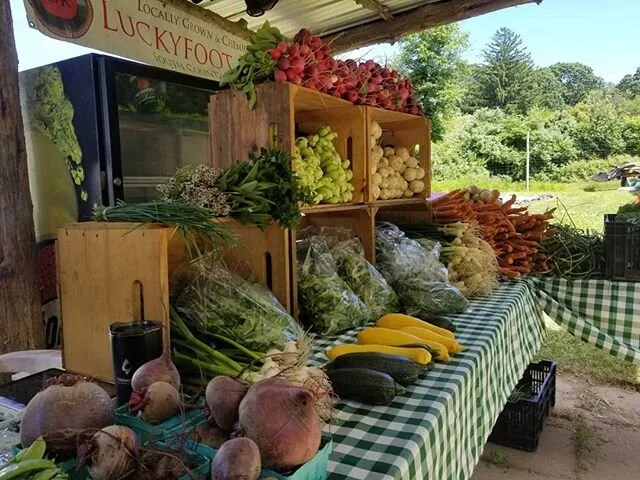
Thibodeau runs an unconventional CSA where members load a debit-style card in $100 increments and receive up to 15% extra value on their balance. Unlike traditional CSAs that deliver a preset box each week, his system lets customers buy what they want when they want it, with no expiration on remaining funds.
“You’re definitely getting quality because when things are produced locally, they’re not grown all the way across the country,” Thibodeau said. He pointed to tomatoes as the most striking example. Store-bought tomatoes are often picked green, force-ripened and shipped for days.
“A lot of folks don’t like tomatoes because they’re really hard and don’t really taste like a whole lot – because they’re not really what a tomato should be.”
The bees, the ecosystem and the bigger picture
The interconnection between pollinators and the local food supply is another pressure point that rarely makes headlines but has serious consequences.
Thomas Chapman, vice president of the Rhode Island Beekeepers Association and owner of Chapman’s Homestead in West Greenwich, keeps hives across Rhode Island and Connecticut (Cedar Lane Apiaries in Sterling) and sells raw, unfiltered honey wholesale to local markets including Roch’s Market, West Greenwich Grocery and seasonal farm stands. He also sells equipment and bees to hobbyist beekeepers, a population he considers essential to the state’s agricultural future.
“Every hobbyist beekeeper out there is helping out,” Chapman said. “Even if we’re not doing it specifically to help out farms, every hobbyist out there that has bees in his backyard is helping out a neighboring farm somehow.”
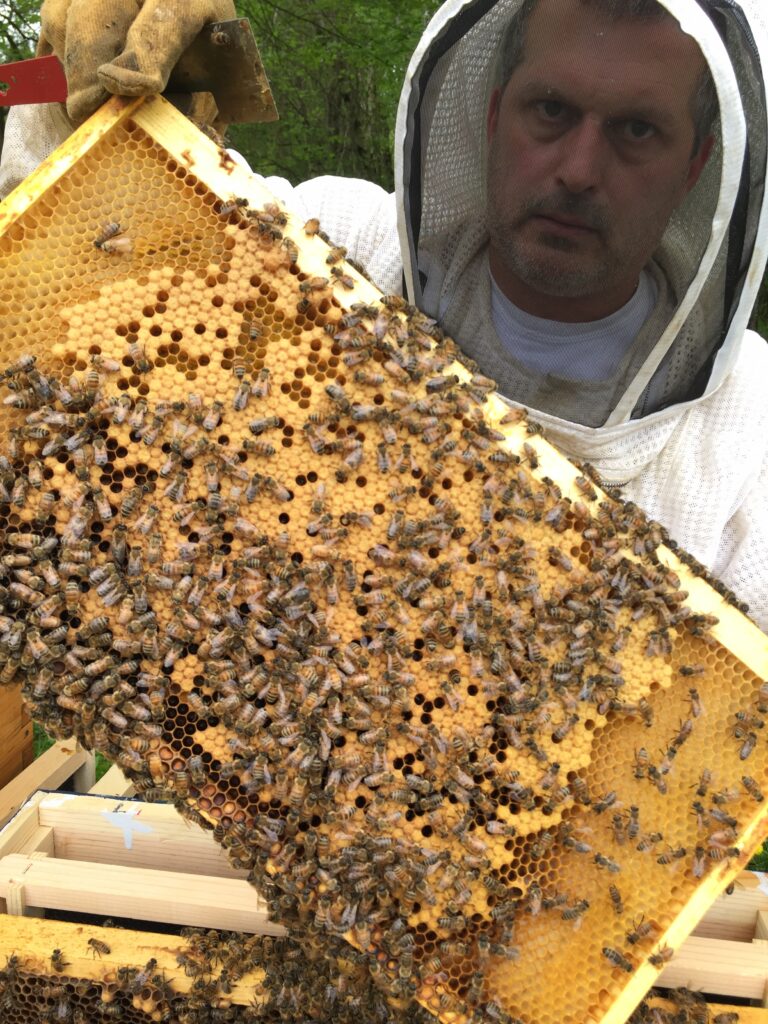
Rhode Island’s farms are generally too small to afford migratory pollination services, Chapman explained, which means they depend on the cumulative effect of backyard beekeepers whose honeybees forage within a roughly three-mile radius. But hobbyists are struggling to keep colonies alive due to the varroa mite, pesticide exposure, habitat loss and increasingly unpredictable New England winters.
Chapman also raised a consumer-protection issue that is directly connected to food affordability. His locally produced honey sells for $16 per pound at retail. Next to it on the shelf sits imported honey labeled organic and priced at $7.
“There’s no such thing as organic honey because you can be an organic beekeeper, but your bees are flying a three-mile radius,” Chapman said. “There’s no way to control where they land.” Imported honey often faces minimal testing or regulation, he said, and may contain additives. The price disparity undercuts local producers and misleads consumers who are trying to make informed choices.
Where Rhode Islanders can find help
For Rhode Islanders navigating the current landscape, several resources exist to connect them with fresh, affordable and locally produced food.
Farm Fresh Rhode Island operates the Bonus Bucks SNAP-match program at 28 locations statewide. Shoppers using EBT cards receive a dollar-for-dollar match in tokens redeemable for fresh produce. The program also administers the Fresh Bucks token system at farmers’ markets across the state. Visit farmfreshri.org for a full list of participating markets and schedules.
The Senior Farmers Market Nutrition Program, administered through the Rhode Island Department of Environmental Management, provides eligible low-income seniors with $50 per year on a scannable card redeemable at enrolled farms and farm stands statewide. Seniors can check availability through their local senior center.
The WIC Farmers Market Nutrition Program, run through the Rhode Island Department of Health, offers seasonal funding for eligible WIC families to spend specifically at farmers’ markets.
Hope Street Farmers Market at Lippitt Park runs every Saturday from May through October, rain or shine, with 55 vendors offering produce, meats, baked goods, beverages and prepared foods. Farm Fresh Rhode Island operates a Bonus Bucks table on site. The market is vendor-run and one of the oldest in the state.
Luckyfoot Ranch in North Kingstown offers a farm stand, a flexible debit-card CSA program with up to 15% added value and seasonal appearances at three weekly farmers markets. The farm donates leftover perishables to a local food bank every Monday.
Wild Harmony Farm sells pasture-raised pork, beef and chicken through its online store and delivers across most of the state. The farm accepts SNAP and offers bulk pricing on quarter cows, half pigs and large ground beef boxes for families looking to maximize value.
The Rhode Island Community Food Bank operates a network of 137 member agencies that provide pantry staples, fresh produce, meats, dairy and culturally relevant foods. Visit rifoodbank.org for locations and hours.
The Rhode Island Department of Human Services administers SNAP benefits. Eligible residents can apply online or in person. Benefits are loaded monthly onto an EBT card accepted at more than 900 retail locations statewide, including farmers’ markets.
Facing Uncertainty
Thea Upham at Farm Fresh Rhode Island frames the crisis in systems terms. The food bank alleviates hunger, she said, but the root cause of hunger is poverty. Farmers’ markets and programs like Bonus Bucks try to work upstream, putting purchasing power in the hands of low-income families while directing dollars into the pockets of local growers.
“How do we empower people to be able to shop for what they want at the farmer’s market, have dollars that they can use to make their own choices so that they also, in some ways, sometimes those dollars go further because they can buy what they actually know they’re going to eat?” Upham said.
The question sits at the intersection of policy, agriculture and survival. And in a state where farmland is disappearing, federal support is contracting and one in three families already does not know where their next meal is coming from, the answer cannot wait.