The state’s chronic absenteeism numbers are improving, screens are getting a second look, and summer is no longer lost to learning. Here’s where the recovery is actually working.
CENTRAL FALLS — The hallways at Segue Institute for Learning in Central Falls were nearly empty for weeks after the school year ended. But on July 6, more than 60 students returned, sitting through reading blocks before lunch and heading out to the playground for the afternoon. For Director of Special Education John Sharrott, this is not remediation – it’s strategy.
“At Segue, we’re very targeted in trying to combat summer learning loss,” he said.
That targeted approach is becoming the norm rather than the exception in Rhode Island, where a decade-long, pre-pandemic learning recession has collided with new anxieties about screens, attendance, and what childhood is actually supposed to look like.
The story making national headlines is grim. A May 2026 Education Scorecard report, a Harvard-Stanford collaboration, put a hard number on a decade of slippage: more than four out of five school districts nationwide saw reading scores fall between 2015 and 2025, with researchers tracing the slide to 2013, long before COVID-19 complicated the landscape. Rhode Island is among the states the same report flags as not yet showing a reading turnaround, having not adopted the comprehensive early-literacy reforms linked to recent gains elsewhere. Even so, inside Rhode Island classrooms, a more hopeful story is unfolding.
A problem older than the pandemic
For the past few years, the convenient explanation for declining test scores was COVID-19. That reasoning isn’t incorrect, but researchers say it’s incomplete. The roots trace back further, to 2011 and 2013, when the federal government began relaxing the strict testing accountability requirements of No Child Left Behind. Without that pressure, some researchers argue, fewer districts and states felt obligated to track whether students were actually learning.
Rhode Island’s own numbers reflect this complex timeline. The same project’s earlier February 2025 edition had recognized Rhode Island as leading all New England states in academic recovery between 2019 and 2024, even though average achievement still lagged by roughly a third of a grade level behind 2019, with reading being the deeper concern.
Ask educators on the ground, and the picture gets more specific – and optimistic – than a single statewide number can capture.
“In general, I have not noticed a downturn in student achievement,” said Julie Maruska, a science teacher at The Compass School, a public charter in South Kingstown.
“What I have noticed,” she said, “and which has continued to be a trend during my time as an educator, is a large gap in the educational experiences provided to students in different communities and different schools, largely across socioeconomic lines.”
That gap is the thread running through nearly every conversation about learning loss in Rhode Island right now.
The slow walk back from screens
Nationally, 88% of public schools now issue a device to every student. The backlash has been swift and increasingly bipartisan, fueled by Jonathan Haidt’s bestselling “The Anxious Generation: How the Great Rewiring of Childhood Is Causing an Epidemic of Mental Illness” and neuroscientist Dr. Jared Cooney Horvath’s 2025 book “The Digital Delusion: How Classroom Technology Harms Our Kids’ Learning – And How to Help Them Thrive Again,” which argues, citing a range of international standardized test data, that students who use computers more in school tend to perform worse academically.
The newest entry to that conversation reframes the problem more broadly. Dr. Jonathan P. Strecker’s 2026 book, “Emergence: How Modern Convenience Is Dumbing Down Our Children and What Parents and Schools Can Do About It,” points the finger less at devices themselves and more at a broader cultural habit of smoothing over hardship, one that has quietly stripped difficulty and productive struggle out of childhood.
Strecker, head of school at the Valley School of Ligonier in Pennsylvania, builds his case for healthy development around five intelligences: intellectual, social, emotional, ethical, and physical. His driving question, as he puts it, is how to help children become fully capable human beings in a world that increasingly removes difficulty, friction, and challenge. It’s a useful lens because the schools doing this well aren’t simply restricting screen time. They’re deliberately reintroducing friction in chores, fieldwork, internships, and unstructured outdoor time as a counterweight.
Rhode Island schools appear to have absorbed the screen-time portion of that lesson much earlier than schools in other states.
At Segue, the philosophy is blunt. “Students who are going to fall behind on paper-based are going to fall behind faster on tech,” Sharrott said.
Kindergartners use tablets and older students use Chromebooks, but daily screen time for younger students tops out around 30 to 40 minutes, mostly for targeted reading interventions. Smartboards and other classroom aids are used regularly, virtual reality headsets let middle and high schoolers “visit” other places and times, and a media class teaches video production. Tech is never a substitute for a teacher or the sole means of instruction.
“That’s a waste of time for everybody,” Sharrott said.
At The Compass School, the line is even firmer, and the structure Strecker describes shows up almost literally. Chromebooks stay at school, and cell phones stay at home.
“Any time a student is ‘caught’ with their cell phone, it is handled by our school leaders and is very rarely a repeated issue,” Maruska said.
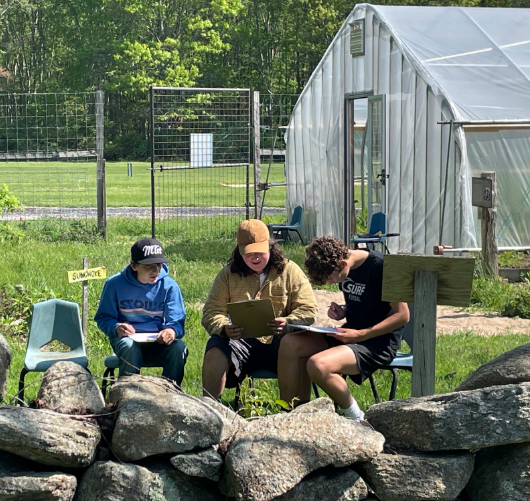
Compass families and staff did a book study of “The Anxious Generation” together, and tech talks are now a fixture at back-to-school nights. Science class Chromebook use averages about 15 minutes a week. In its place, students tend a school farm, care for goats and chickens, hike on-campus trails, and get PE twice a week, year-round, the kind of friction-by-design Strecker argues kids so desperately need.
For Gina Giramma, an educator at the Metropolitan Regional Career and Technical Center’s Newport Campus, the debate surrounding screens is less about managing a classroom and more about a shift in how students connect.
“Honestly, I notice a difference in communication styles more than anything else,” she said. “Students tend to be less creative and courageous with human interactions. They worry more about what people will think of them rather than what they have to say. This stems from social media more than just technology.”
The common move across all three schools isn’t banning technology outright. It’s creating boundaries and filling the freed-up time with outdoor learning, project-based work, real-world apprenticeships, and group activities.
Attendance, the state’s most visible turnaround
Attendance is the key metric supporting Rhode Island’s recovery narrative. Statewide chronic absenteeism, defined as missing 10% or more of the school year, peaked at 34.1% in 2021-22 and fell to 22.1% by 2024-25, a nearly 12-point drop and the fifth-largest decline of any state in the country. RIDE’s Attendance Matters RI campaign, launched in 2023, gets much of the credit, alongside a live, regularly updated dashboard that flags at-risk students before patterns harden into crises. Statewide, chronically absent students perform roughly 20% to 26% lower on assessments than their consistently present peers, a gap that opens as early as kindergarten and widens with each passing grade.
Central Falls, where Segue is located, has become something of a statewide model. A February 2026 study by the Rhode Island Public Expenditure Council found the district’s chronic absenteeism rate cut nearly in half since the pandemic’s peak, dropping from close to 50% down to roughly 26%, a result well beyond what the city’s poverty and demographic profile alone would have predicted. RIPEC attributes the gap mainly to a data-driven home-visiting program and a sustained commitment to frequent family engagement. By framing absences as challenges to be solved collectively rather than as disciplinary infractions, the district has effectively turned the tide on student attendance.
That philosophy manifests itself almost word-for-word in Sharrott’s description of Segue’s response to a student’s first unexcused absence. Deans reach out to families right away, he said, with weekly check-ins until the issue is resolved. If it’s a ride to school standing in the way, “we have vans, we can scoop you up,” he said. With most Central Falls families living within a block or two of the school, he calls the practice “definitely a village effort.”
The school’s Family Engagement team addresses issues from housing instability to losses due to circumstances such as fires, providing help before attendance becomes a problem.
Compass has its own version of the same instinct, with a harder edge. Students who are chronically or near-chronically absent must now attend after-school or summer sessions to recover lost time, a policy Maruska credits with helping the school’s fifth-through-eighth-grade cohort post the best middle school attendance in the state at one point this year.
“I’ve even heard first graders say, ‘I cannot miss one more day of school!’” Maruska said. “They know.”
Not every district has matched that progress. Chronic absenteeism remains above 40% in some Rhode Island schools, and the state lacks a uniform definition of what counts as present. The Attendance for Success Act, which would have standardized attendance policy statewide, stalled in the General Assembly. Commissioner Angelica Infante-Green has said the goal isn’t simply to return to pre-pandemic attendance levels but to beat them, “because that means that we have a majority of our kids in the classroom.”
Summer, from afterthought to acceleration
The summer slide isn’t new. What’s new is how seriously Rhode Island schools are now treating it. National research has demonstrated that elementary students often lose between one and three months of math skills and one to two months of reading skills during a typical summer, with these losses primarily affecting lower-income students who have less access to books and organized activities. A December 2025 Northwest Evaluation Association analysis put a number on what summer school actually buys back: a small math bump worth roughly two to three weeks of classroom learning, with reading scores left essentially untouched.
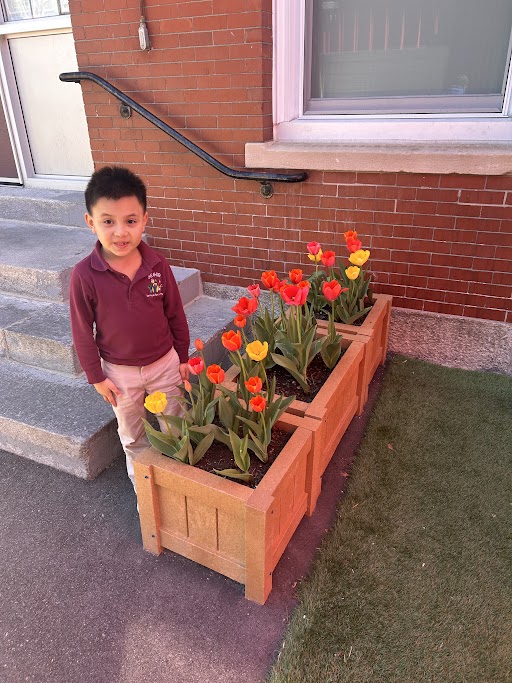
The Segue Institute for Learning has responded by reimagining summer as a seamless extension of the academic year. Students arrive two weeks early, in the third week of August, and the school runs a full July program layered onto required extended school year services for students with IEPs.
None of it carries the sting of summer school as punishment.
“The kids are really excited to be back,” Sharrott said. “It’s just common knowledge, like, ‘Hey, we’ll see you in July.’”
The program blends math and literacy with music, a social-emotional learning elective, and paid internships for high schoolers. An incoming-kindergarten program brings in students who never attended pre-K for four low-pressure weeks before their first official day.
“Very slow, no academic drivers or objectives we have to meet,” Sharrott said. “Let’s just get them to understand what it’s like to be a kid at school.”
Over the next two to three years, Sharrott said, the plan is to move K-3 students onto a 12-month, trimester-based calendar, with the same total vacation time redistributed across the year rather than concentrated into one long summer.
At The Met, summer learning looks nothing like a traditional program because The Met is not a traditional school. Giramma builds individualized summer plans for each of her 17 students, anchored not in worksheets but in motivation. One student is working two jobs and volunteering with the fire department to save for a research trip tracking snakes in the Amazon. Another is balancing a fast-food job, a modeling gig in New York, and a pre-college summer program at Harvard.
“The most important part of the plan is that they need to be the author of this plan,” Giramma said. “Motivation counts more than outcomes.”
At Compass, that same data-driven instinct carries into summer. Planning starts with retesting, not guesswork. Maruska’s students take reading assessments before the break and again in September, so any real loss, rather than assumed loss, gets caught early.
“We will retest them in September to measure any actual learning loss, and begin from there,” she said.
What’s actually working
Strip away the differences between the individual missions of each school, and a few common threads emerge. Each emphasizes boundaries around technology rather than outright bans, early, relationship-based attendance interventions, and summer programming that treats the season as instructional time rather than vacation. Much of the programming requires more relationships and a willingness to extend the school day, week, or year when a student needs it.
It’s also, by the educators’ own accounts, working. Maruska says Compass’s fifth graders posted the top RI Next Generation Science Achievement scores in the state in 2023-24. Central Falls posted one of the most significant attendance turnarounds in Rhode Island. Sharrott says Segue’s students are accessing grade-level texts at rates that would have seemed out of reach for the COVID-era kindergarten cohort of just a few years ago.
Maruska also seeks to insulate her educators from undue criticism, emphasizing the importance of a healthy and positive school culture.
“I want to ensure we are not placing this blame on educators. Kids don’t want to learn from people they don’t like, in places they don’t want to be. First comes school culture, and the learning will follow.”
The national conversation about a decade-long learning recession is real, and Rhode Island’s data show the state still has ground to make up, including in the reading scores that are driving national headlines. But the schools closest to the problem aren’t waiting for the research to settle before acting. As Rhode Island chases its goal of matching Massachusetts’s outcomes by 2030, the answer may have less to do with what’s banned in classrooms statewide and more to do with what teachers like Maruska, Giramma, and Sharrott are already building, one relationship, one summer session, and one attendance van ride at a time.