Prevention and cure move closer, thanks to innovative research
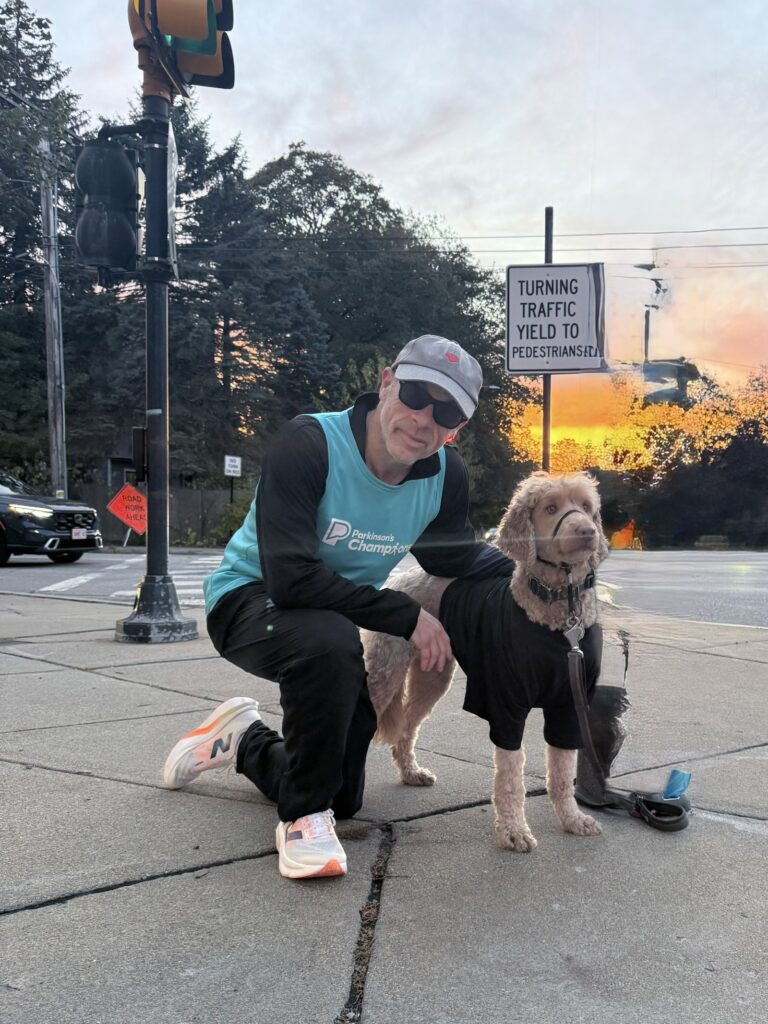
PROVIDENCE — The first indication that Dan Alperin, 61, had Parkinson’s disease was in 2024. A radio salesman and avid runner, Alperin had traveled to Japan to compete in another marathon.
“At mile 21, they kicked me off the course,” Alperin told Ocean State Stories. “They have very strict guidelines, and I was going too slow. During that trip, my wife noticed that I had a tremor. So when I got home, I went to my doctor and he said, “Well, I think you might have Parkinson’s. Why don’t you go to a neurologist?’”
Alperin could not get an appointment for six months. After he met with a neurologist, who conducted tests, Alperin logged into his patient portal.
The diagnosis: Parkinson’s.
Alperin was crestfallen.
“I didn’t know a lot about Parkinson’s at the time,” he said, “and I started reading everything I possibly could. I was thinking about the worst scenarios.”
Alperin was scheduled to run the Chicago Marathon three days after he learned he had the disease. “It was going to be my last marathon in my 50s,” he recalled, and diagnosis notwithstanding, he intended to compete.
“At mile 11, someone bumped into me and I lost my balance. When I got back up, I didn’t feel great, so I went to the medical tent. My tremor was really bad. The doctor looked at me and said, ‘You’re not going back’ onto the course.”
According to the New York-based nonprofit Parkinson’s Foundation, actor Alan Alda, former boxer Muhammad Ali, former NFL quarterback Brett Favre, and singer-songwriter Neil Diamond are among the prominent people still alive who have the disease. Another is actor Michael J. Fox, who has championed awareness, support and research into causes and treatments since he disclosed his diagnosis in 1991, when he was 29. Fox launched the Michael J. Fox Foundation in 2000.
“Parkinson’s disease (PD) occurs when brain cells that make dopamine, a chemical that coordinates movement, stop working or die,” the Fox Foundation declares. “Because PD can cause tremor, slowness, stiffness, and walking and balance problems, it is called a ‘movement disorder.’”
However, the foundation continues, “depression, memory problems and other non-movement symptoms also can be part of Parkinson’s. PD is a lifelong and progressive disease, which means that symptoms slowly worsen over time.
“The experience of living with Parkinson’s over the course of a lifetime is unique to each person. As symptoms and progression vary from person to person, neither you nor your doctor can predict which symptoms you will get, when you will get them or how severe they will be. Even though broad paths of similarity are observed among individuals with PD as the disease progresses, there is no guarantee you will experience what you see in others.
“Estimates suggest that Parkinson’s affects nearly 1 million people in the United States and more than 6 million people worldwide.”
The Rhode Island Department of Health does not track Parkinson’s disease, according to spokeswoman Annemarie Beardsworth. She referred Ocean State Stories to a 2019 article in the scientific journal npj Parkinson’s Disease, that showed of the 81,781 Rhoder Islanders then on Medicare, 1,288 lived with the disease.
Alperin lives in Massachusetts but his Rhode Island connections are deep. His mother and father grew up and lived in Providence, as did his paternal grandfather, who also had Parkinson’s. Alperin was born in Cambridge, Mass., but “Providence is like a second home,” he told Ocean State Stories.
A 1986 graduate of Hobart and William Smith Colleges, where he was the radio “voice of Hobart sports for four years,” Alperin today is a senior account manager for Florida-based Beasley Media Group, which operates 49 radio stations in 11 national markets. He was also the local sales manager for WBZ-FM 98.5 The Sports Hub, “Boston’s Home for Sports,” when it was owned by CBS.
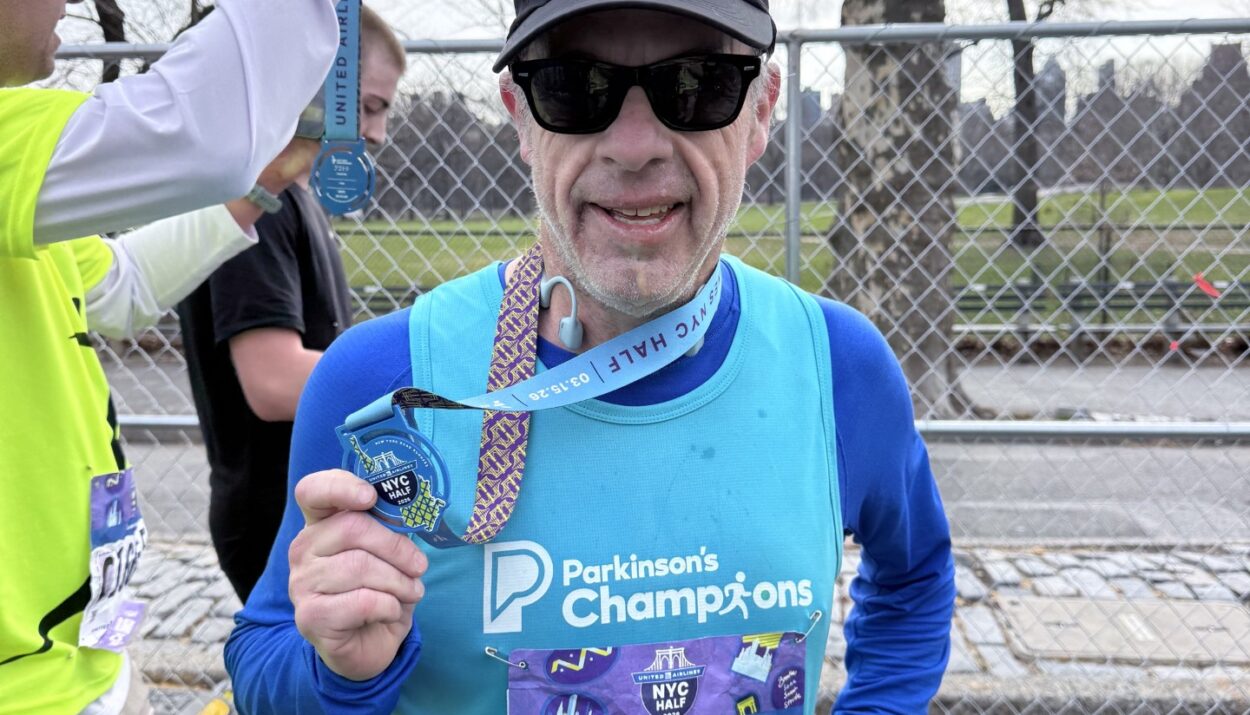
Alperin said he ran this year’s Boston Marathon in four hours and 19 minutes. He is a member of the elite World Marathon Majors, which honors runners who have finished marathons in cities including Boston, New York, Berlin, Chicago, London, Tokyo, and Sydney, Australia. Alperin has competed in all but Sydney. In August, he intends to run there on behalf of the Parkinson’s Foundation.
“They’ve made that the ‘seventh star,’” Alperin said. “In March 2025, I got my sixth star in Tokyo. So I’ve done all the world majors. I would say maybe 25,000 people in the entire world have their sixth star, which is pretty cool, right?”
Alperin is currently developing a new website, Runningwithparkinsons.org, with the goal of encouraging people living with Parkinson’s to stay active through running and movement, while also laying the groundwork for a foundation to support Parkinson’s organizations. There are many remarkable athletes with Parkinson’s who run, swim, bike, and more. Alperin plans to add a podcast component in which he interviews these athletes, allowing them to share their incredible stories.

Watch an Ocean State Stories video of Alperin. Click here.
Dr. Prarthana Prakash is a Movement Disorders Neurologist with Brown University Health at Rhode Island Hospital. In an Ocean State Stories interview, Prakash discussed the patient experience in the program.
“When a new patient is evaluated in the clinic, we discuss lifestyle modifications, including the role of exercise, stress reduction, and dietary approaches that may be beneficial,” she said. “Patients also have the opportunity to participate in our new-patient Parkinson’s disease program through referrals to physical therapy, occupational therapy, and speech therapy services.”
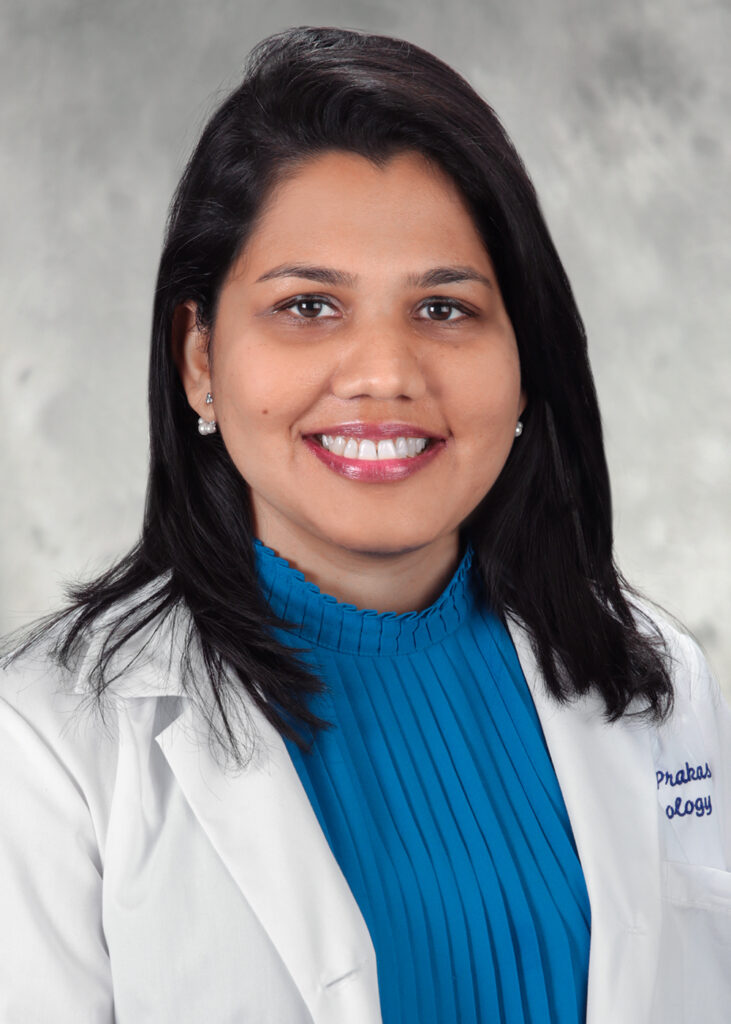
Prakash continued: “In terms of symptomatic treatment options, medications are typically considered first and can help manage symptoms; however, they do not alter the disease progression. They are primarily aimed at improving motor symptoms and enhancing quality of life.
“If over the course of the disease, certain motor symptoms or movement-related symptoms are not adequately controlled with medications, advanced therapies such as deep brain stimulation may be considered. Other surgical treatment options may also be appropriate in selected patients. In addition, ongoing clinical trials continue to offer hope for the development of newer therapies that may better address disease progression and symptom management.”
“Many people find that support groups help them cope with the day-to-day realities of having Parkinson’s disease,” the Fox Foundation states. “The opportunity to swap stories and share resources can be truly therapeutic….
“If you’re feeling frustrated about life with Parkinson’s disease, being part of a support group can be one of the best ways to reduce stress and connect with others who can relate to your experience. Care partners and family members also benefit from sharing questions and concerns with like-minded others.”
But the foundation cautions that “Not all support groups are right for everyone, however. For starters, they come in different formats, ranging from large, formal meetings to smaller “living-room” get-togethers. If you don’t like the first group you find, it’s worth looking for one that suits you better.”
The non-profit, New York City-based American Parkinson Disease Association lists more than a dozen support groups in Rhode Island. The list can be accessed here.
Among other duties, Dr. Wael F. Asaad is a neurosurgeon at Rhode Island Hospital and the director of the Functional Neurosurgery & Epilepsy Program at Brown University Health.
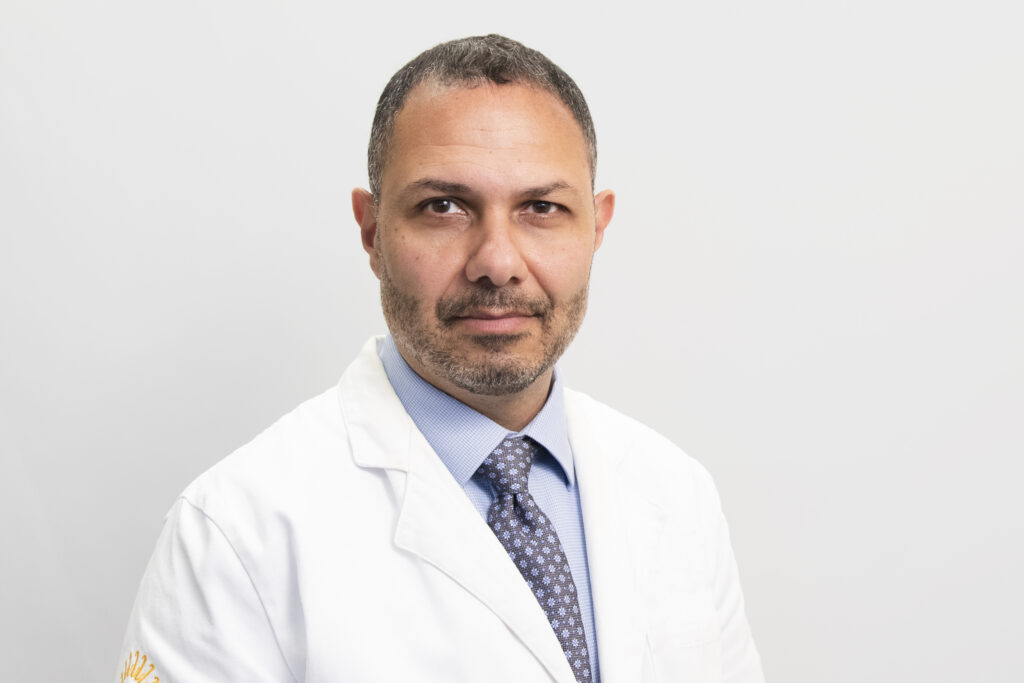
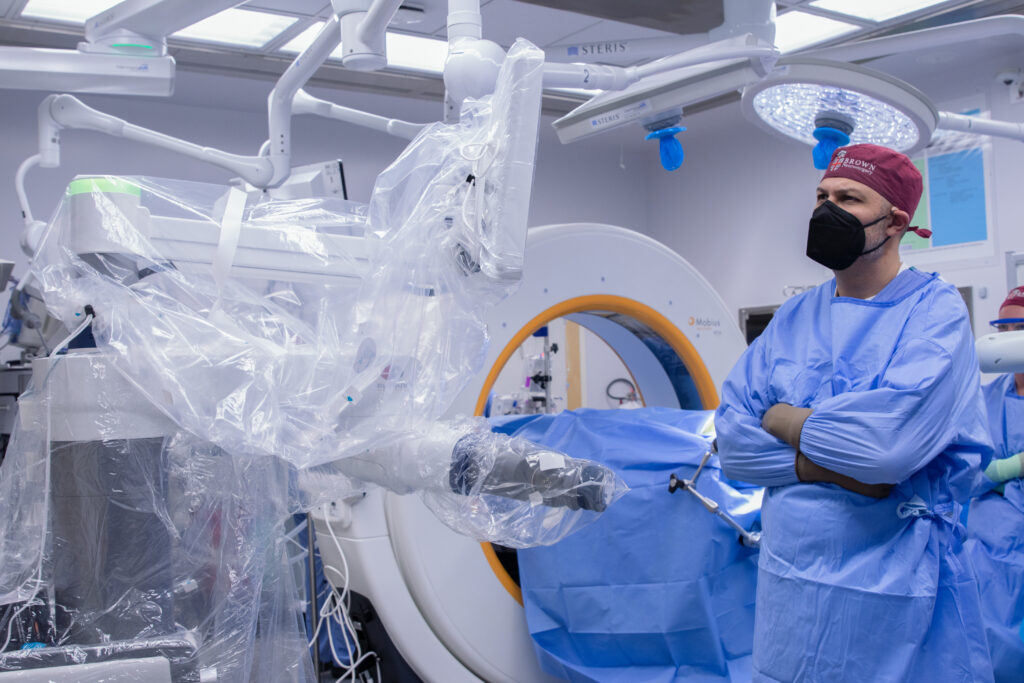
“Our job is basically manipulating brain circuits to try and improve brain health. That involves things like deep-brain stimulation for Parkinson’s disease or targeted disconnections using lasers or focused ultrasound to try and basically rebalance brain circuits,” he told Ocean State Stories. “Some of our work even is in psychiatric neurosurgery, which involves treatments for things like intractable OCD,” Obsessive-Compulsive Disorder.
Deep-brain stimulation and focused ultrasound, Asaad said, “can help patients live their lives a little bit more fully. But none of these things yet allow us to reverse the course of the disease.”
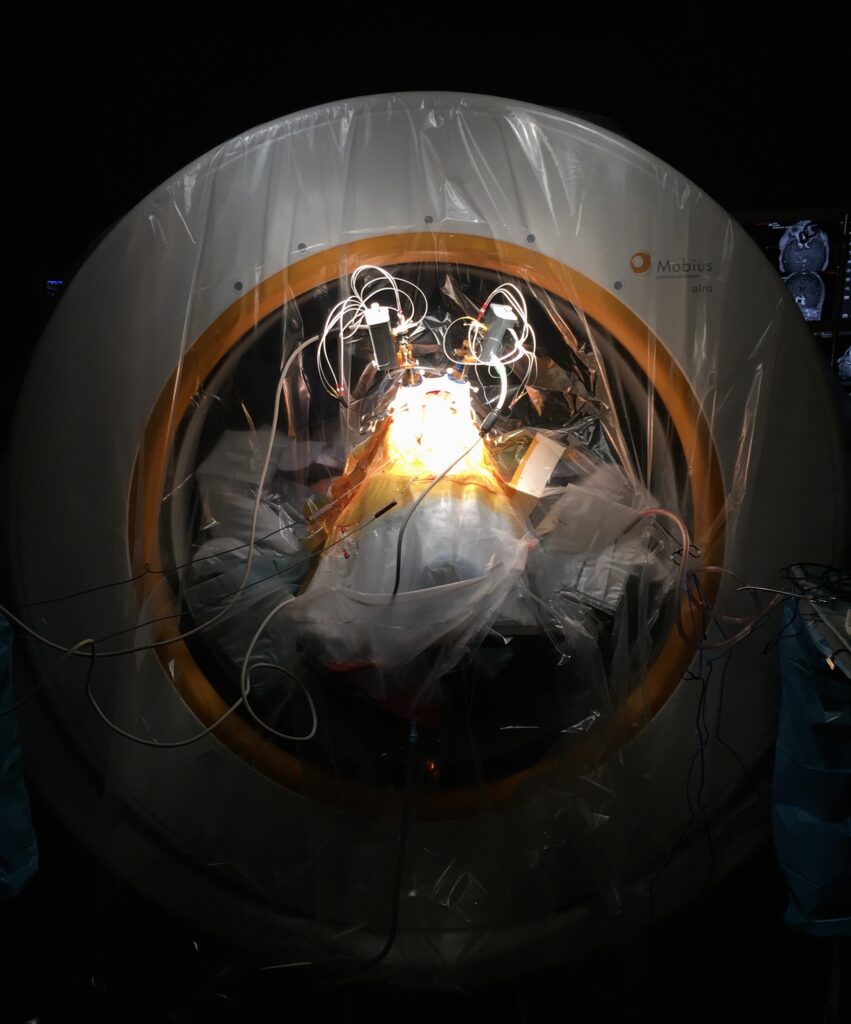
His program, Asaad said, “is a participating site [for research] into a stem cell-derived cell therapy for Parkinson’s disease. We’re hoping that injecting these new dopamine neurons will help people actually turn the clock back on the disease more fundamentally.”
“I’m still not 100% over the fact that I have Parkinson’s,” Alperin told Ocean State Stories. “A few months ago, I was waking up in the morning, not even able to get out of bed, because there was so much pain. But it was because I was having an off time from the time I took my last medication to the time I woke up in the morning. So now I take an extended release. Now, no problem.”
He continued: “What I’ve learned is that they’re making a lot of progress. I feel like I’ve been very helpful in the sense that I’ve raised a lot of money for both the Parkinson’s Foundation and Michael J. Fox Foundation. So I’m hoping that there’s a cure or some sort of solution to this.
“I would prefer not to have it. But thankfully, it’s been about a year and a half since I was diagnosed. I think I’m finally at peace with it.”