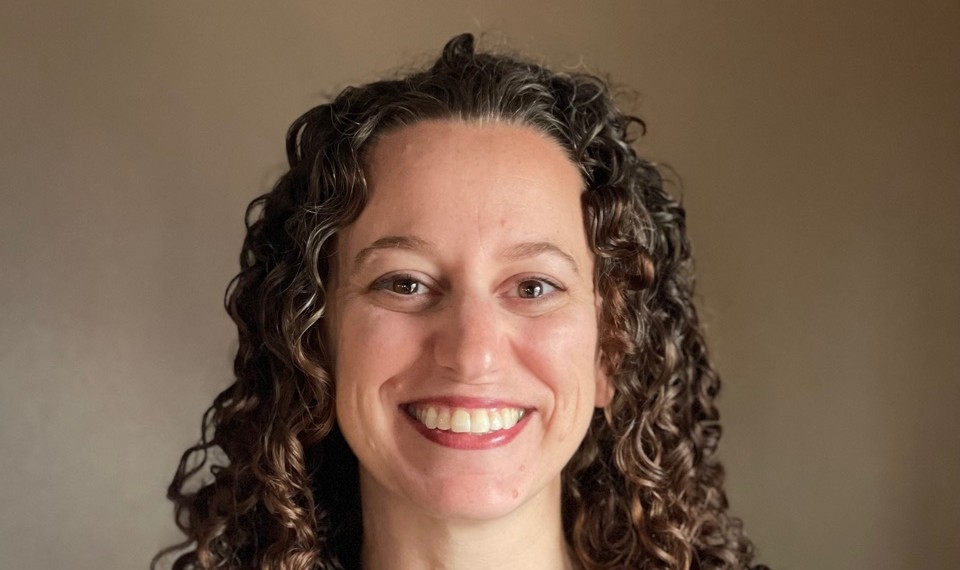
“Our strategy also rests on changing the narrative, which I think of as the ‘hearts and minds’ strategy. The truth is that we have deeply held beliefs around money and the economy, at both the individual and collective levels. Many of these beliefs are outdated assumptions that are not actually true or no longer serve us.”
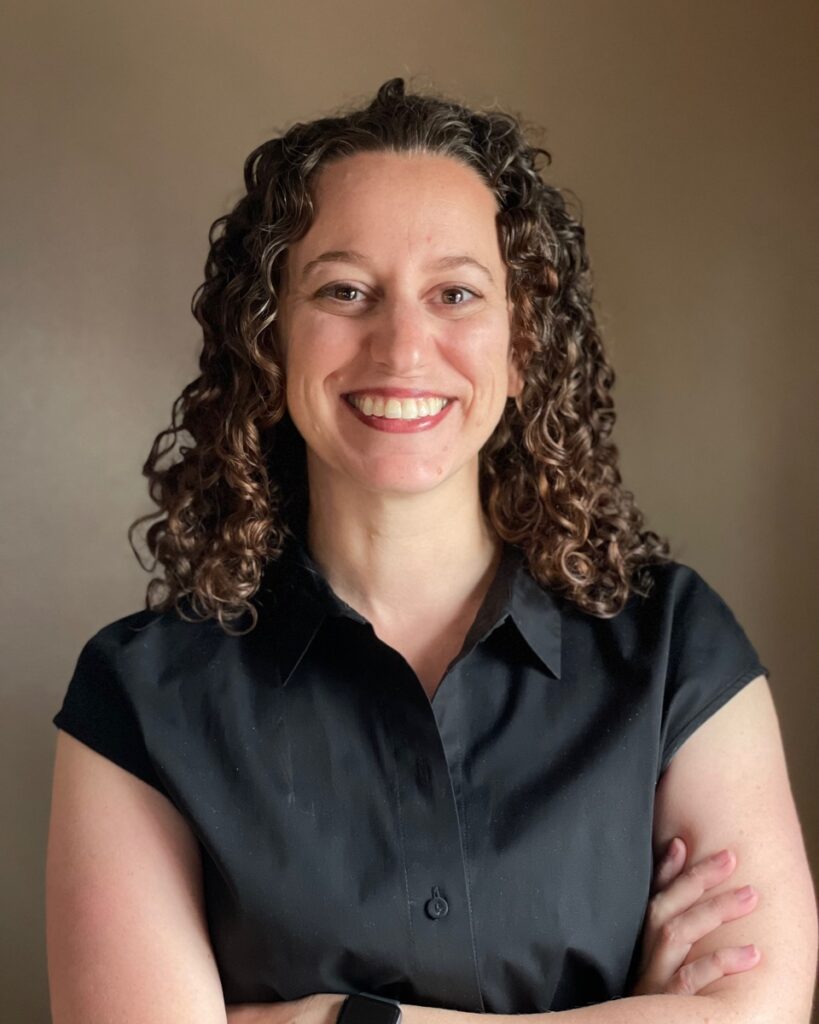
Thanks for joining us, Jessica. The Pizza Strip Fund, a new neighborhood initiative you are helping coordinate, recently came to our attention and we’d like to learn more about it. But first, please tell us about why and when Local Return was founded.
Local Return’s mission is to build community wealth through investing and ownership, with a focus on neighborhoods that have experienced generations of disinvestment. We do this by shifting the traditional narratives around the economy and wealth, generating community investment, and building ownership models around community assets.
We are a relatively new organization, created in 2021 in the midst of the COVID-19 pandemic. Our six founding directors came together around what we saw as a gap in the local ecosystem. As practitioners in the economy, environment, organizing, and philanthropy sectors for many decades, we recognized that most community efforts were focused on what we saw as “lagging” indicators: raising income through job training, perhaps, or alleviating housing insecurity by building more affordable units. These programs are important and necessary, but they are not enough to address what we saw as the primary cause of COVID’s negative impact on our less well-off communities: the lack of community wealth.
Local Return was born to address this gap and focus on the intersection of people, place, and money.
The website states that “our vision is for Rhode Island families and communities to control their own economic destiny. Our mission is to build community wealth in Rhode Island through ownership and investment, particularly in neighborhoods that have experienced historical disinvestment.” Can you please break that down for us?
Sure thing. There are a few things to unpack in those statements.
First, the term “community wealth” can be an unknown. The concept was developed by the Democracy Collaborative, which in turn was motivated by their study of the Mondragon Cooperatives in Spain. The idea is to focus on developing and using local assets in such ways that the benefits of those assets remain with the local community.
Wealth can be a controversial term, as it’s currently understood in our world. But at its essence, wealth creates resilience. It is a cushion for when something bad happens, be that the loss of a job, unexpected car repairs, or illness. This is true for communities as well as people. Neighborhoods that have greater community wealth are more resilient when they face pandemics, recessions, or market instability. COVID-19 revealed that those people and places with greater wealth could take greater precautions, had access to more resources to adjust to new ways of working and living, and bounced back faster. Those with less wealth were on the frontlines, literally. Therefore it wasn’t surprising to see the neighborhoods of Central Falls, Olneyville, and South Providence spike the highest rates of COVID-19. Not incidentally, these are the same neighborhoods we see consistently with high rates of poverty, low educational attainment, high incidents of chronic disease, environmental threats, and higher rates of interaction with the criminal justice system.
Second, our theory of change is based on the idea that ownership and investment create wealth. What we’re saying is that community wealth is created over time by (1) investing generative capital into local ventures and (2) ensuring that local assets are owned locally. As a result, many of our efforts are focused on increasing local ownership of businesses and real estate and building vehicles so that Rhode Islanders can actually invest financially into the local economy. For example, we launched Rhode Island’s first-ever community investment fund. We’re raising $3.5 million to invest directly into Rhode Island neighborhoods. This investment opportunity is open to any resident; we even have a special offering for those who are low-income.
Third, what do we mean by “neighborhoods that have experienced historical disinvestment?” Those are the places that have those persistently unequal, negative outcomes – lower high school graduation rates, lower life expectancy, lower incomes, less employment, etc. Disinvestment destroys local assets or takes them away from the neighborhood – think about some of the urban renewal projects that erected highways through neighborhoods. Or it removes local ownership, meaning that the local community cannot make decisions about that asset or receive the full benefits it creates. This could be a major development project that is owned by an absentee landlord or a former grocery store with a restrictive covenant that sits empty. Disinvestment also leads to displacement; as neighborhoods gentrify with outside investment, residents are priced out.
More detail is found in the Strategic Plan, 2026-2030. Anything in it that you’d like to highlight?
Our strategy also rests on changing the narrative which I think of as the “hearts and minds” strategy. The truth is that we have deeply held beliefs around, and the economy, at both the individual and collective levels. Many of these beliefs are outdated assumptions that are not actually true or no longer serve us. Making the kinds of changes that Local Return aspires to requires confronting these narratives. And, as you know, that is not a small task! All kinds of things are tied up in our financial and economic assumptions, including our identity, relationships, legacy, and values.
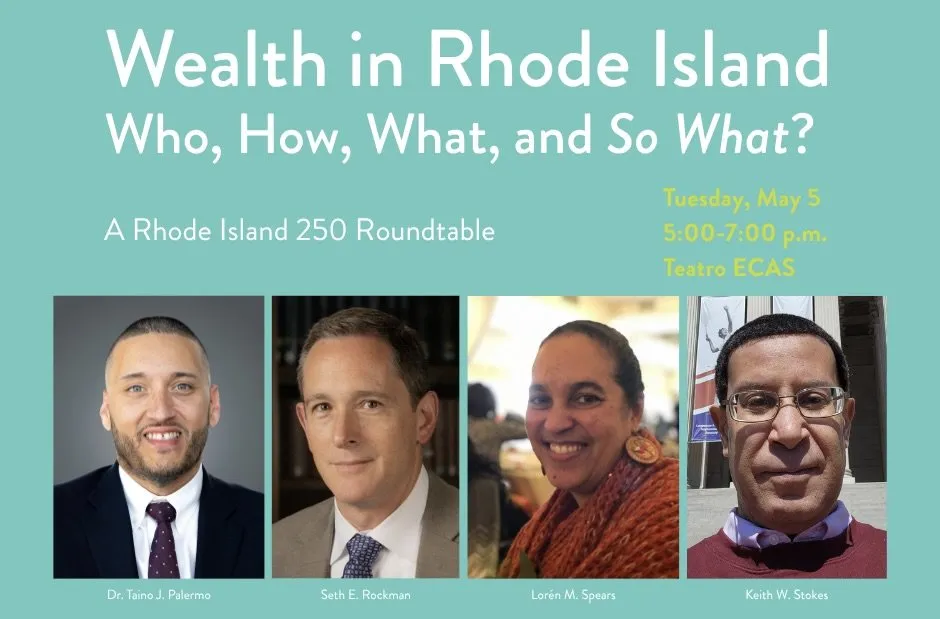
Local Return’s News Page recently posted a video of a discussion titled Wealth in Rhode Island: Who, How, What, and So What? The following people participated:
— Taino J. Palermo, Clinical Professor of Law and Director, Business Law Clinic, Roger Williams Iniversity Law School.
— Seth E. Rockman – George L. Littlefield Professor of American History, Brown University.
— Lorén M. Spears, Narragansett/Niantic and executive director of The Tomaquag Museum.
— Keith W. Stokes, Associate Director, Rhode Island Department of Administration, leading the Division of Equity, Diversity and Inclusion.
A link to the discussion is below, but can you give us an overview, please?
Our goals for this event were two-fold:
First, we wanted to place today’s wealth disparities in the proper context. The Federal Reserve Bank of Boston just released a study showing that the median net wealth in Massachusetts is $7,800 for Black families, $1,200 for Latino families…and $549,200 for white families. That is a staggering gap.
When you see that kind of staggering gap, you realize that these kinds of wealth gaps do not happen by accident. They are the result of systemic and structural barriers that have made it harder for Black and Brown people to access the primary drivers of wealth in this country — ownership of real estate, businesses, and investment assets. Rhode Island’s economic history cannot be disentangled from the theft of land and genocide of Indigenous people and the Slave Trade.
Wealth compounds over generations. Factors such as homeownership, educational attainment, and levels of debt all play a role in an individual family’s wealth, and advantage or disadvantage is magnified from one generation to the next. Wealth begets wealth; the lack of wealth begets the lack of wealth. So, the foundational history matters – both as context for why we see such tremendous disparities now and as illumination for how to close those gaps for the future.
And second, we wanted to deliberately invite personal and institutional consideration upon these facts. Rhode Island’s history, like our nation’s history, is complex and filled with paradoxes. As the current stewards of this state, we have a chance to dance with those tensions – to consider the invitations they offer. And ultimately, it’s up to each of us to consider whether we have the responsibility and/or opportunity to bend the arc of Rhode Island’s moral universe, as Martin Luther King, Jr. might say.
Watch the discussion
Another Local Return initiative is Jumpstart Rhode Island. What is that?
Real estate ownership is the most common way that people build generational wealth in the United States. I know that’s true for my ancestors. But for many people, it’s simply out of reach. We also believe that neighborhoods are better served when development is led by people who live and work within them, who know the people and the place intimately. Jumpstart Rhode Island is about empowering Rhode Island residents to become investors and developers in their own neighborhoods. We offer a 15-hour training program that covers the basics of small-scale real estate development. Graduates from the training program become part of our Jumpstart network, accessing mentors and ongoing education opportunities.
Jumpstart Rhode Island is based on the program developed by Jumpstart Germantown, which has now grown to a network of 24 locations.
Are there opportunities for residents of the state to become involved with Local Return?
Absolutely! The best way to keep in touch with our offerings is to join our email newsletter list at localreturn.org We have a committee of local wealth champions that meets monthly, and that’s a great opportunity to get to know us. We’re currently accepting applications for our next Jumpstart cohort (applications are due September 13). Our Jumpstart network meets up on the first Wednesday of each month, and anyone who is interested in real estate development for community wealth building is welcome. This fall, we’ll be launching a new program to help small businesses own their real estate, so stay tuned for more information on that.
We have an occasional book club, where we read and discuss books together. (Next week, we’re hosting author Seth Rockman at Symposium Books to discuss Plantation Goods.)
And any Rhode Islander can invest into our Local Return Diversified Community Investment Fund, becoming an investor-owner of the Rhode Island Community Investment Cooperative! You can learn more about that at ricommunityinvestment.com.
Finally, before we get to Pizza Strips, please give us a summary of your background. You’ve long been involved in philanthropic enterprises in the state. Life gives us many opportunities — what motivated you to take this road?
I have to admit, it took me a long time to discover my purpose. Even now, I wear a lot of hats, and they don’t always make sense to people! I would say the through line of my work is: How do we live in the truest possible alignment with our values?
I was fortunate to begin my career in the nonprofit sector, and I began right away to see the importance of place to opportunity and outcomes. My 13 years at the Rhode Island Foundation allowed me to be immersed in the incredible work being done around the state, led by so many brilliant, dedicated people. And it also forced me to confront the ways our current systems and practices contradict the very outcomes we’re seeking. Local Return is one way of trying to design with intention and experiment with different ways of doing things.
It’s really been within the last eight years that I began to consider the areas of alignment and misalignment in my own life. That line of inquiry brought me to divinity school, which I finished last spring. I believe we have a responsibility to serve the world, and there are so many opportunities to do that – whether it’s changing the fundamentals of our economy or paying for pizza strips.
OK, now Pizza Strips. What is it?
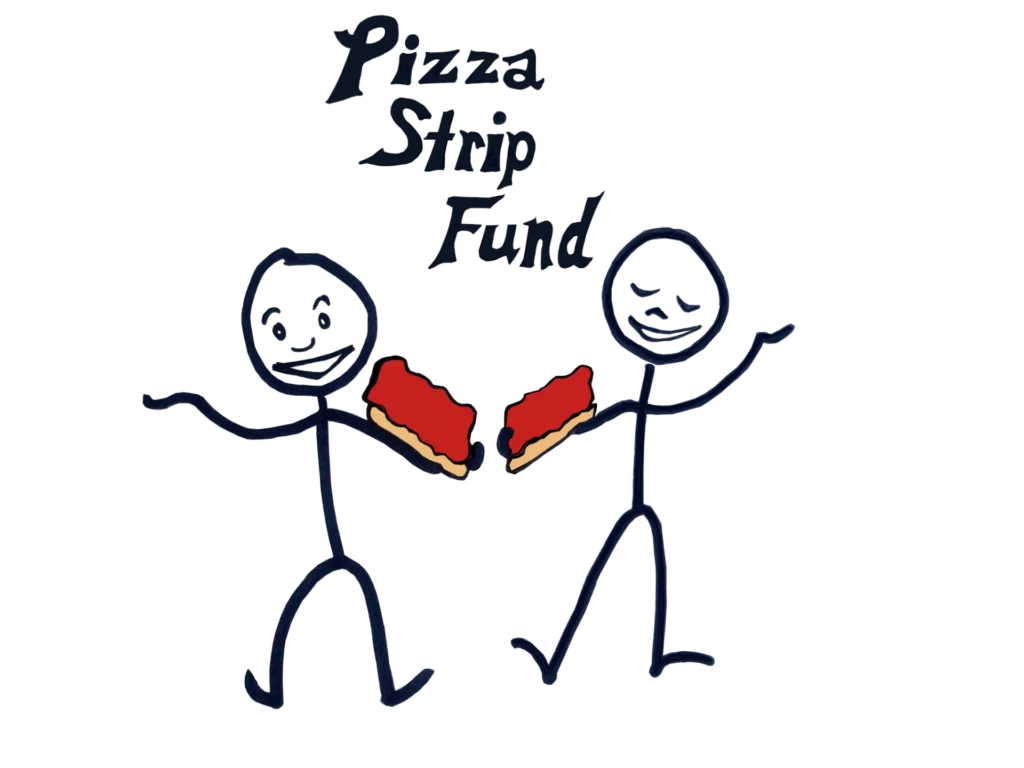
The Pizza Strips Fund is a super simple idea: We believe community life is better when you know your neighbors. There is a lot of data out there around the breakdown of the social fabric, the loneliness epidemic, and the erosion of civic trust. These trends have huge consequences in our political, economic, educational, and social spheres. So we provide up to $150 for neighbors to host neighbors in low-stakes, low-lift gatherings. Our effort is part of a national wave of local microgrant programs called With Neighbors.
We chose pizza strips as the title for the project because they are the original Rhode Island low-lift gathering food — they’re easy to serve, easy to eat, and a guaranteed crowd-pleaser. How many parties have you attended with pizza strips? But there’s also a deeper meaning, and one that really resonates with me. Pizza strips were originally made from leftover bread. They made good lunches for workers on sites where refrigeration wasn’t available. That’s the spirit of this initiative – using what we have to bring people together.
What’s the goal?
Our initial goal was to fund ten gatherings and offer $1,500, and we wondered if we’d even receive that many applications. We received so many applications that we ran out of money within the first 48 hours! So far, we’ve supported 13 great projects – everything from a chili cookoff to homemade brick oven pizza to a back-to-school block party.
Who can get involved?
We aren’t currently accepting applications, as we’ve spent down our available funds. We are raising additional money, though, since we have so many good proposals still on the table. If people want to chip in a few dollars, email me at pizzastripfund@gmail.com. Plus, we’d love to offer another round in the future!
On a higher level, the beauty of this idea is that anyone can get involved. We deliberately set out to support “low-stakes, low-lift gatherings.” I always marvel at people who can pull off massive festivals or elegant dinner parties, but that’s beyond my ability. I can pick up some pastries and cider, though, and put a table out in my driveway.
Anything we missed about Pizza Strips or Local Return?
Nothing I can think of!