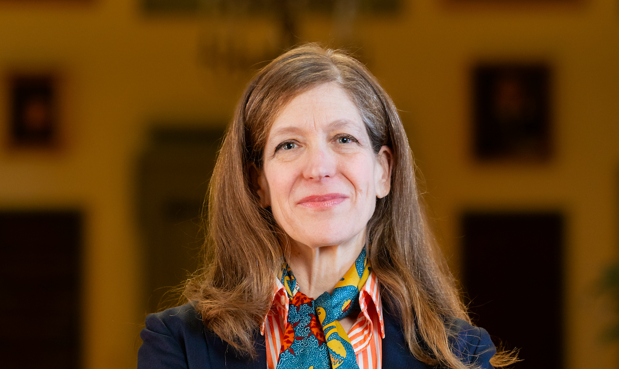
Thanks, Leora, for agreeing to discuss your extensive and impressive work. When we talked by phone, I asked about your background. It begins with your upbringing in South Africa and continues with your college and university education in the U.S. Can you please recap that for our audience? How did your South African years influence your work? The country was still living with apartheid, correct? Was that a factor in you moving to the U.S.?
Yes, it absolutely was. I was born in 1973 in Durban, an English Victorian city on the Indian Ocean, in the heart of what was historically Zululand. In 1985, when I was twelve, the government declared a State of Emergency that lasted until 1990. So my formative years were spent living in what was essentially a police state, as the government used the so called “emergency” to exercise unprecedented levels of force against the mounting resistance, and to abandon all pretense of free speech or democratic process. There was an absolute restriction on the press and on all public gatherings. There were intense economic sanctions, and cultural and sporting boycotts, so no musicians or artists would visit, and the country became terribly isolated. Because of the press and media restrictions, which included banning books and foreign publications, kicking out the international press and jailing local dissident journalists, it was challenging to understand the full extent of what was going on. But it was not hard to glean that we were living in a radically unjust and violent society which we detested from within, and for which we were being rightly condemned as racist pariahs from abroad. Shame is not a popular concept these days – but the international anti-apartheid effort successfully instilled a deep sense of shame in being a white South African – and regime change probably would not have happened without it. So as a teenager, like many in my generation, I wanted to get as far away as possible from South Africa, and all it represented. My parents talked for years about leaving, but it is tough with a family unless one has money, which they didn’t and emigrating is always risky proposition. When I was 17, I realized they would never leave, so I decided to do so on my own. When one is so young, one has a false sense of confidence and less aversion to risk. I was really too stupid to know all that lay ahead, having never traveled outside the country and very little within it! Naively, I believed the US to be a very different kind of country from South Africa. In some ways it is, but in other, foundational ways, I soon realized the two countries are very similar.
And when here, you studied at three universities, earning four degrees. That’s quite an accomplishment! What were the schools and the degrees?
I went to Yale for my undergraduate, and double majored in Philosophy and Studio Art (painting). Going to Yale was transformative in every way. And I’m a big believer in colleges as the single most important driver of social and economic mobility in this country. (My grandfather never finished high school.) After several years working in NYC in corporate law and corporate design (international sales, then running the “inspiration library” at Donna Karan New York) and finally a short stint managing the infamous restaurant Nello’s on the Upper East side, I decided to try graduate school for art history. I came up to Providence, to Brown, to study modern art with Kermit Champa, and it was marvelous. It felt like such a privilege to be back in school after working at a series of mind-numbingly boring jobs. However modern European art seemed very worked over, and very distant to my interests and experience. I wanted to work on contemporary art especially contemporary African art. So I applied to Harvard, took another two years of coursework, earned another masters degree in African art, and then wrote a dissertation, working with two fantastic mentors, Suzanne Blier and Ewa Lajer-Burcharth. A lot of academic writing is about writing one’s way home, or claiming a particular sense of self, and certainly for me, writing a dissertation on contemporary South African art became a way for me to educate myself on a history, economics and politics of which I understood little growing up. It allowed me to connect with and understand my past and my family’s, and earlier events I had witnessed but not really understood, including a white activist hanged by the government who was a close friend of my dad’s but whom had never been discussed; and another family friend, a psychiatrist and collaborator with the National Party whose abominable crimes were detailed at the Truth and Reconciliation Commission. Researching this period allowed me to process the past. It was a very privileged form of therapy, I guess. But yes, my personal history and my particular understanding of the world from the perspective of the tip of Africa have largely shaped my work, my writing and my teaching.
Now you are at the Rhode School of Design. What drew you there?
RISD is an incredible place, which nurtures students and their work in very special ways. What particularly attracted me here is that this is a place where material ways of thinking sit alongside, and are often prioritized over text-based modes of learning. As a former painter, I am obviously deeply sympathetic to this. And whereas a lot of academic art history and contemporary art writing has become increasingly unmoored from any sense of reality, or even the exigencies of the studio, most artists remain committed to allowing material and process to shape and constrain ideas. For this reason, among others, I feel far more intellectually attuned and interested in the way that artists think and work, especially insofar as their work exists in and must wrangle with a contemporary art discourse that can be not just pompous and affected, but often deploys language as an armor against its own vacuity. For a long time I felt intimidated by this discourse, as I think many people still do. In fact, not having grown up with museums, or around Euro-American modernism, I felt a need to get a PhD in order to understand and be empowered to judge certain strains of art and art history. But that’s fairly ridiculous! Now my hope is to empower students to believe in the strength of their ideas and intuitions, whether they can articulate them fluidly yet or not.
What are some of the courses and seminars that you teach?
At RISD we team teach an art history survey course to the whole freshman class. It is an amazing class in that we have all five hundred and twenty students gathered in a single auditorium, without phones or laptops, listening to colleagues who are extraordinary teachers. But its challenging in that the auditorium is dark, it can be 8 am in the morning, and this is not a generation who have been trained in the art of listening and silent stillness. How to keep them all awake? Prompted by these challenges, several years ago, myself and a couple of colleagues reconfigured the modern and contemporary component of the course from a ploddingly chronological prehistoric to contemporary survey into a “global modernisms” course that begins with the contemporary and rewinds back to modernism through a series of flashbacks. And by modernism we understand a diverse set of visual practices, theoretical positions, and media that unfolded across the world from approximately 1750 to the present. Certain lectures look at recurrent impulses such as abstraction or expressionism, which emerge and re-emerge periodically but overall, modernism is not presented as a singular, orderly set of “movements” marching towards a predestined end. Rather, it is described as a messy network of relationships and historical processes that emerged in tandem with—and often explicitly driven by—the Euro-US colonial project and the often violent cross-cultural encounters it produced.
I also teach small seminars on postcolonialism, critical theory, and process, as well as a graduate course called Conversations on Contemporary Art for the first-year MFA Painting cohort, along with MFA students from various other departments like Ceramics and Printmaking. This is absolutely my favorite class to teach because I get to work with a group of emerging artists who are thoughtful and ambitious and who are so committed to deepening their practice that they are incredibly expansive in their thinking and in their willingness to read broadly and to sample ideas widely.
Let’s get into some of your other many specialties and passions. Please tell us about the Redwood Contemporary Arts Initiative at Newport’s Redwood Library & Athenaeum.
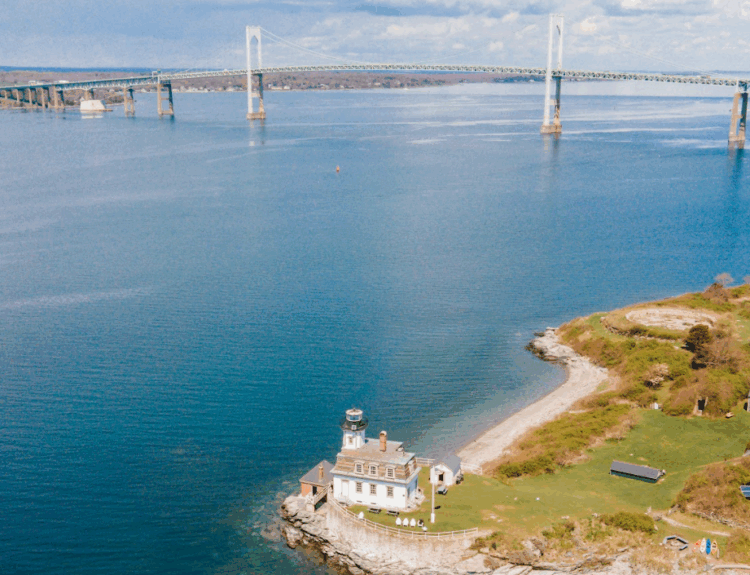
The Redwood, which was chartered in 1747, is America’s Enlightenment institution par excellence: I’ve been told it’s the sole secular cultural institution in this country with an unsevered link between the eighteenth century and the present. As such, given this extraordinary but complicated history, the Redwood Contemporary Art Initiative (RCAI), which I founded in 2017, uses contemporary art to address this history in particular, and to explore the double history of the Enlightenment more generally, that is, the way in which the most laudable ideals of democracy and liberty coexisted with its less enlightened underpinnings such as colonialism and slavery. Rhode Island, as we know, occupied a central place in this history, and the Redwood was founded with funds donated by a man who owned nearly three hundred enslaved Africans whom he forced to labor on his sugar plantations in Antigua. In this way, the Redwood Library exemplifies this double legacy of the Enlightenment in that its noble ideas of knowledge and education (for some) were made possible only by an ignoble reality of slavery and violence.
The Redwood has long shown art, and in 1875 added a picture gallery to the original building that was the first art gallery in Rhode Island, and one of the earliest in New England. So I felt that it would be fitting to start showing contemporary art projects at the institution, which engaged with, and animated the Redwood’s history by dialoguing, critiquing, even reinterpreting received narratives from the perspective of the contemporary. My husband, Benedict Leca, arrived as Executive Director in 2015, and as outsiders to Newport, with both of us having been born into colonial regimes in Africa, we found it unusual that Rhode Island’s more troubling histories did not seem to be flagged. This was already a decade after the Brown Commission, and it was important to both of us that this history be publicly acknowledged, even if only as a first, partial step in a much longer process. Contemporary art seemed one possible way to do this, especially via a large, slightly raucous art work that would draw in passing traffic from the community.
What are some of the projects you have done as part of the Redwood Contemporary Arts Initiative?
The RCAI’s first project was commissioning Pascale Marthine Tayou to make a public art work that reflected on the Redwood’s history, from the point of view of a West African. Tayou’s response, Remember Bimbia (2018) was a 12-foot-high heap of granite paving stones, each painted a vibrant color, with an American flag planted in the center. Tayou titled the work after Bimbia, a onetime slave market in his home country of Cameroon. When installed in front of the Redwood’s Neoclassical façade, Remember Bimbia formally echoed the building’s triangular pediment, yet juxtaposed its ideals of unity and balance with an image of radical fragmentation and collapsed form. It also moored the US flag in the rubble of a repressed past, partly by pointing us to West Africa and to the foundational role that African peoples played in the founding and success of this country. The stones, similar to those that still pave Newport streets, and painted in a “riotous” array of colors, summoned not only revolutions past – the storied Parisian barricades breached, and paving stones flung – but also revolutionary dreams of equality and justice yet unfulfilled. This evocation was especially pointed in 2018, on the fifty-year anniversary of the summer of 1968.
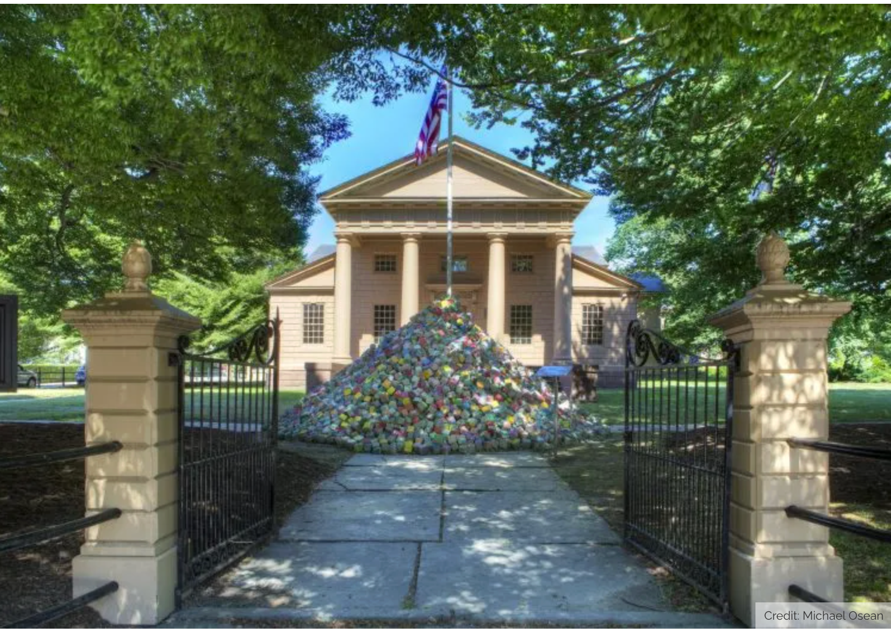
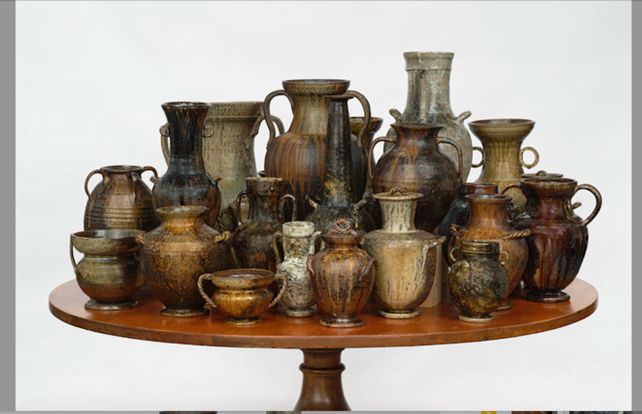
The sculpture’s central location on Bellevue Avenue sparked a good deal of conversation. It garnered some raised eyebrows and disapproval, but also real excitement, and incredible support that revealed an appetite for challenging contemporary art that I wanted to feed through further installations, exhibitions and conversations on contemporary art. So the following year we invited Per Barclay to mount an installation in the summer house, a reflection on oil as a kind of dark mirror of modernity. Jocelyne Prince and Shara Hughes also staged sites-specific projects in the summer house, and next summer, Adam Silverman will be premiering his Newport Amphora Project there, as well as at several other institutions around town. Currently, the RCAI is showing Jackie Gendel’s paintings in the main galleries, and we have commissioned site specific works from artists as different as Daniel Lefcourt and Andrew Raftery. Raftery’s wallpaper for the Redwood, a multi-year project that took over 1500 hours of labor and is made using hand-carved wooden printing blocks, premiered this past summer and won the National Academy of Design’s prestigious Abbey Mural Prize. It is an extraordinary addition to the Redwood’s entrance vestibule that few other printmakers in the world could accomplish.
From day one, the RCAI has been a group effort, indebted not only to brilliant artists, several of whom are based in Rhode Island but also to an amazing group of funders and supporters. For instance, our first acquisition, a Nari Ward clock called Anchoring Escapement: Ithaca, was identified by two amazing women on our advisory committee, and purchased with the help of other donors, all of whom envisioned it in dialog with one of the Redwood’s three Claggett clocks. Ward’s sculpture is currently installed alongside a Claggett clock, where it proposes a radically alternative vision of time, labor and progress.
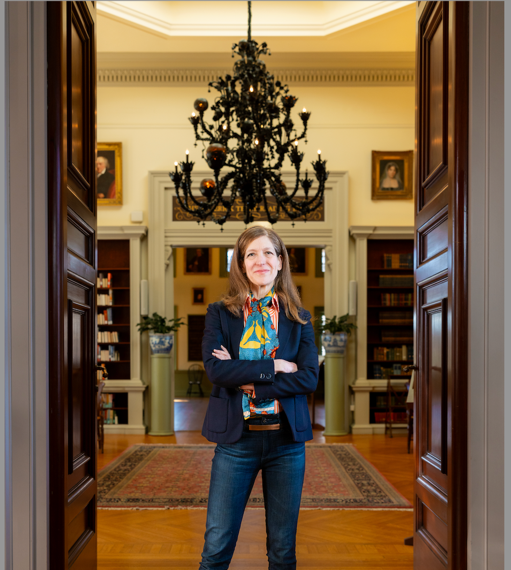
Our recent acquisition of Fred Wilson’s No Way But This (above), perhaps the crowning jewel of our small collection, was also very much a group endeavor. Like Ward’s clock, it too explores the double legacy of the Enlightenment, in this case via a monumental and gorgeously ornate chandelier made of glass, a material long associated in the Western tradition with light and transparency. Wilson’s chandelier is made of Murano glass that is black, a color that is traditionally understood to absorb light: it’s thus an artwork that celebrates opacity and tenebrous reflection, while questioning the longstanding Western equation of light with whiteness and truth.
Ultimately my hope is that these works, which question core notions of time and progress and engrained metaphors such as light and reason, together create a kind of multivocal symphony of protest against simple celebrations of the Enlightenmnt and modernity by considering the underside of this history, as one of colonial violence, enslavement, environmental degradation and all kinds of exploitation and abuses.
South African artist William Kentridge is another abiding interest. Who is he and what has he accomplished in art over the years? We understand he is an animator, sculptor, painter, and opera director. You wrote a book about him.
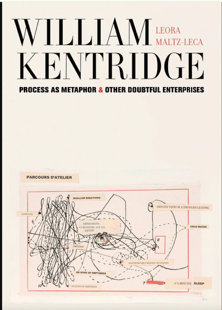
Kentridge is now recognized as one of the foremost contemporary artists in the world, but when I decided to write my dissertation on his work in the late 1990s, he was much less famous. I had been introduced to his work in the late 1980s in high school art history, when he was known as one of the local “resistance” artists who used visual art to publicize the human rights violations of the apartheid regime. But it was only when I read (and completely disagreed with) an essay by the famous art historian Rosalind Krauss that I realized how central the context of local time and place, Johannesburg in the 1980s, was to understanding his work. Krauss argued that Kentridge’s key accomplishment lay in his innovative drawn animation process because it was exemplary of what she called the “post-medium condition” in that it reinvented the exhausted modernist notion of medium. For me, Kentridge’s signature process of drawn animation had very little to do with modernist theories of medium, but rather, somehow, was embedded in the local and specific peculiarity of South Africa’s history and geography. Eventually, I came to realize that his formal process of drawn animation was embedded in South Africa’s political process of change, in part, through its ability to signal massive, unexpected historical change; to visually animate history and its erasures. I argued that Kentridge’s recurrent image of the procession – of crowds surging forward – was a visual means of processing and representing historical change. And so I wrote an essay tracing how his process of drawn animation, which is generally understood as his chief accomplishment, developed in tandem with, and is inextricable from his content, from his many images of processions, which are ultimately images of regime change.
What about his contributions to social justice?
Well, as a 21- year old student in 1976, Kentridge led some of these processions through the streets of Johannesburg, including one the day after the Soweto riots, and in some ways, perhaps, when processions were unbanned in late 1989, after two decades of being prohibited, Kentridge’s drawings of that time processed, or worked through the memory of his own embodied experience marching through Johannesburg twenty-three years earlier. All of his work is, and always has been, about apartheid, and then post-apartheid Johannesburg, and its infinite complexities and contradictions. I would say its less that Kentridge’s art contributes to or “deals with” justice and politics than that past histories and contemporary realities deal with him; they are the inescapable ground of his work.
I think they shaped him even as a child. His family played a key role in the anti-apartheid struggle. His father represented Nelson Mandela at the Treason Trial; his mother founded an important legal aid organization; his grandfather was a labor organizer. Because of his father’s work, Kentridge saw some of the horrors of apartheid violence pierce the (usually protected) sanctuary of white domesticity. For instance, he remembers, as a 6-year old encountering a box of what he thought were chocolates in his father’s study, only to open it to find photographs of the victims of the Sharpeville massacre, evidence his father was using to prepare for trial. These memories and images resurface in his animated films, as he wrestles with his legacy of white privilege, and both white resistance and complicity with the apartheid regime. He especially deals with the compromised place of white Jews, who were important actors in the anti-apartheid movement, and also some of the most ruthless and exploitative capitalists and collaborators with the South African government.
South African photographers have also caught your eye, so to speak. Who are a few of them — and what intrigues you about their work?
There are several South African photographers whose work I’ve written about, mostly for a magazine called Artforum, such as Alf Kumalo, Santu Mofokeng, Peter Magubane, David Goldblatt and Guy Tillim. Documentary photography became terribly important during apartheid, especially as part of the 1980s “Resistance Art” I mentioned earlier, since photographers were able to provide graphic evidence of the ways in which the police were shooting peaceful protesters, or violently evicting people as part of forced removals. As a genre, documentary developed in really interesting ways at this time, from very direct and confrontational imagery to more muted and oblique forms of chronicling events. David Goldblatt’s work is remarkable as an example of the latter mode, in that it attended less to the immediate impact of a violent encounter that so often marks the press photograph than to the multitude of ways in which apartheid laws shaped the daily lives and working conditions of specific communities. One of Goldblatt’s earliest landmark projects was shot in the 1960s and published in 1973 as a book called On the Mines with the writer Nadine Gordimer. Her terse text accompanied his black and white photographs to chronicle the experiences of workers on the Witwatersrand mines. After apartheid, when the pressures of representation shifted, Santu Mofokeng pushed Goldblatt’s understated mode of documentary much further into the realm of the poetic, or what I have called “lyrical” documentary. One of my favorites series is his Chasing Shadows from the 1990s, a haunting set of images populated by apparitions and spirits which he tracks across the misty landscape of the Highveld. His tremulous, ghostly forms are extraordinary in that they deploy photography to capture an otherworldly spiritual aura, suggesting the material world as a precarious flux of light and shadow that we tame into polite solids, yet which is all wobbly illusion.
What advice do you have for aspiring artists, of any age?
Take all advice with a grain of salt. Consider ignoring it completely.
Anything we missed?
I don’t think so! Thank you so much for inviting me to participate in this conversation!