
First-time donors increase significantly at the blood center’s four donation centers across the state.
This story was originally published in Rhode Island Current, a publication partner of Ocean State Stories.
PROVIDENCE — After a sleepless night with the sounds of sirens and TV news about Saturday’s Brown University mass shooting, Daniel Morris was on the hunt early Sunday for a morning coffee and pastry when he saw the social media post.
The Rhode Island Blood Center needed donations. Morris needed a distraction.
“I just showed up,” the 31-year-old Providence resident said. “I needed to do something.”
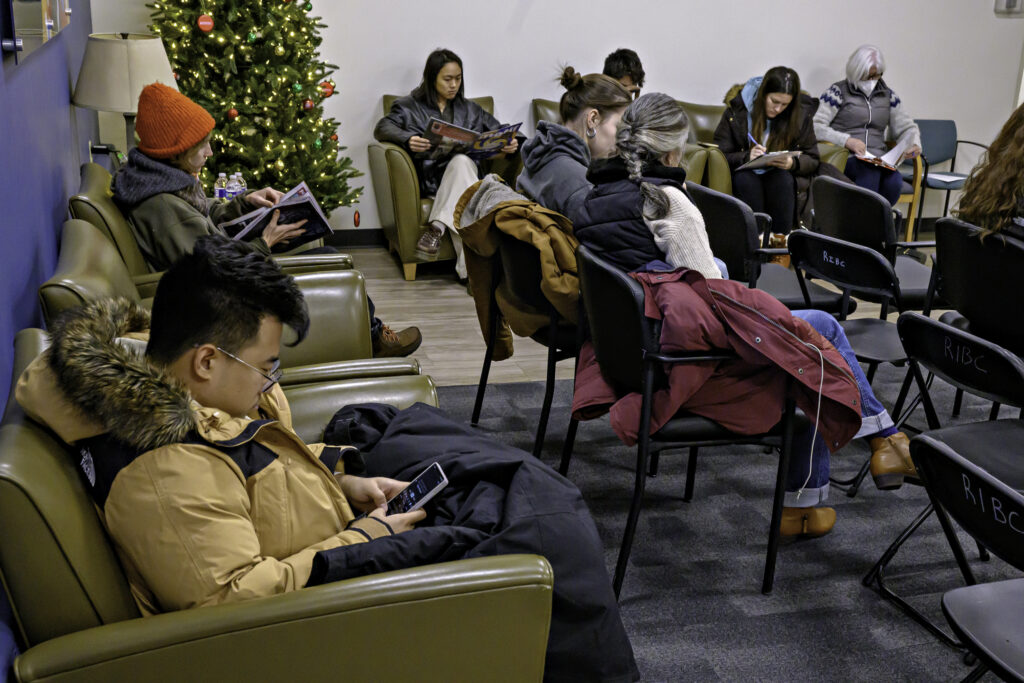
He was not the only one. By the time Morris arrived at the community nonprofit’s Providence Promenade Street headquarters and donation center at noon, the waiting room was filled. People spilled over into a makeshift overflow area.
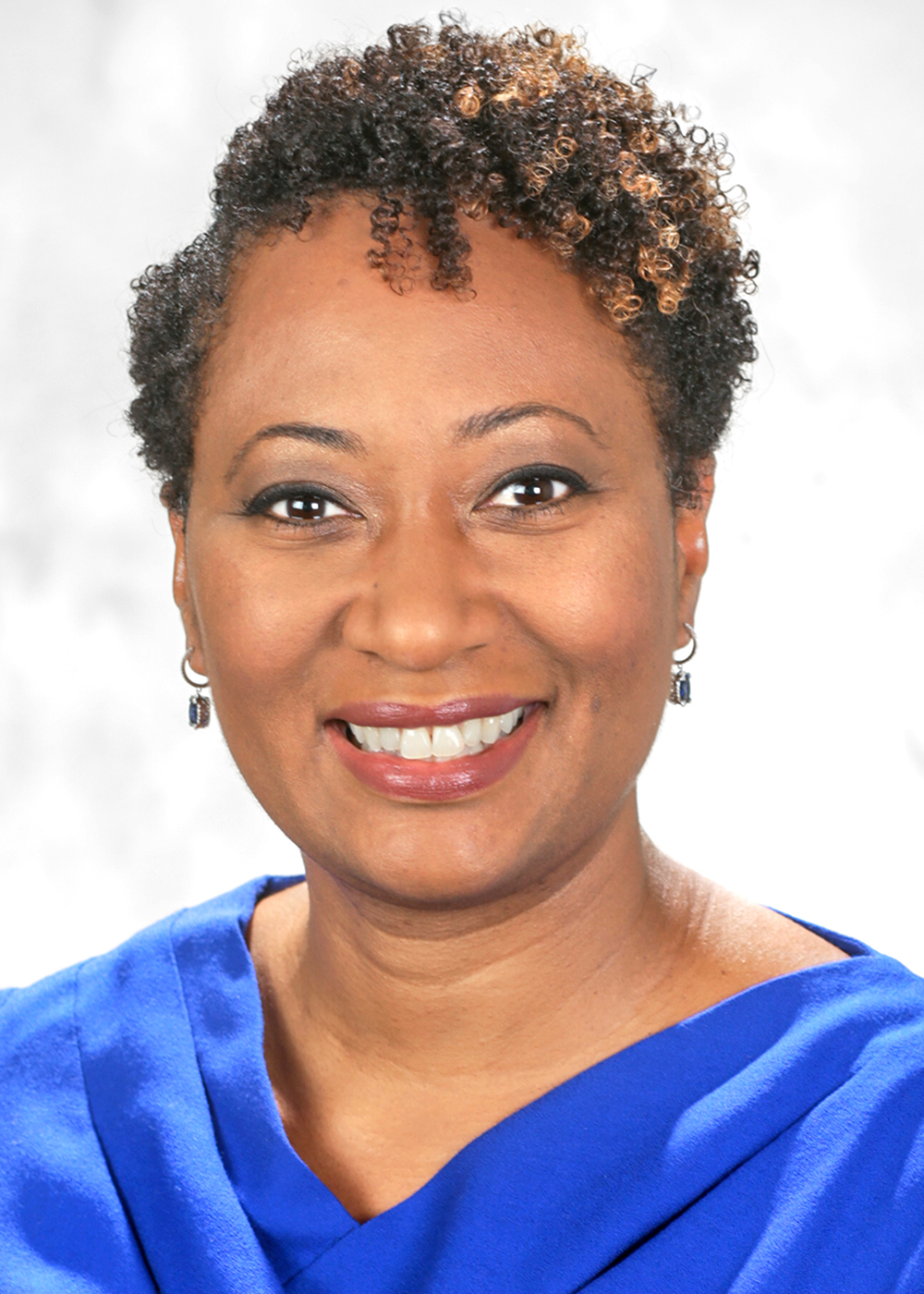
“In my 22 years, I’ve never seen a response like this,” Executive Director Nicole Pineault said in a phone interview on Monday. “It has been truly heartwarming and incredible to see the community support us in this way.”
Roughly 330 people donated blood or platelets across the blood center’s four donation centers — Providence, Warwick, Woonsocket and Middletown — more than triple the 100-person average for a Sunday, said spokesperson Chelsey Smith. More than one third of Sunday’s donations came from first-time donors.
Another 650 people booked appointments for future donations, compared with the typical 75 appointments scheduled on a Sunday.
By Monday afternoon, another 200 people gave blood donations at the Providence donation center, including U.S. Rep. Seth Magaziner, who posted about his experience on X.
The blood center was already low on supply before the mass shooting Saturday that killed two students and injured nine more people. Winter cold and snow, holiday travel and illness suppress donation levels at this time every year, Smith said. At the same time, the need for blood increases in the colder months, with those same factors — travel and bad weather — leading to more traffic accidents that necessitate blood transfusions at local hospitals.
“We see a drastic decline in donations and blood drives,” Pineault said. “We really struggle. In the winter, things are really stacked against us.”
Participation through business or community blood drives has failed to fully rebound since the COVID-19 pandemic, leaving the nonprofit already at lower donation levels before seasonal drops begin.
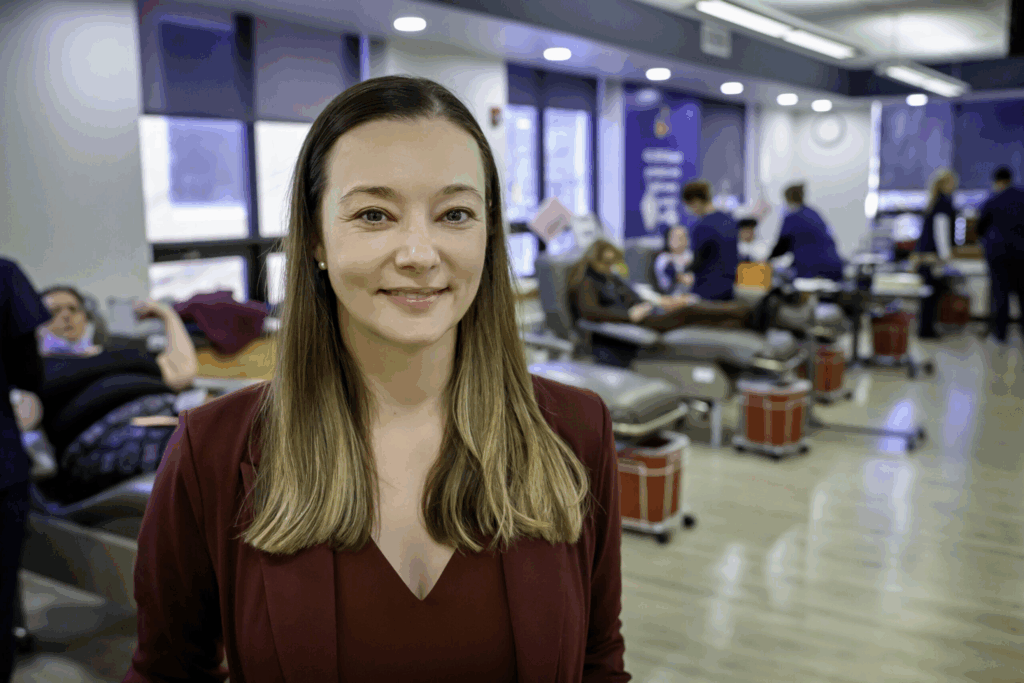
‘In my 22 years, I’ve never seen a response like this,’ Rhode isldn Blood Center Executive Director Nicole Pineault says of the outpouring of blood donations since Saturday’s mass shooting on the Brown University campus. (Photo by Michael Salerno/Rhode Island Current)
All hands on deck
The blood center put out a call for donations on social media at 7 a.m. Sunday, just after sending off 120 units of blood, platelets and plasma from prior donations to Rhode Island Hospital, where nine people were being treated for injuries from the shooting. Two Brown University students were killed when a gunman dressed in black opened fire in the Ivy League’s engineering building during final exams Saturday afternoon. He has not been identified or located as of Monday afternoon.
Many of the donors who responded to the call for action were residents living near campus, faculty and students.
“Students who had been on lockdown on their campus, sheltering in place, were walking through the snow across downtown Providence to give,” Smith said.
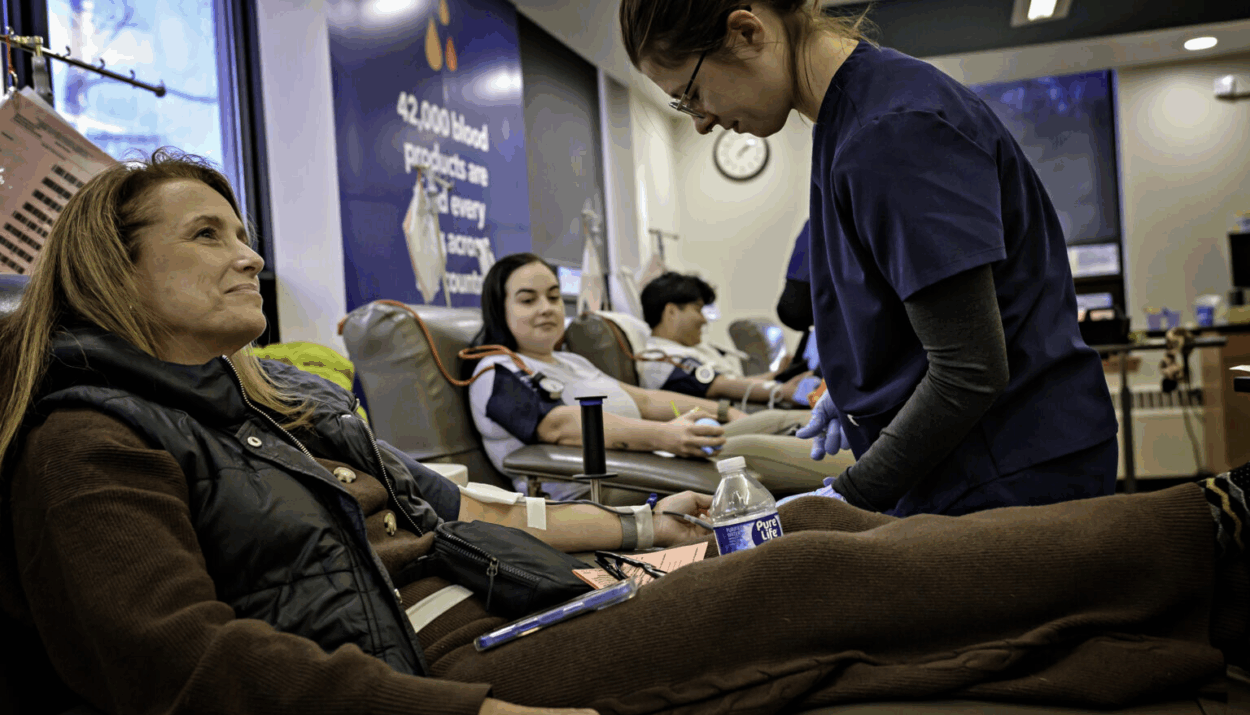
The crowd at the Providence donation center remained several dozen strong throughout Sunday and into Monday, ensuring all 13 donation beds were full for the 12-hour donation window each day.
Blood center employees came in on their day off, or added hours, working into the night after the donation center doors closed to prepare the blood for transfer and to finish processing the paperwork required for new donors, Smith said.
“We really do have a staff that wants to be a part of the emergency response, so we’re fortunate to have an all hands on deck thing,” Smith said.
For donors, too, spirits remained high despite what for some were hourlong waiting times.
“I think this is something people can focus on right now and feel good about it at a time of tragedy,” Pineault said. “Unfortunately it’s times like this where we’re all reminded of the importance of having a steady and reliable blood supply. Most of the time, people take for granted it’s going to be there. Moments like this allow us to highlight the fact that we need to be ready.”
From the waiting room, Morris said he watched two Brown University students begin what looked to him like a “meet cute,” or flirtatious first encounter. He welcomed the chance to set aside the weight of the mass shooting temporarily.
The blood center is especially looking for Type O donors, who can donate red blood cells to anybody, along with Type B-, Smith said.
The blood center’s Providence donation center will continue to operate on extended hours this week. However, donors are asked to book appointments online rather than walking in due to the increased demand.
“We’re going to need blood not just for the victims of this violence but also just everyday patients,” Smith said.
Embracing the surge in late-season donors, the blood center has readied its snack cabinets with extra Nutter Butters, Lorna Doones, soft drinks and fruit juices, contributed by New York Blood Center Enterprises, the umbrella nonprofit that oversees a network of regional blood centers, including in Rhode Island.
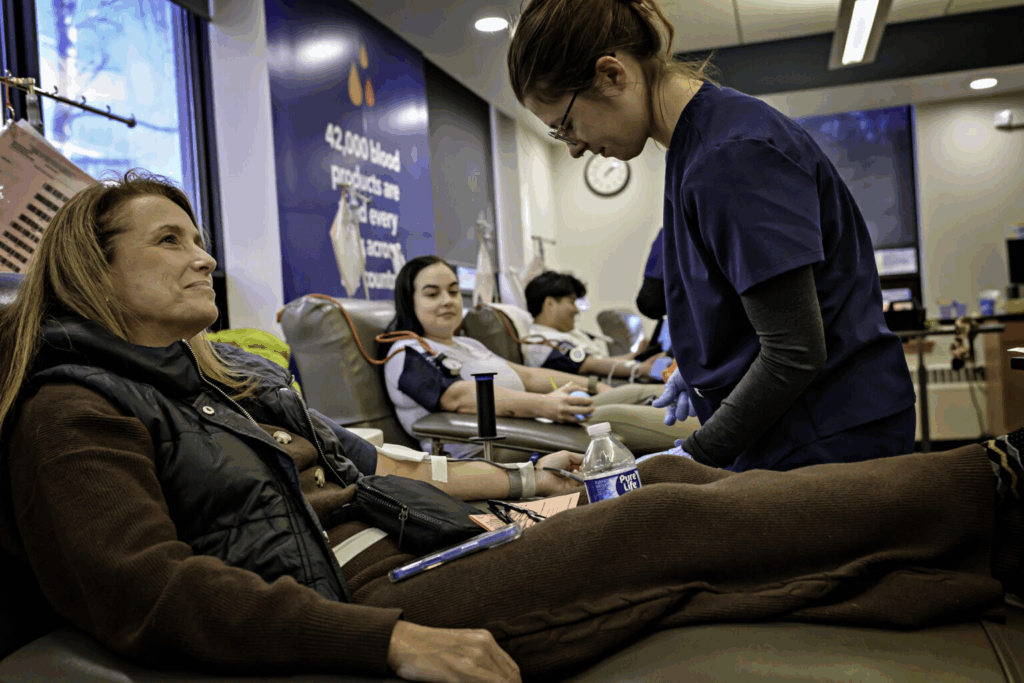
How to give blood. Appointments are encouraged. Make an appointment online to donate through one of the Rhode Island Blood Center’s donation centers or mobile clinics. The donation center at 405 Promenade St., Providence, will operate on extended hours from 7 a.m to 7 p.m. through Thursday, and 7 a.m. to 5 p.m. on Friday.