Involvement of healthcare professionals and medical students benefits all
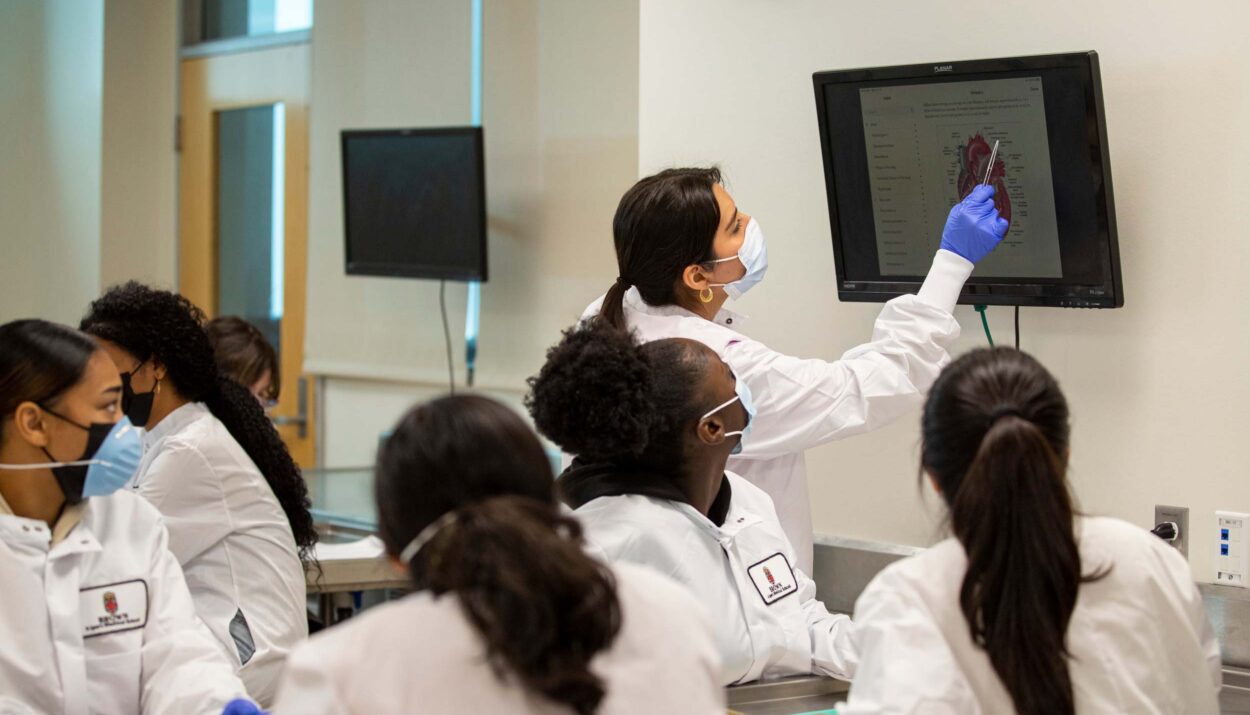
CENTRAL FALLS — Maria Guerrero Martinez, a student at the Warren Alpert Medical School of Brown University, becomes animated when discussing her participation in the SMART Plus clinic program, which operates in the city’s school system. The program brought her face-to-face with students for a month last fall.
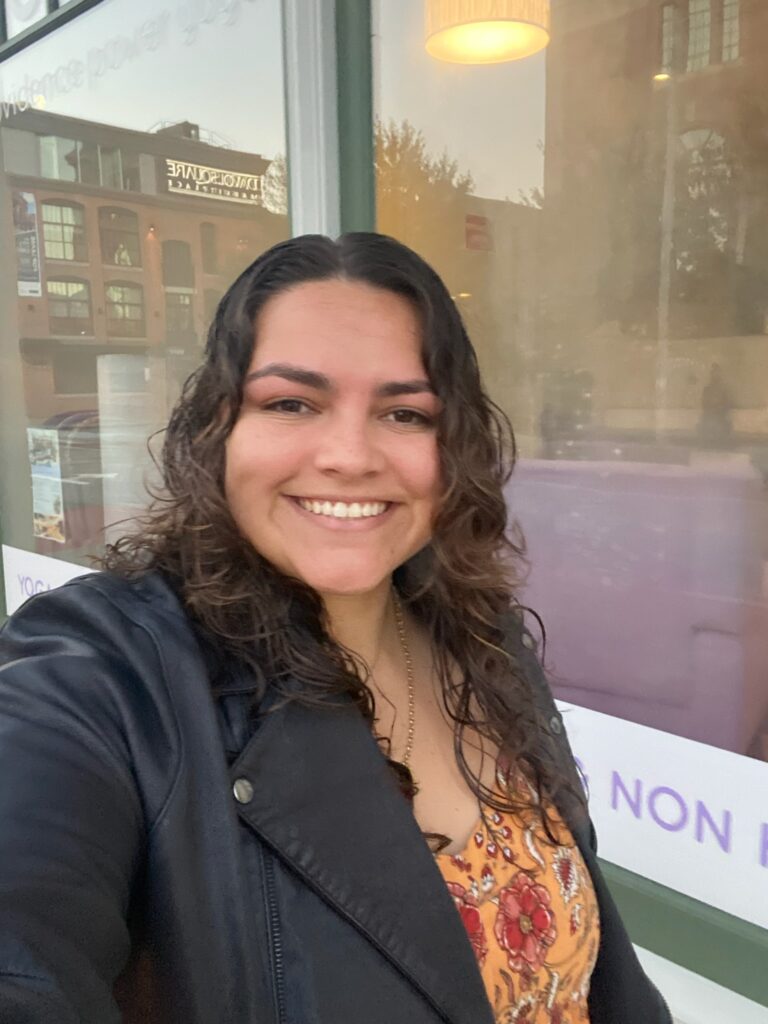
“I worked with a nurse practitioner or an attending doctor” from Brown, she said in an interview with Ocean State Stories. Together, they conducted health histories and exams with consenting students and treated minor injuries such as cuts and sprains. Guidance was offered to the children, who had the opportunity to interact with healthcare professionals — encounters that could motivate students to become professionals themselves.
“I think they liked the clinics, honestly,” Martinez said. “And I’d say that it’s really convenient to have an advanced practitioner there to also collaborate with the school nurse and with the administration to make sure that you give the kids like… the accommodations that they need based on their medical conditions.”
In interviews with Brown News, other medical students who have taken part in the program agreed with Martinez’s assessment. Said one of them, fellow fourth-year student Carolina Carrillo: “Every school should have a fully functioning clinic like this, which enables such positive experiences between kids and health care providers.”
According to the parent organization, SMART Student Health, the acronym stands for “School Health Model for Academics Reaching All and Transforming Lives.”
The organization describes itself as “an educational solution that focuses on breaking the cycle of poverty and improving the trajectory of lives by supporting academic achievement through onsite SMART Centers. Our centers identify and address the physical, behavioral, social, and emotional barriers to classroom success through the proactive delivery of on-site integrative health services, in real time.”
Clinics have been established or are in development in Alabama, Chicago, Pennsylvania and Rhode Island: in addition to Central Falls, those include clinics in Providence at George J. West Elementary School, Roger Williams Middle School, and Mt. Pleasant High School.
“The model is built on the numerous, well-documented interconnections between the ‘Whole Child’ factors of physical and behavioral health, wellness, social and emotional learning, and educational attainment,” SMART Student Health states. “The SMART approach not only increases the health, success, and overall well-being of individuals; it reaches families and school staff, positively impacting entire communities.”
SMART clinics are supported by CVS Health, which “brought their support for this landmark work as a Legacy Sponsor with a long-term commitment to SMART as an innovation in health care delivery that meets unmet needs, closes health equity gaps, and improves outcomes at lower costs for individuals on their path to improved socioeconomic status,” according to the organization. The Rhode Island Foundation also helped with early funding.
In Rhode Island, Dr. Joseph Diaz, associate dean for pathways and community engagement at Brown’s medical school, has been one of the pioneers of SMART Plus. Speaking with Ocean State Stories, he emphasized the benefits that schoolchildren receive — and the inspirational value SMART Plus may have on some.
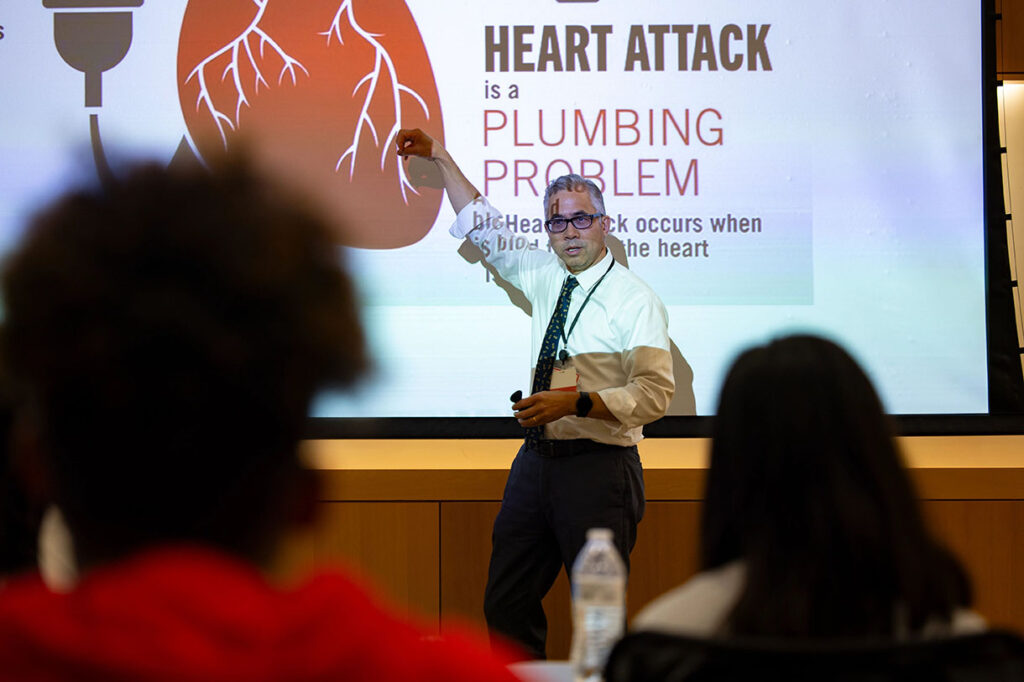
Some schoolchildren may be influenced to become doctors, he said, while others may see a future in other areas of healthcare such as nursing, social work or pharmacy — a path that may also lead to a medical degree. The program has ties to other universities, according to Diaz, which can help smooth the way.
“We provide opportunities as early as elementary school, then in middle school and then provide additional opportunities and more robust opportunities in high school, whether we’re going into classrooms or the students are coming and spending two weeks at the medical school every Saturday for the fall semester [here],” he said.
“From there, we extend that into the undergraduate schools, particularly at the University of Rhode Island, Rhode Island College, and Providence College because the medical school has an early identification program with those schools with the idea of identifying students early from the schools for matriculation into the medical school. We’ve built this into a program called Rhode to Medicine.”
Diaz added: “Our vision is that then they go to medical school, whether it’s here in Rhode Island or elsewhere, and then come back and serve the R.I. community.”
In her Brown News interview, Carolina Carrillo, a Mexican-American who is fluent in Spanish, related her clinical elective time at Central Falls’ Calcutt Middle School. She recounted how upon learning that some students who had reached puberty might appreciate learning about personal hygiene, she and former SMART Plus Clinic provider Dr. Tess Trinka created an age-appropriate presentation.
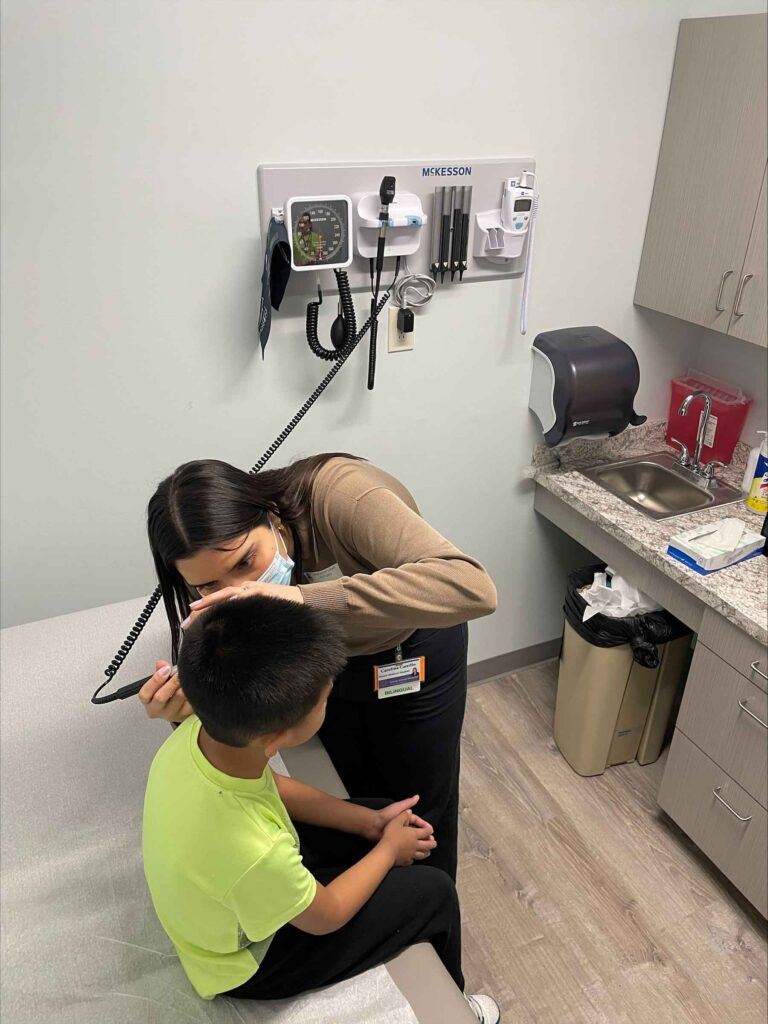
“The girls responded to our talk about menstrual health very positively,” Carrillo said in the story. “They had a lot of questions and were eager to talk with me; I think they saw me as an adult they could talk to who wasn’t a teacher, and who, as a Latina, could relate to them.”
Carrillo now recommends the rotation at the Calcutt SMART Plus Clinic to fellow Brown medical school students: “It was not only a really great learning experience, but also a great learning environment. I felt very well integrated into the clinic, and I felt truly useful during my time there.”
The Brown News story also quoted Melanie Ginn, architect of the SMART Clinic model and president and CEO of Ginn Group Collaborative.
“We proactively conduct outreach, we screen for risk and barriers to academic achievement — including physical, mental and social-emotional — and then work to address those,” Ginn said. “We’re about wellness for all, so that every single student can reach their academic potential.”
Central Falls High School teacher Dr. David Upegui is another core participant in the SMART Plus Clinic — and he has a deeper connection to education in the city.
“I’m a graduate of Central Falls High School,” he said when interviewed by Ocean State Stories. “Oddly enough, Dr. Joe Diaz’s wife is also a CF graduate.”
The city, he said, is often unfairly maligned.
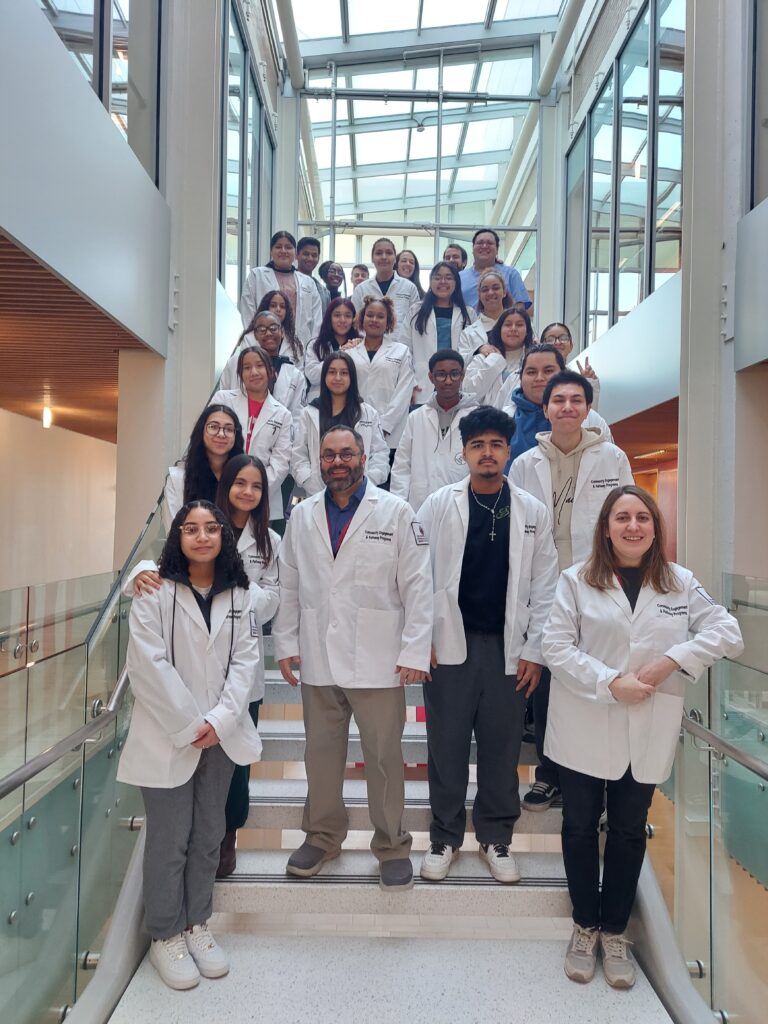
“We’re sort of infamous. We are the smallest city in the smallest state. We have a single public high school. And by a lot of the metrics that are used in the neoliberalist approach to education, we don’t score well. We don’t have high standardized scores, and we often fall short in many areas.
“But one of the things that we don’t fall short on is talent. The students in Central Falls are tremendously talented. As I always remind them, the universe is not stingy with talent, but it is unjust when it comes to opportunities.”
Before teaching at Central Falls High, Upegui was employed by Brown University’s School of Public Health. This background gave him insights he carries with him today.
Some students at the high school, he said, have become “physicians and neonatal nurses and physical therapists” and other healthcare professionals. But regardless of their futures, “all of our students will have to make decisions about healthcare,” and those decisions will be made against a larger backdrop — one that Diaz also emphasizes.
“He has always been tremendously concerned with the idea that health is not a single sort of independent characteristic of a human being, but rather it is a social construct that is built in by the interactions of many things, including genes and the environment and the sort of structures that we have around us,” Upegui said.
“It also is really important to recognize that right now we’re living in a world where we don’t easily know what’s real anymore. It’s so much easier to be convinced by the 30-second video clips that are on TikTok or whatever it is that the kids are watching. Part of our approach has been to ensure that children understand how to discern truth from nontruth.
“I tell my students that we study science not just because some of them will become physicians, but because scientific literacy is a form of self-defense. Without it, you are disempowered. We saw the tragic cost of this during the early days of the pandemic, when misinformation led people to ingest bleach based on false claims. We teach science so that our students are empowered to protect themselves and those they care for.”
Before enrolling in Brown’s medical school, Maria Guerrero Martinez was an undergraduate at Brown University. A native of Puerto Rico, she was an honor student and star soccer player in her homeland, according to her listing on the Brown Bears soccer roster.
Martinez majored in biochemistry and molecular biology and after graduation, she took a gap year, then enrolled in Brown’s medical school. She plans to be a primary care practitioner for children and adults.
SMART Plus Clinics, she told Ocean State Stories, are “a great system. I love that they are increasing the mental health aids that they’re providing the kids by using screeners. As somebody who wants to learn how to get care to patients in creative ways, it was an amazing exposure to have in medical school. The people who are working there with the kids are an inspiration and they’re very committed to their jobs.”