Courses are training people on how to use naloxone to stop opioid overdoses.
| by Samantha Medeiros August 18, 2026 |
This story was originally published in The New Bedford Light, a publication partner of Ocean State Stories.
The number of opioid-related deaths in New Bedford is decreasing, and advocates say increased Narcan training is helping.
Opioid-related deaths in New Bedford have declined from 84 in 2022 to 43 in 2024, according to data from the Massachusetts Bureau of Substance Addiction Services. However, opioid-related deaths increased from 7 to 12 among people in their 60s between 2020 to 2024.
Reported uses of the anti-overdose drug Narcan — the best-known brand of naloxone — have steadily declined in the city since 2023, according to data from the New Bedford Police Department.
Overdose deaths statewide have also dropped, from a peak of 2,364 in 2022 to 978 in 2025. (Local data for 2025 is not available.)
The Police Department and Health Department declined multiple requests for interviews from The Light regarding Narcan training and opioid-related responses. The Light began making interview requests on July 6, but the city said no public officials could respond to questions until the first week of September, according to Jonathan Darling, New Bedford’s public information officer.
“I think there’s been some real good work to reduce the number of fatal overdoses,” said Carl Alves, the director of the New Bedford recovery support center Positive Action Against Chemical Addiction. “And that is, in large part, from a lot of outreach and Narcan distribution.”
Though the Police Department’s data says the number of Narcan uses in the city has steadily declined, Alves suspects that unreported Narcan use may have increased as a result of the recent push to make Narcan available to the public.
“I think Narcan [use] has actually gone up,” he said. “And what has come down is the number of reported overdoses, and the number of reported fatal overdoses, primarily because people are using Narcan.”
While PAACA works closely with the Police Department to get Narcan into the hands of those in recovery, the Greater New Bedford Opioid Task Force is working to get Narcan out to the general public through its Narcan training courses. Its website provides information on how to access and administer Narcan to someone enduring a suspected overdose, although no one from the Task Force was available for an interview on the topic.
Other towns have adopted Narcan education courses to inform their citizens on how to safely administer Narcan as well.
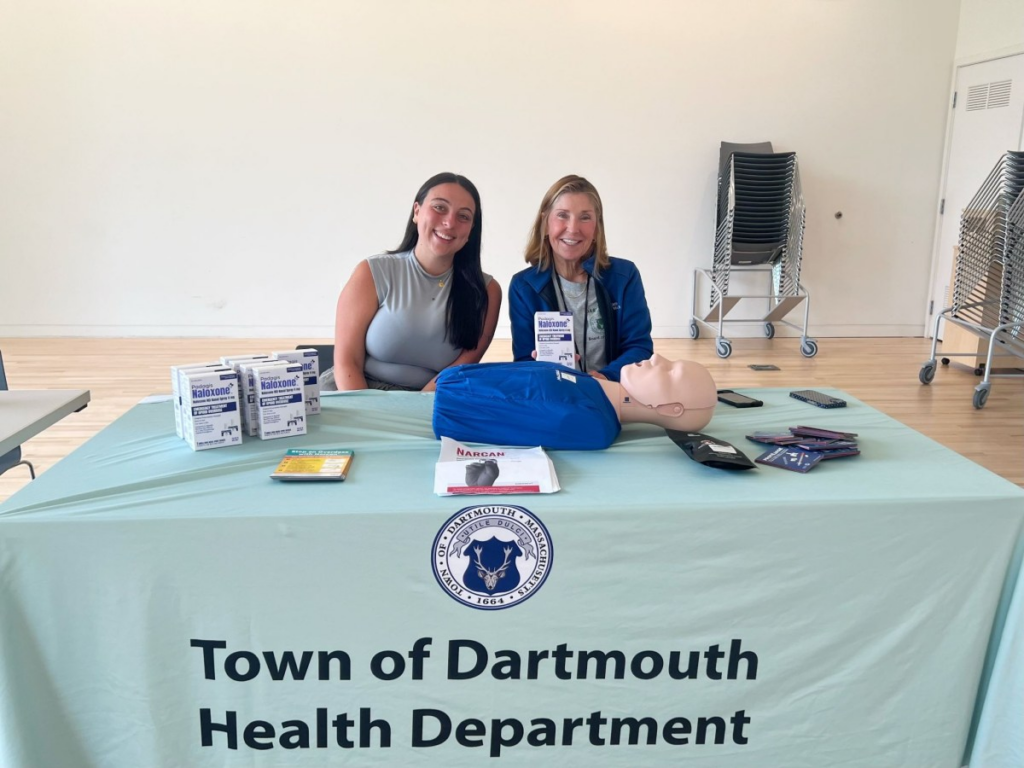
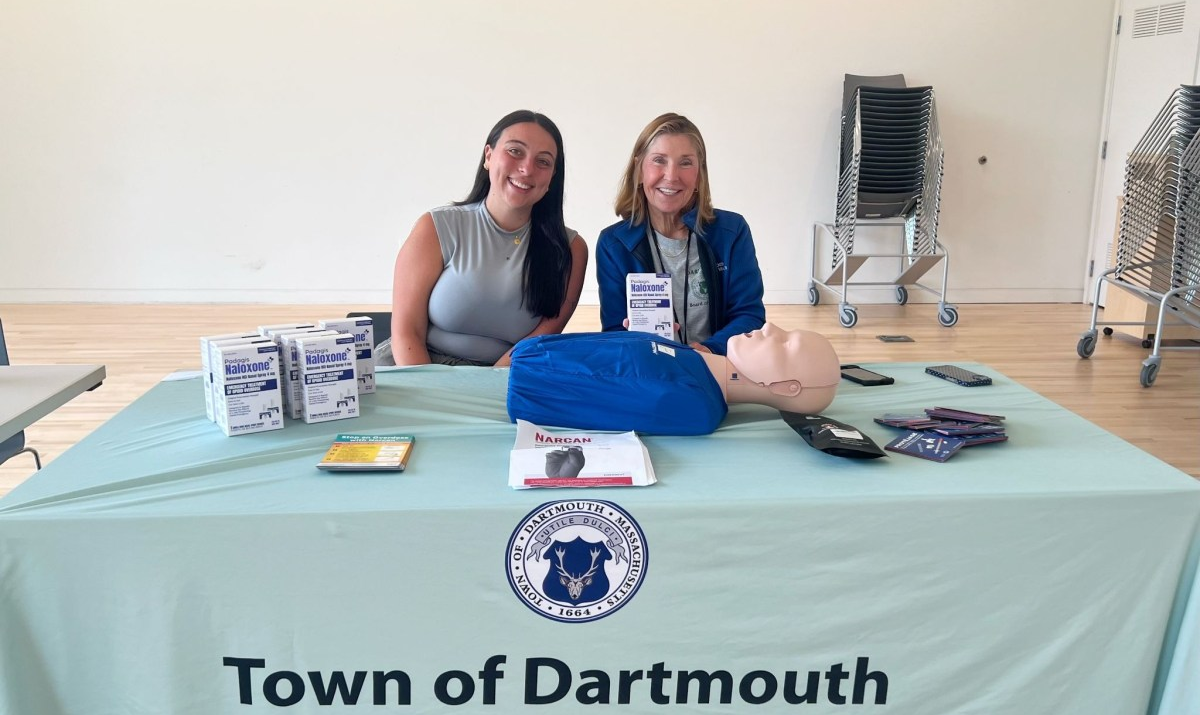
Dartmouth is hosting naloxone training courses throughout the town this month. Rachel Dzialo, the town’s Substance Use program coordinator, said that the town wanted to offer this training “as a preventative measure and an educational opportunity for our community, not only in Dartmouth but the surrounding community, to take advantage and learn a skill that could potentially save a life.”
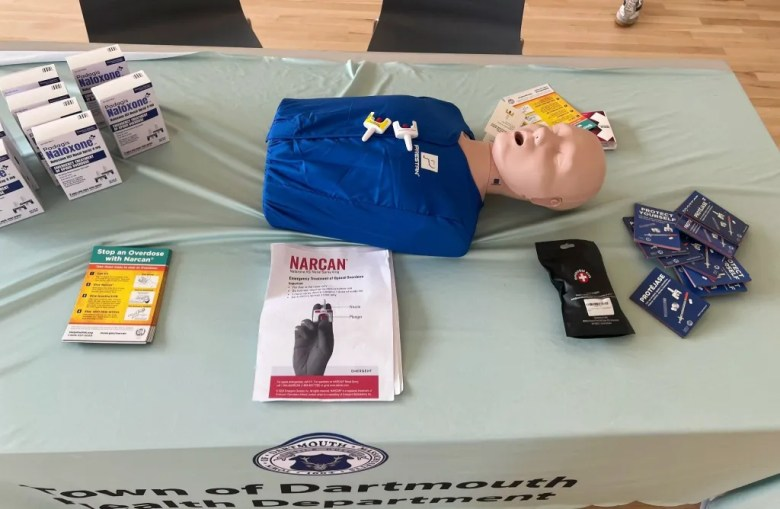
The town’s public health nurse, Maura Reimer, delivers the training, demonstrating how to administer the Narcan, which is sprayed into an overdosing person’s nostril.
“It’s actually really similar to CPR training,” said Dzialo. “We have the dummy for people to practice in conjunction with the chest compressions and if rescue breaths are necessary.”
Credit: Samantha Medeiros / The New Bedford Light
The demonstration takes about 20 minutes. Every participant leaves with a box of naloxone, which contains two doses of the medication, as it is common for more than one dose to be necessary to stop an overdose.
The North Attleborough Opioid Task Force provides a similar service, and also endeavors to reinforce the presence of Narcan as a safety tool to the public.
Stephen Berdos, the human services coordinator for the North Attleborough Health Department, explained that Narcan is not only useful to those struggling with substance abuse disorders; it can be useful to people who are prescribed opioids.
“It’s really safe to have Narcan — and a rather good idea to have Narcan — at home just in case,” he said. “Sometimes, people might be in charge of their own medications if they’re coming out of surgery, which isn’t always safe, because you can take a medicine, forget you took it, and then take another dose, which could inadvertently cause an overdose.”
Anne Marie Fleming, director of North Attleborough’s Health Department, said the department has given Narcan presentations at the town’s senior center.
“One of the concerns with the elderly population with chronic pain or who have opioids is if there’s any type of memory issues,” she said. “The concern is that they could inadvertently take too much medication, and having the Narcan in the home to be used by you, a caregiver, family, or friends is important.”
The North Attleborough Opioid Task Force and the Northern Bristol County Public Health Alliance helped make Narcan available in the area during the FIFA World Cup games in Foxborough in June and July. Some goals included “bringing Narcan to local hotels, motels, gas stations, restaurants, particularly centered around the highways,” and giving those businesses instructions on how to administer the medication, according to Fleming.
North Attleborough began holding public Narcan training courses in fall 2025, while Dartmouth began them this summer.