Tim, we read Jack Perry’s recent story in The Providence Journal about Residue of Evil: Legacies of Nazism, now in production, and we wanted to bring the story to our own audience. This is your 48th documentary, correct? What inspired this one?
Because of what’s going on in the world, especially in the United States, it’s important that people understand the warning signs history provides us before it becomes too late to do anything about it. We are in a situation now where many of the phrases and wording used during the 1930s and 1940s are being used today. It’s scary to hear and even more worrisome to realize that the majority of these words are unfamiliar to people today. That’s a failure of our educational institutions, who don’t value the teaching of history as they should. It’s different in Europe. They tend to stay on top of this stuff much better than we do. A credit to their governments and schools. They are positioned to understand the signs because they lived through it and recognize the fact that they don’t want to go down this horrendous road again.
Can you please give us an overview? And then we’ll get into some depth about the film.
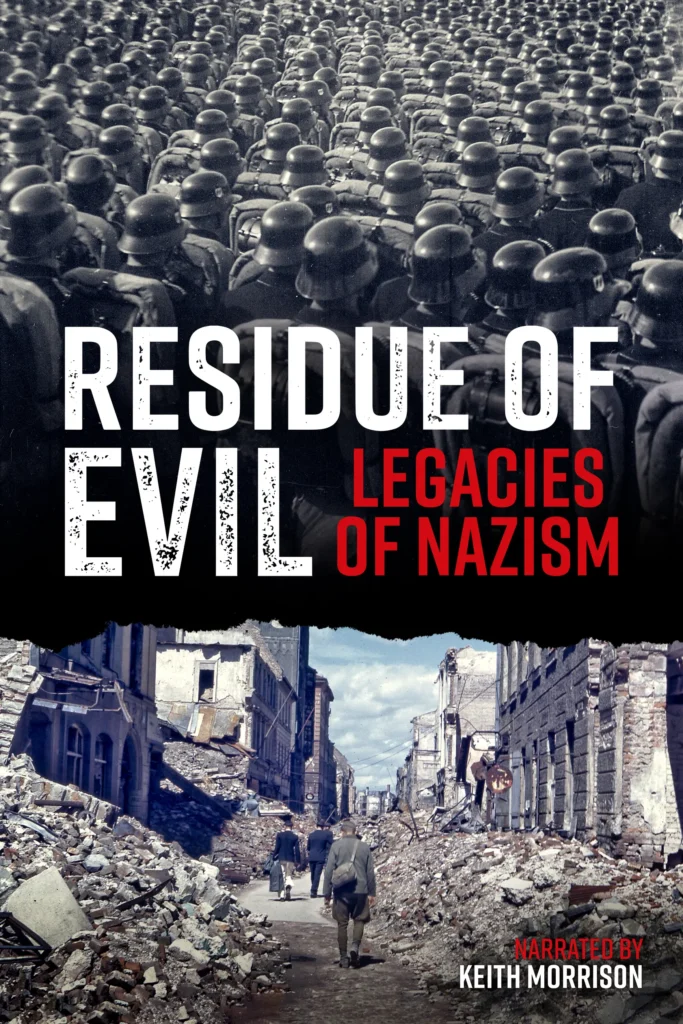
The film is about aspects of the Holocaust. However, stories that are somewhat unknown compared to the familiarity of topics such as Auschwitz or the roundup of the Jews by the Nazis. The documentary revisits places where National Socialism was born and evolved, but also focuses on such lesser known programs such as Hitler’s efforts to eliminate the disabled in Europe and the underground movement to smuggle Jewish babies out of Europe to England and the United States by secret and brave, organizations made up of the Resistance. It was called the Kinder Transport. We also examine what is being done by individuals to make sure the Holocaust and its victims are front and center when people go about their daily lives around Europe.
Where did filming take place?
In Austria, Germany, the Netherlands and the United States.
The documentary chronicles Adolf Hitler’s T4 program. What was it?
The murder of the disabled in Europe, especially those with Autism, Down Syndrome and intellectual disabilities, as well as physical. Pretty much anyone who the Nazis thought could screw up their Aryan gene pool was targeted for murder.
What role did Hartheim Castle in Austria play?
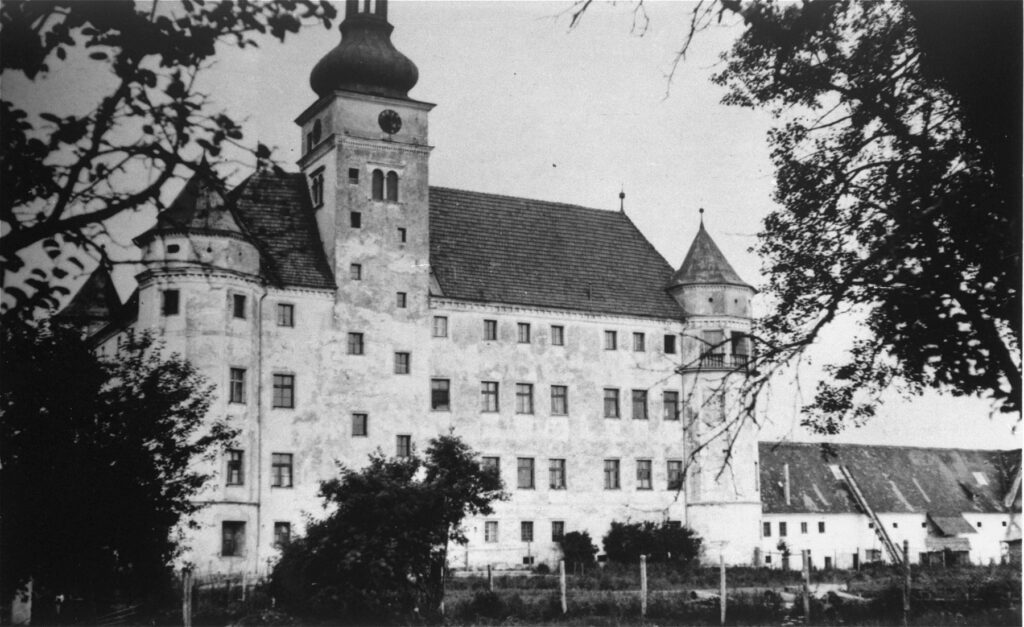
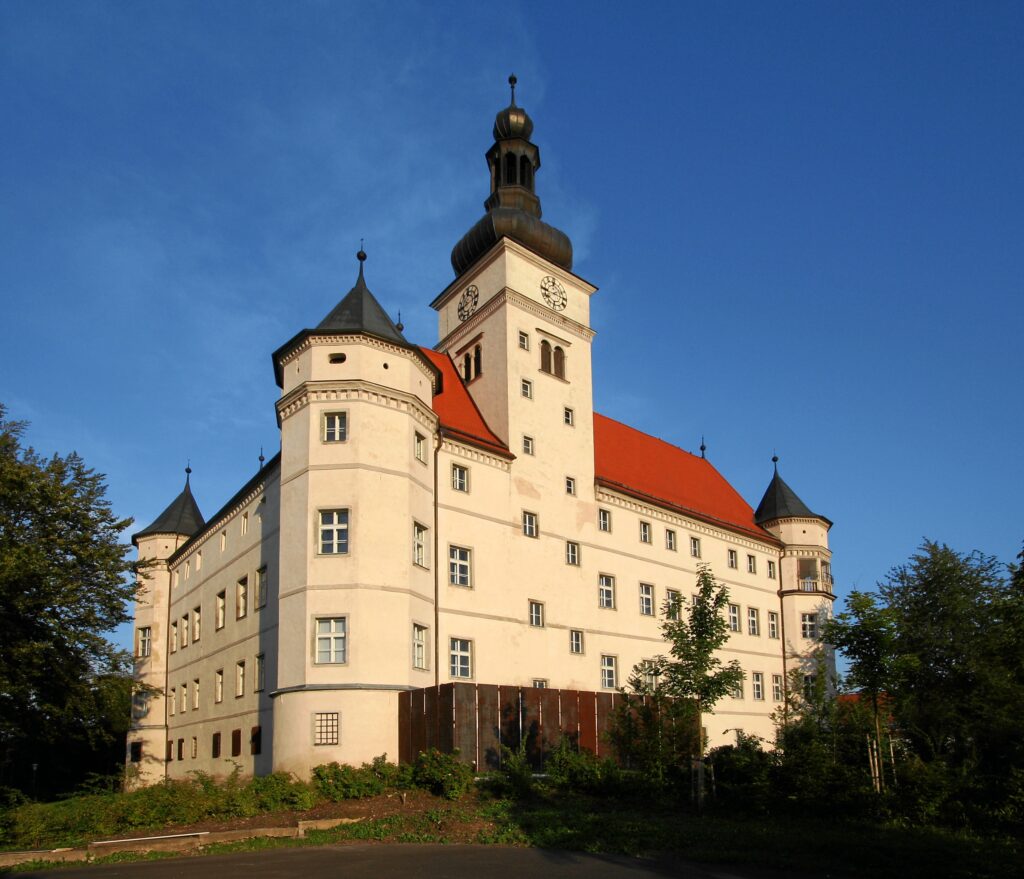
Hartheim is a beautiful 400 year-old castle in Austria. A place where a Price and Princess could live-from the outside. Inside, it was a killing factory, killing some 30,000 disabled, mostly children and young adults. They were bussed there, gassed and cremated. Parents were under the impression they were sending their children to a safe place where they would be cared for during the war, but they were really sending them to their deaths.
Some European cities and towns have installed “stumbling stones” outside homes where the Nazis seized families and sent them to their deaths during the Holocaust. Can you give us more detail about these stones?
The stones, which are small gold brass plates affixed to a paving stone are placed in front of homes or apartments throughout Europe identifying that individuals or families were taken from that place by the Nazis and later murdered at a concentration camp such as Auschwitz, Dachau or Buchenwald. It gives the dates when they were taken, the transit camp they were taken to and then, their place of death at the camp. People generally look down when they walk, so you can’t miss them around Europe and that’s the idea, to remember someone once lived here and they were taken away because of their religion and killed. Anne Frank and her family have stones in Amsterdam, for example.
Who is narrating Residue of Evil?
Dateline NBC’s Keith Morrison.
When will the documentary be released?
January 27, 2027, International Holocaust Remembrance Day.
Will it air on PBS?
That’s the goal.
Residue of Evil is not entirely about Hitler’s legions. Can you tell us about some of the worthy characters in it?
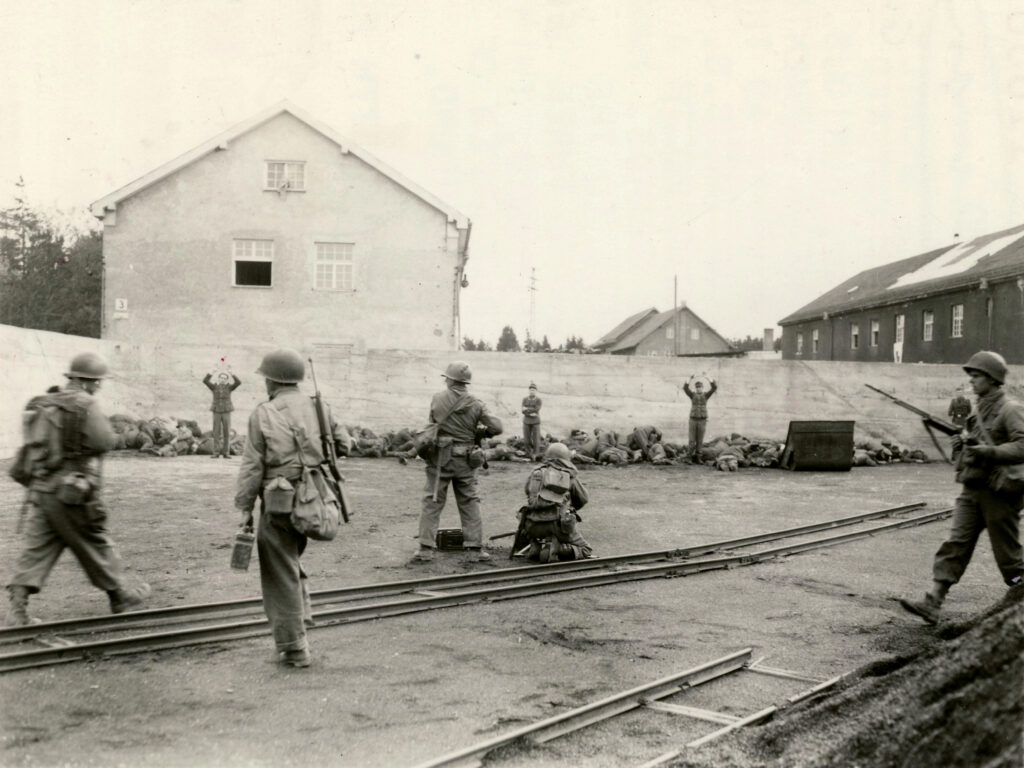
We also examine the impact of the libertarian of a Concentration Camp on Americans who first arrived at these facilities. For example, soldiers of the 45th Infantry Division who liberated Dachau. There were still SS guards at the camp when the 45th arrived and when they saw the dead and the dying prisoners, they immediately began killing the guards, which was out of an anger one can only imagine after seeing what was there.
The Journal story stated that “Gray’s foundation is developing an educational curriculum with the nonprofit organization Journeys in Film, which will be distributed to more than 20,000 educators.” Details please.
Journeys in Film is a nonprofit organization that takes feature films, such as Schindler’s List or Hidden Figures, and documentaries, such as ours, and builds a discussion guide around the story for educators to use in the classroom. It’s an incredible tool. Liam Neeson is their global spokesperson. The resources are free for teachers. It takes a true story, chronicled in a film or documentary, and teaches history to thousands of students around the world.
Is one of your ambitions raising awareness of the Holocaust, particularly among young people?
Yes. It’s barely taught in schools and that’s embarrassing and somewhat, negligent on the part of our country.
On a related note, have you found that high schools typically do not teach Holocaust history?
Some do. It seems like private schools have a little more wiggle room to teach World War II history, although I know many public school history teachers who try to get it in there because they believe themselves it needs to be covered. Sometimes it’s just based on what that individual teachers thinks is important, as it relates to WWII. Teachers have a lot of demands on them these days and it always seems that history is deemed not as important as math or science, but I would argue that we’ll continue to repeat the same mistakes unless we know how people before us dealt with them when they first arose.
Lastly, your films have won many awards. Congratulations!
We’ve been fortunate over the past 20 years. The best awards always come from your peers. Those are the ones that mean the most. I worked with some incredible people in RI, Videographer and Editor Jim Karpeichik and composer Roger Cichy, and in Fort Myers, FL, Dave Beaty and John Paluzzi. They always do more than is expected of them and are some of the best in the business. I’m lucky to have them. They’re also just incredible people. Talented beyond words.”
Thanks for doing this, Tim. Anything we missed?
Nope
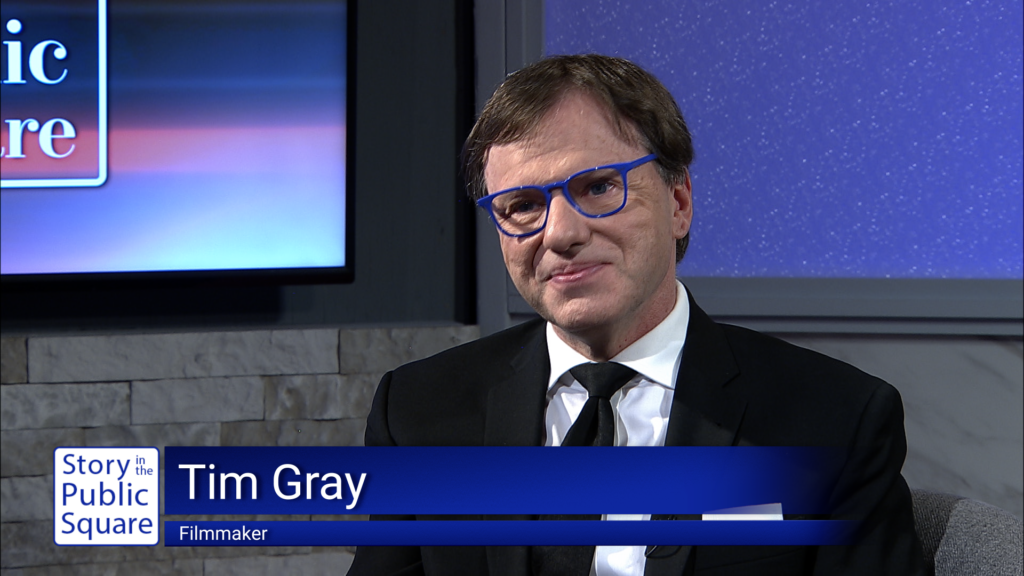
Tim Gray, founder and president, World War II Foundation, discusses the work of the foundation, its many documentaries, and why it is important to remember the Second World War — and lessons it holds for today. WATCH this Story in the Public Square episode.
Editor’s note: The Ladd Center, Rhode Island’s lone institution for people with developmental and intellectual disabilities, closed in 1994. On the day it did, Robert L. Carl Jr., the state administrator who played a leading role in making Rhode Island the first state to shutter such a place, famously said: “Nazi Germany killed these people. Rhode Island made a commitment to treat them with dignity and respect. Nobody will ever be able to throw away a human being again.”